
You buy a brand-new couch, carefully position it in your living room, and within days, your cat has turned one pristine corner into their favorite personal scratching spot. If you are reading this while staring at frayed fabric or shredded wood, you are far from alone. For decades, pet parents have battled to save their home decor from the sharp claws of their feline companions.
Here is the quick reassurance you need: scratching is an entirely normal, healthy, and instinctual behavior for felines. However, furniture damage can absolutely be prevented without ever resorting to punishment. The key to harmonious cohabitation is not stopping the scratch—it is redirecting it.
The most effective way to stop a cat from scratching furniture is to provide tall, sturdy scratching posts placed directly next to the targeted furniture, use double-sided furniture guards temporarily, and reward the cat with treats and play when they use the appropriate scratching surfaces.
In this comprehensive guide, we will explore exactly why your cat is targeting your favorite chair, what smells repel cats from scratching, and 10 highly effective, vet-approved solutions to permanently redirect this natural behavior.
How Do You Stop a Cat From Scratching Furniture?
- Provide scratching posts: Offer tall, sturdy sisal posts.
- Redirect scratching: Move the cat to the post when they scratch the couch.
- Reward good behavior: Use treats and praise when they use the post.
- Use furniture protectors: Apply sticky tape or vinyl guards to the couch.
- Avoid punishment: Never yell or use water bottles, as this increases anxiety.
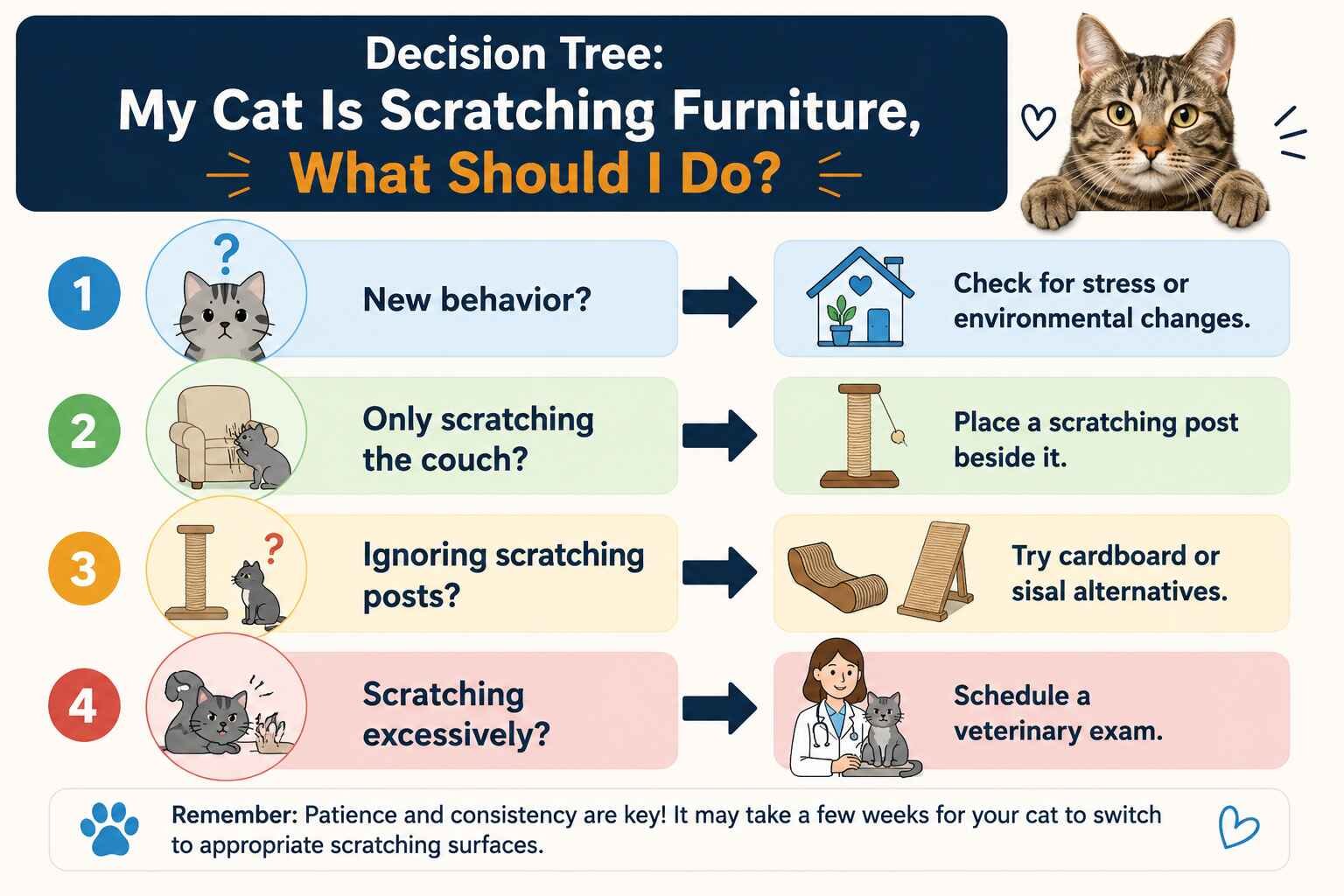
Decision Tree: My Cat Is Scratching Furniture, What Should I Do?
Example: How One Owner Saved Her Sofa
Sarah was incredibly frustrated when her adopted tabby, Leo, began shredding the arm of her expensive new sofa. She initially tried yelling “No!” and moving him away, but Leo just waited until she left the room to scratch again. After researching cat behavior problems, she purchased a tall sisal scratching post and placed it directly in front of the scratched sofa arm. She applied double-sided sticky tape to the sofa fabric and rubbed catnip on the new post. Within two days, Leo switched entirely to the sisal post. A month later, Sarah safely removed the tape, and her sofa remained untouched.
Key Takeaways
- Scratching is a biological necessity, not a malicious behavior.
- Cats require tall, stable scratching posts that allow for a full-body stretch.
- Placing appropriate scratching surfaces near the damaged furniture is critical for success.
- Safe deterrents, like citrus scents and sticky tape, can temporarily protect furniture while you train.
- Punishment increases feline anxiety and often makes scratching behaviors worse.
Why Do Cats Scratch Furniture?
To solve the problem, you must first understand the motivation. Cats do not scratch your furniture out of spite. They are fulfilling several deeply ingrained biological needs:
- Territory Marking: A cat’s paws contain scent glands. When they scratch a prominent object in the room (like a couch), they are leaving both a visual mark and a chemical scent mark that says, “This is my home.”
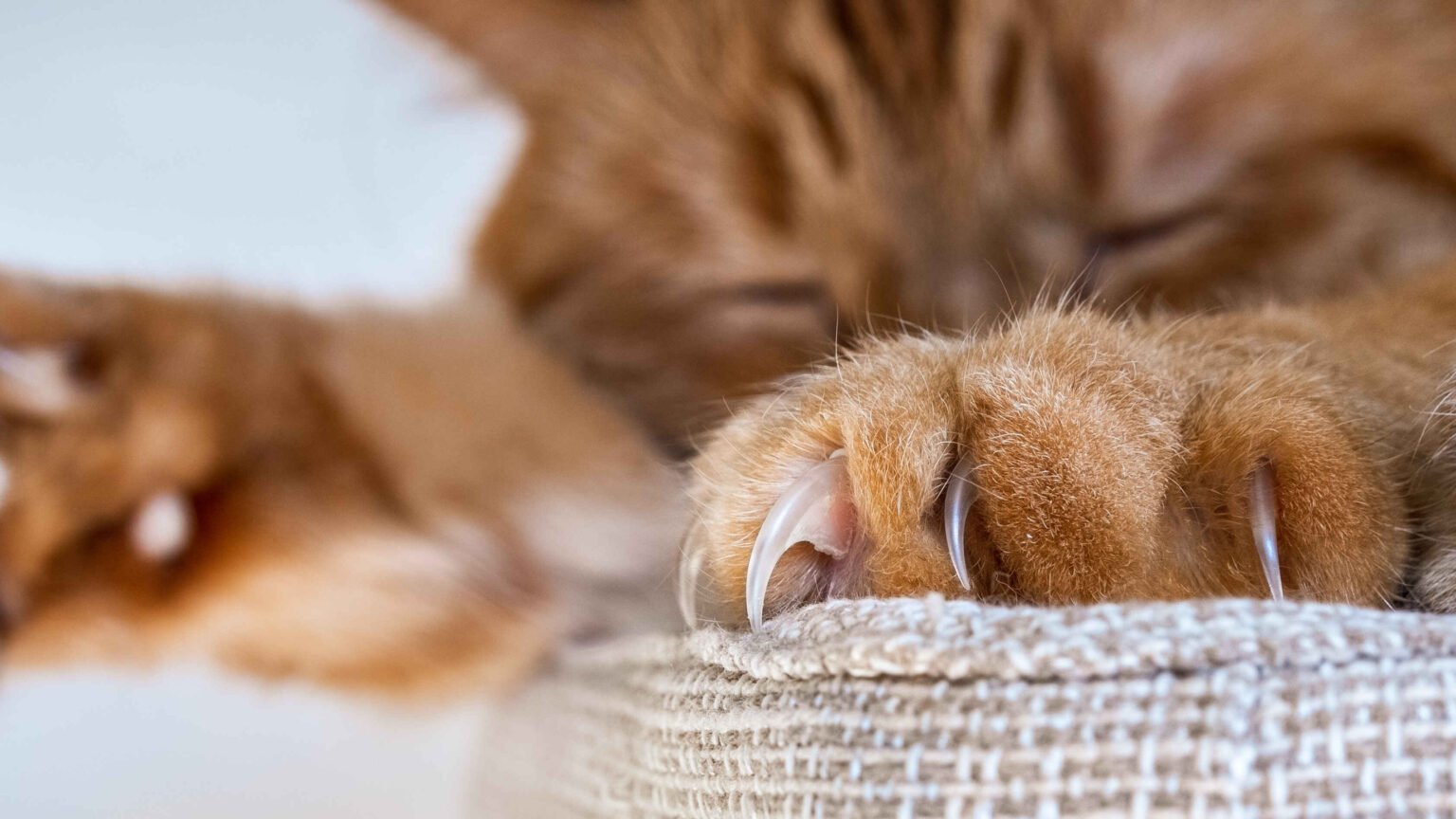
- Nail Maintenance: Scratching helps cats shed the dull, dead outer husks of their claws, revealing the sharp, healthy nail underneath.
- Stretching Muscles: Felines use scratching as a way to stretch their back and shoulder muscles, which is why they often scratch right after waking up from a nap.
- Stress Relief and Excitement: Scratching releases pent-up energy. You may notice your cat furiously scratching a post right before mealtime or when you come home from work.
Important statement: Scratching itself is not the problem; scratching the wrong surface is.
Veterinary Consensus on Scratching
According to the American Veterinary Medical Association (AVMA), scratching is a normal feline behavior used for claw maintenance, stretching, and communication. Over 80% of indoor cats exhibit scratching behaviors on household items if proper outlets are not provided, and the vast majority prefer sisal or rope textures.
What Veterinarians Want Cat Owners to Know
Veterinary professionals emphasize proactive management over reaction. When discussing furniture scratching, they want owners to understand a few core facts:
- Scratching is normal: It is a biological requirement, not bad behavior.
- Declawing is not recommended: It is a major surgery with long-term behavioral and physical consequences.
- Punishment is ineffective: Yelling or using water bottles increases anxiety and damages your bond with your cat.
- Environmental enrichment prevents most problems: Providing acceptable outlets like posts, trees, and horizontal scratchers is the ultimate cure.
Is Furniture Scratching a Behavioral Problem?
Many frustrated owners search online asking, “Is furniture scratching a behavioral issue?”
The answer is usually no. Everyday scratching is a normal, instinctual behavior. However, the context of the scratching matters. While standard territorial marking is normal, an obsessive or sudden increase in scratching can indicate an underlying issue.
Sudden changes in the household—such as moving, a new baby, or a new pet—can cause massive anxiety. Anxiety-related scratching is a coping mechanism. If your cat suddenly begins frantically tearing up door frames, carpets, and multiple pieces of furniture, they may be suffering from stress and attempting to desperately self-soothe by heavily scent-marking their environment.
10 Ways to Stop Cat Scratching Furniture
If you want to know how to stop cat scratching furniture, you need a multi-faceted approach. Here are the 10 most effective, proven methods to save your upholstery.
1. Provide a Tall Scratching Post
The biggest mistake owners make is buying a tiny, wobbly scratching post. If the post falls over when the cat uses it, or if it isn’t tall enough for them to stretch their entire body, they will abandon it for your heavy, stable couch. Invest in a post that is at least 32 inches tall with a wide, heavy base.
2. Place Posts Near Scratched Furniture
Location is everything. If your cat loves scratching the corner of the living room sofa, putting a scratching post in the guest bedroom will fail. Cats scratch prominent, socially significant areas. Place the new post directly next to the piece of furniture they are currently targeting.
3. Reward Appropriate Scratching
Positive reinforcement works wonders on felines. Every single time your cat uses the scratching post, immediately reward them with a high-value treat, a petting session, or a few minutes with a wand toy. They will quickly associate the post with positive outcomes.
4. Use Catnip on Scratching Posts
If your cat is ignoring the new post, make it irresistible. Rub dried catnip or spray a catnip attractant directly onto the sisal rope. This will draw the cat to the post and encourage them to dig their claws in.
5. Cover Furniture Temporarily
While you are training your cat to use the post, you must make the couch unappealing. Apply double-sided sticky tape (often sold as “sticky paws”) or clear vinyl furniture guards to the targeted corners. Cats hate the sticky, smooth feeling on their paws and will immediately look for an alternative.
6. Trim Your Cat’s Nails
Routine maintenance minimizes damage. Learning how to trim your cat’s nails every 2 to 3 weeks blunts the sharp tips of their claws, meaning that even if they do sneak a scratch on the furniture, the damage will be vastly reduced.
7. Increase Playtime
A tired cat is a well-behaved cat. Many cats scratch furniture simply because they are bored and have excess energy. Engaging in 15 minutes of vigorous interactive play with a laser pointer or wand toy every evening can drastically reduce destructive behaviors.
8. Reduce Stress
If the scratching is anxiety-driven, you must address the stressor. Provide high-up hiding spaces, maintain a predictable routine, and consider using synthetic feline facial pheromone diffusers (like Feliway) in the rooms where the scratching is worst to help the cat feel secure.
9. Offer Different Scratching Surfaces
Not all cats like the same textures. While sisal is the most popular, some cats prefer corrugated cardboard scratchers that lay flat on the ground, while others prefer raw wood or carpeted posts. If your cat ignores sisal, experiment with different materials and angles.
10. Redirect Instead of Punishing
When you catch your cat scratching the couch, do not yell, hit, or spray them with water. Punishment only teaches the cat to fear you and to scratch when you aren’t looking. Instead, calmly pick the cat up, carry them to the scratching post, and mimic a scratching motion with their paws or a toy to redirect the behavior.
How to Stop a Cat From Scratching the Couch
The living room sofa is almost always public enemy number one for cat claws. Because the couch is usually in a socially significant room that smells strongly of you, it is the prime target for territorial marking.
To specifically stop couch scratching, you must combine deterrents with alternatives. First, apply clear plastic corner guards to the arms of the sofa. Second, place a highly appealing scratching post beside the couch. Third, use cat attractants like silvervine or catnip on the post. Consistency is key here; do not remove the corner guards until the cat has consistently used the scratching post for at least 30 to 45 days.
What Smells Stop Cats From Scratching Furniture?
Cats have highly sensitive noses, and you can use this to your advantage to protect your home. Many owners ask, “What smells repel cats from scratching?”
You can use scent strategically to make the couch unappealing. Here is a breakdown of common scent deterrents:
| Scent | Effectiveness & Safety |
|---|---|
| Citrus (Lemon/Orange) | Often effective. Cats naturally dislike the smell of citrus peels. Use heavily diluted juice in water. |
| Rosemary | Mild deterrent. Safe for pets, but varying success rates depending on the cat. |
| Lavender | Mixed results. Some cats hate it, while others are unfazed. |
| Commercial Sprays | Usually strongest. Formulated specifically to repel felines safely. |
| Essential Oils | Avoid completely due to toxicity risks. Eucalyptus, peppermint, and heavy citrus oils are highly dangerous to felines. |
Best Products for Cats That Scratch Furniture
If you are building your anti-scratching toolkit, here is a comparison of the product categories that have the highest success rates among cat owners:
| Product Type | Best For | Pros | Cons |
|---|---|---|---|
| Tall Sisal Post | Most cats | Natural scratching texture, sturdy | Takes up floor space |
| Cat Tree | Active cats | Climbing + scratching in one | More expensive, heavy |
| Cardboard Scratcher | Budget option | Highly affordable, cats love it | Wears out faster, leaves debris |
| Furniture Guards | Couch protection | Immediate results, clear/unobtrusive | Temporary training solution |
| Deterrent Spray | Training aid | Easy to use anywhere | Not effective for every cat |
Should You Declaw a Cat That Scratches Furniture?
When training gets frustrating, some owners inevitably ask: “Should I just declaw my cat?”
The answer is no. Declawing (onychectomy) is not merely a nail trim or a simple cosmetic procedure. It is the surgical amputation of the last bone of each toe on a cat’s paw.
Behavioral consequences: Cats without claws often feel physically defenseless. This insecurity can lead to severe behavioral changes, including increased biting, aggression, and a refusal to use the litter box due to lingering paw pain when digging in the litter.
Modern veterinary recommendations: The American Veterinary Medical Association (AVMA) and most modern veterinary organizations strongly oppose declawing for elective, non-medical reasons. In fact, the procedure is currently banned in numerous countries and several U.S. states due to animal welfare concerns.
Better alternatives: Routine nail trims, applying soft vinyl nail caps (like Soft Paws), and providing adequate scratching posts are humane, highly effective alternatives that preserve your cat’s health and your furniture.
Can You Train a Cat to Stop Scratching Furniture?
Yes! While you cannot train a cat to stop scratching entirely, you absolutely can train them to only use approved surfaces. The step-by-step process requires patience:
- Observe: Notice what texture and angle the cat likes to scratch (e.g., vertical fabric).
- Match: Buy a scratching post that mimics that texture and height.
- Block: Cover the original scratched area with sticky tape or vinyl guards.
- Position: Place the new post directly in front of the blocked area.
- Reward: Praise and treat the cat every time they use the new post.
- Transition: After a month of successful use, slowly move the post an inch a day to its permanent desired location, and eventually remove the tape from the furniture.
Common Cat Scratching Myths
Understanding feline psychology requires unlearning a few pervasive myths:
Myth #1: Cats scratch furniture out of spite
False. Cats do not experience complex human emotions like spite or revenge. They scratch to mark territory, stretch, and maintain their claws. They do not understand the monetary value of a sofa.
Myth #2: Declawing solves scratching problems
False. While it permanently removes the claws, the trauma of the surgery often creates far worse behavioral issues, such as severe biting, chronic pain, and permanent litter box avoidance.
Myth #3: Water sprays are effective training tools
Usually false. Spraying a cat with water does not teach them that scratching is bad. It only teaches them to fear you and wait until you are out of the house to scratch the furniture.
When Scratching May Signal a Bigger Problem
While we have established that scratching is normal, there are times when excessive grooming, biting at the nails, or frantic scratching at the floors and furniture indicates a medical issue.
If your cat seems agitated, is losing fur, or is aggressively chewing at their paws, they may be suffering from fleas, mites, or severe cat skin allergies. Stress and anxiety can also manifest as destructive behavior. If you notice these red flags alongside the furniture damage, it is time to consult your veterinarian to rule out a medical cause.
🚨 When to Call the Vet
If your cat’s scratching behavior suddenly becomes frantic, obsessive, or is accompanied by excessive vocalization, fur loss, bleeding nail beds, or inappropriate urination outside the litter box, consult your veterinarian. These are often signs of acute medical distress, parasites, or severe anxiety that require professional diagnosis.
Conclusion
Learning how to stop cat scratching furniture does not require magic; it simply requires an understanding of your cat’s natural instincts. By protecting your upholstery with temporary deterrents, providing tall and sturdy scratching posts in socially significant areas, and rewarding your cat for making the right choices, you can effectively save your couch and keep your feline friend perfectly happy.
Frequently Asked Questions (FAQ)
How do I get my cat to stop scratching the couch?
To stop couch scratching, apply clear vinyl furniture guards or double-sided sticky tape to the corners of the couch. Immediately place a tall, sturdy sisal scratching post directly next to the couch, and reward your cat with treats whenever they use the post instead of the furniture.
What smell stops cats from scratching furniture?
Cats generally dislike the smell of citrus, such as lemon, lime, and orange. Lightly spritzing a pet-safe, heavily diluted citrus scent near the base of the furniture can deter them. Avoid using concentrated essential oils, as they can be highly toxic to felines.
Can scratching behavior be redirected?
Yes, scratching behavior can be successfully redirected. Because scratching is a biological necessity, you cannot stop the urge, but by providing an attractive alternative (like a catnip-rubbed sisal post) and blocking the old scratching site, cats will happily redirect their habits.
Is scratching furniture normal?
Yes, scratching is a completely normal and healthy feline behavior. Cats scratch to mark their territory, shed dead nail husks, and stretch their back muscles. The goal of training is to provide acceptable outlets for this normal behavior, not to suppress it.
What is the best scratching post for indoor cats?
The best scratching post is one that is at least 30 to 36 inches tall, allowing the cat to fully stretch out their body. It should have a wide, heavy base so it does not wobble, and it should be covered in tightly woven sisal fabric or sisal rope, which cats naturally prefer over carpet.
Should I punish my cat for scratching furniture?
No, you should never punish your cat for scratching. Yelling, hitting, or using a squirt bottle increases the cat’s anxiety and fear, which can actually cause them to scratch more as a stress-relief mechanism. Punishment only teaches them to scratch the furniture when you are not in the room.