


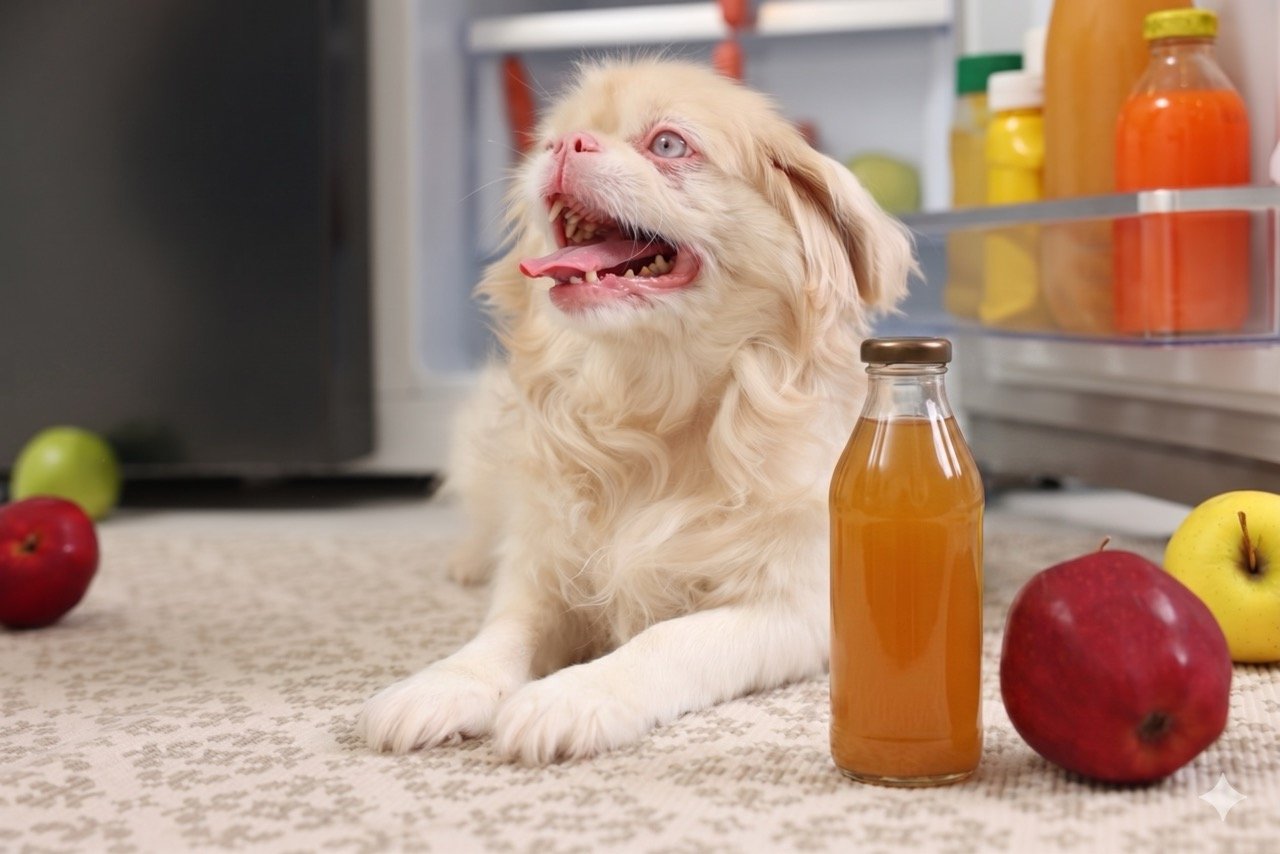
If your dog is suffering from relentless itching, obsessive paw licking, or recurring skin issues, I know exactly how tempting it is to reach for a quick, natural cure. When my own rescue dog started chewing his paws raw, my first instinct was to scour the internet for immediate relief. In almost every forum and holistic pet group, one pantry staple is constantly praised as a miracle cure: apple cider vinegar for dogs.
- Is Apple Cider Vinegar Safe for Dogs?
- Does Apple Cider Vinegar Actually Work for Dogs?
- What People Say vs. What Science Says
- Benefits of Apple Cider Vinegar for Dogs
- Risks and Side Effects (What You Need to Know)
- How to Use Apple Cider Vinegar for Dogs Safely
- How Much Apple Cider Vinegar for Dogs?
- Apple Cider Vinegar for Dogs’ Itchy Skin
- Apple Cider Vinegar for Dogs’ Paws
- Apple Cider Vinegar for Yeast Infections
- When NOT to Use Apple Cider Vinegar
- Better Alternatives to Apple Cider Vinegar
- When to See a Vet
- References & Further Reading
- Frequently Asked Questions (FAQ)
Apple cider vinegar (ACV) is heavily promoted as a natural, do-it-all treatment for everything from flea prevention to severe yeast infections. But as pet parents, we have to ask: is it actually safe, or is it just internet hype?
The truth is, the internet is flooded with exaggerated claims. In this vet-backed guide, we are stripping away the myths. We will explore the honest benefits, the very real risks, and exactly how to use apple cider vinegar safely without accidentally harming your dog’s delicate skin barrier.
Is Apple Cider Vinegar Safe for Dogs?
The short answer to is apple cider vinegar safe for dogs is: yes, but only when used correctly and heavily diluted.
Apple cider vinegar is not inherently toxic to dogs. However, it is highly acidic. Because of its high concentration of acetic acid, using it incorrectly is dangerous. If applied directly to the skin without water, or fed in large quantities, its acidity can cause severe gastrointestinal issues, chemical burns, or intense skin irritation.
ACV should be viewed as a supplementary, temporary tool—not a harmless water substitute. It must always be diluted and treated with caution.
Does Apple Cider Vinegar Actually Work for Dogs?
Here is the hard, vet-backed reality that many holistic blogs skip over: there is no strong scientific proof that apple cider vinegar cures major canine health issues.
As highlighted in comprehensive veterinary guidance published by Chewy’s educational team, while ACV has some mild topical benefits, there is no strong scientific proof that it works as a cure-all, and applying it incorrectly or without dilution can actually cause severe skin irritation.
While there is a massive amount of mixed anecdotal evidence from owners who swear by it, clinical veterinary studies do not support ACV as a standalone treatment for severe infections. It is believed that the acetic acid alters the pH balance of the skin, making it an inhospitable environment for bacteria. While this makes sense in theory, the clinical results are often underwhelming compared to modern veterinary medicine.
What People Say vs. What Science Says
To clear up the confusion, here is a breakdown of the most common internet claims compared to actual veterinary science:
| The Myth (What People Say) | The Reality (What Science Says) |
|---|---|
| “ACV completely cures dog yeast infections.” | False. It mildly alters surface pH, which can suppress light yeast growth, but it cannot cure a deep, systemic Malassezia infection. |
| “It kills all fleas and ticks naturally.” | False. Fleas dislike the smell and taste of vinegar, acting as a mild repellent, but it is not an effective insecticide and will not kill an active infestation. |
| “Adding it to their water daily is completely safe.” | Misleading. Daily consumption of highly acidic liquids can slowly erode tooth enamel and upset a dog’s gastrointestinal tract. |
| “It is the best treatment for itchy hot spots.” | Dangerous. Applying ACV to a raw, scratched hot spot will cause excruciating chemical burns. It should only be used on unbroken skin. |
Benefits of Apple Cider Vinegar for Dogs
When appropriately diluted, organic, unpasteurized ACV (the kind with the cloudy “mother”) can offer a few mild, supportive benefits for your dog.
May Help With Itchy Skin
For minor, surface-level irritation, a heavily diluted ACV spray can act as a mild astringent, helping to cool the skin and temporarily relieve the sensation of itching.
May Reduce Bacteria and Yeast
Because of its natural antibacterial properties and low pH, wiping down your dog’s paws or skin folds with a diluted vinegar solution may help suppress mild, early-stage yeast and bacteria growth before it becomes an infection.
May Support Digestion
Some holistic practitioners believe that adding microscopic amounts of ACV to a dog’s food can introduce beneficial probiotics (from the “mother”) that support gut health, though results vary heavily from dog to dog.
May Help Odor
If your dog has a musty “corn chip” smell, a diluted ACV rinse after a bath can help neutralize the odor by balancing the skin’s natural pH.
Risks and Side Effects (What You Need to Know)
This is the critical section that many DIY remedy guides completely miss. Because ACV is an acid, the risks of misuse are very real.
Skin Irritation
Applying undiluted apple cider vinegar directly to a dog’s coat will strip their natural oils and cause severe, burning skin irritation. It can actually make your dog much itchier than before.
Vomiting and Diarrhea
If a dog ingests too much ACV, the intense acidity will upset their stomach, leading to painful cramping, vomiting, and diarrhea.
Dental Damage
Frequently adding vinegar to a dog’s drinking water can slowly erode the protective enamel on their teeth over time, leading to painful dental disease.
Not Safe for Open Wounds
Never apply ACV to raw, scratched, or bleeding skin. It will burn excruciatingly. If your dog has scratched themselves raw, you need a soothing dog rash treatment, not an acid.
How to Use Apple Cider Vinegar for Dogs Safely
If you decide to try this home remedy, dilution is the golden rule. Here are the safest application methods.
1. ACV for Itchy Skin (Spray)
To create a soothing topical spray, mix a solution of 50% pure water and 50% apple cider vinegar in a clean spray bottle. You can spritz this lightly onto your dog’s intact skin to soothe minor environmental allergies. Again, ensure the skin is not broken or bleeding before spraying.
2. ACV for Dog Paws (The Soaking Method)
If you need an apple cider vinegar for dog paws recipe, create a soaking bath. Mix one part ACV with two parts warm water in a small tub or basin. Let your dog stand in the mixture for 3 to 5 minutes. Pat their paws completely dry afterward. This is excellent for washing away pollen and suppressing mild paw yeast.
3. ACV in Drinking Water
Many owners ask, can I put apple cider vinegar in dog water? You can, but only in very small amounts, and not daily. Add no more than a few drops to a large bowl of water. Always provide a second bowl of plain, fresh water so your dog has a choice; many dogs hate the taste of vinegar and will dehydrate themselves rather than drink it.
How Much Apple Cider Vinegar for Dogs?
If you are adding ACV to their food or water for internal benefits, the dosage must be strictly limited based on their weight:
- Small Dogs (under 15 lbs): Just a few drops to 1/8 teaspoon.
- Medium Dogs (15–40 lbs): 1/4 teaspoon.
- Large Dogs (over 40 lbs): 1/2 teaspoon.
Never exceed these amounts, and always monitor your dog for gastrointestinal upset after introducing it.
Apple Cider Vinegar for Dogs’ Itchy Skin
When dealing with apple cider vinegar for dogs itchy skin, it is best used as a preventative rinse rather than a cure. After bathing your dog, pouring a diluted 50/50 ACV and water rinse over their back (avoiding the eyes and face) can help remove residual shampoo and balance the skin barrier. However, if your dog is suffering from chronic, severe allergies, ACV will not be enough. You will need a dedicated, vet-approved dog itchy skin treatment to provide true relief.
Apple Cider Vinegar for Dogs’ Paws
Using apple cider vinegar for dogs paws is arguably its most effective application. Dogs sweat through their paw pads, creating a dark, moist environment perfectly suited for yeast. Wiping their paws with a diluted ACV solution after a muddy walk physically removes allergens and makes the paws temporarily inhospitable to yeast overgrowth, naturally reducing their urge to lick.
Apple Cider Vinegar for Yeast Infections
The internet loves to claim that apple cider vinegar for dogs yeast infections is a miracle cure. The important truth is that while it may help manage very mild, early-stage yeast imbalances on the surface of the skin, it is NOT a real medical treatment for a full-blown infection.
Veterinary consensus shows that vinegar does not improve severe fungal dermatitis significantly enough to replace prescription antifungals. If your dog’s skin smells strongly of yeast, is greasy, or has thick elephant-like skin, a vinegar bath will not cure it.
When NOT to Use Apple Cider Vinegar
ACV is not a universal remedy. You must absolutely avoid using it in the following scenarios:
- Open Wounds: Applying acid to broken skin is incredibly painful and actively delays healing.
- Severe Infections: Deep staph infections or heavy yeast overgrowths require antibiotics or prescription antifungals from a vet.
- Sensitive Skin: Hairless breeds or dogs with genetically sensitive skin can easily suffer from chemical burns.
- Puppies: A puppy’s skin barrier is far too delicate for acidic treatments.
Better Alternatives to Apple Cider Vinegar
If you are dealing with persistent skin issues, there are far more effective, scientifically proven alternatives to ACV in your pantry or at the pet store.
For immediate itch relief, upgrading to the best shampoo for dog skin (specifically those containing colloidal oatmeal or chlorhexidine) will provide vastly superior results without the risk of acid burns.
If your dog is battling a persistent issue, exploring our comprehensive guide to dog skin problems will help you identify whether you are dealing with food allergies, environmental triggers, or a true dog skin infection that requires veterinary intervention.
When to See a Vet
Home remedies like apple cider vinegar are meant for minor, everyday maintenance. If your dog is losing hair, developing oozing sores, smells foul, or is scratching so much that they cannot sleep, it is time to put the vinegar away and call your veterinarian. Delaying professional care while trying DIY remedies often allows a minor irritation to mutate into a painful, expensive, and severe infection.
References & Further Reading
- Chewy Education: Apple Cider Vinegar for Dogs: Pet Diet Tips and Safety
- American Kennel Club (AKC): Home Remedies for Itchy Dogs and Skin Soothing
- PetMD: The Truth About Natural Flea Control and Remedies
Frequently Asked Questions (FAQ)
How much apple cider vinegar should I give my dog?
If given orally, the dosage must be very small to prevent stomach upset. Small dogs should only have a few drops, medium dogs a 1/4 teaspoon, and large dogs a 1/2 teaspoon, always mixed well into their food or highly diluted in water.
Can I put ACV in my dog’s water?
Yes, you can put a very small amount of ACV in your dog’s water, but it is not recommended for daily use as the acid can damage their tooth enamel. Always provide a second bowl of plain water, as many dogs dislike the taste of vinegar and will refuse to drink it.
Does ACV stop itching?
A diluted ACV spray (50% water, 50% ACV) can temporarily soothe minor itching caused by dry skin or light environmental allergies by balancing the skin’s pH. However, it will not stop severe itching caused by fleas, mites, or deep bacterial infections.
How often can I use ACV on my dog?
For topical use, such as a paw soak or a post-bath rinse, using a highly diluted ACV solution once a week is generally safe for dogs with healthy, intact skin. Using it more frequently can strip the skin of natural oils and cause severe dryness.
Can ACV treat yeast infections?
ACV can help create an acidic environment that suppresses mild yeast growth on the surface of the skin or paws. However, it is not a cure for a full-blown yeast infection (Malassezia dermatitis), which requires prescription antifungal medications from a veterinarian.