
Dog ear infections can cause head shaking, scratching, odor, discharge, redness, and pain. These signs tell you that an ear needs attention, but they do not identify the cause. Allergies, yeast, bacteria, mites, and foreign material can produce overlapping symptoms.
Seek prompt veterinary care for head tilt, loss of balance, unusual eye movements, difficulty walking, facial weakness, or severe pain. Do not wait for a routine cleaning appointment if these signs develop.
This guide explains what to observe and how to prepare for veterinary assessment. It is general information, not a diagnosis or an individual treatment plan.
What the symptoms can—and cannot—tell you
| What you notice | Useful detail to record | What it cannot establish |
|---|---|---|
| Repeated scratching or head shaking | When it started; one ear or both; whether it followed a walk, bath, or swim | Whether the cause is infection, allergy, or something lodged in the ear |
| Discharge or a new odor | Color, amount, and whether it is changing | The organism involved; color and smell are not reliable home diagnostic tests |
| Redness, swelling, or pain | Whether your dog avoids touch or normal activities | How far into the ear the problem extends |
| Head tilt or balance changes | When they began and any difficulty walking | The diagnosis; these signs need prompt professional assessment |
Look only at what you can see comfortably. Do not force a painful ear open or put an object into the canal to investigate. A dog that normally tolerates handling may react defensively when in pain.
What is an ear infection?
Otitis externa means inflammation of the external ear canal. Inflammation can occur without a bacterial infection. An underlying problem may alter the ear environment and allow yeast or bacteria normally present in small numbers to overgrow. Treatment therefore needs to address the cause as well as any secondary infection. See the Merck Veterinary Manual overview of otitis externa.
Otitis media affects the middle ear; otitis interna affects the inner ear. Deeper disease can require additional investigation. Inner-ear involvement can affect balance, although other conditions can also cause balance problems. The Merck guide to middle- and inner-ear disease explains these distinctions.
Why ear problems develop or keep returning
- Allergies: allergic inflammation can affect the ears, sometimes alongside itching elsewhere. Repeated treatment of secondary microbes may not control the underlying allergy.
- Parasites or foreign material: mites or plant material can irritate the ear. Sudden symptoms in one ear are useful history for your vet, not proof of a particular cause.
- Moisture and anatomy: swimming, bathing, or a narrow canal can contribute to a less healthy ear environment in susceptible dogs.
- Chronic changes: persistent inflammation can thicken or narrow the canal, making management more difficult.
- Other disease: growths, skin conditions, or middle-ear disease may require investigation, particularly with recurrent or one-sided symptoms.
If your dog also has skin irritation, record where it occurs. Our dog skin problems guide offers background for that conversation. The AAHA allergic skin disease guidelines describe a structured approach to investigating and managing allergic disease.
What happens at the veterinary appointment?
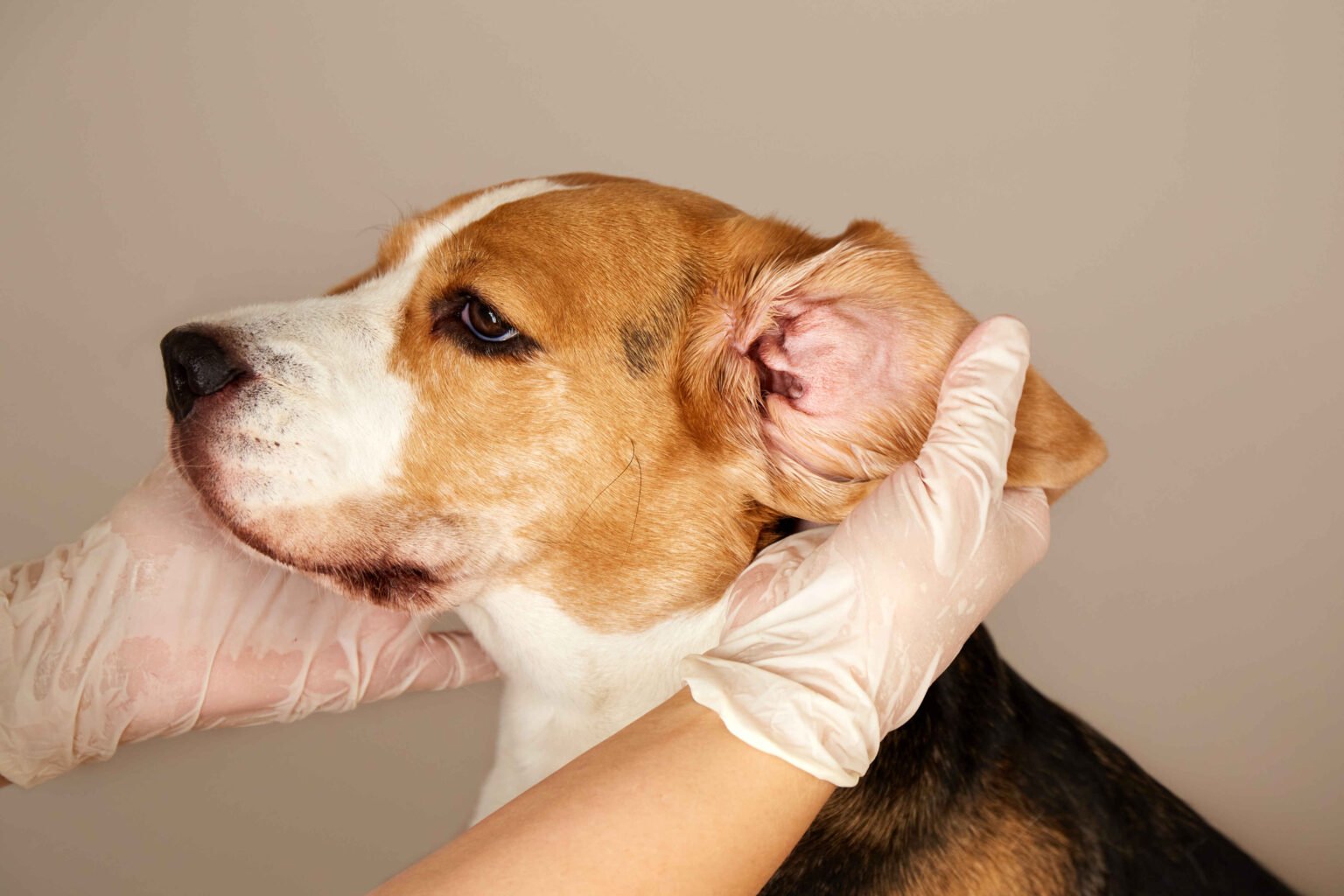
The examination usually combines a history, assessment of the ears and skin, and examination of the canal with an otoscope. A sample examined under a microscope—ear cytology—can help identify yeast, bacteria, and inflammatory cells. A very painful or obstructed ear may need sedation or initial management before a complete examination is possible.
Culture, imaging, or other tests are selected according to the findings; they are not interchangeable with a visual inspection. Recurrent cases may require a broader investigation rather than another course of the same drops.
How treatment is chosen
There is no single product for every itchy or smelly ear. Treatment may include appropriate cleaning, medication directed at the organisms present, relief of inflammation and pain, and management of the underlying condition. The eardrum’s condition matters when selecting products.
Antibiotics do not treat every cause of ear discomfort. Do not reuse an old prescription, another pet’s medication, or a human ear product without veterinary advice. Follow the prescribed schedule and attend rechecks even if the ear looks better. Your vet can explain how recovery will be assessed and whether repeat sampling is needed.
Home care: agree on a specific plan
Until the ear has been assessed, keep water out during bathing and avoid swimming. Do not attempt deep cleaning or add homemade mixtures. The Merck pet-owner guide cautions that irritating remedies, including vinegar mixtures, can worsen an inflamed ear.
If home cleaning is recommended, ask the clinic to demonstrate it and write down:
- The exact cleaner and which ear or ears to treat.
- How often to clean and how cleaning fits around medication.
- What to do if your dog resists, appears painful, or develops a new symptom.
- The recheck date and whom to contact if treatment is not helping.
Do not push cotton swabs into the canal or force cleaning of a painful ear. Contact the clinic if cleaning causes substantial pain, bleeding, dizziness, or worsening symptoms.
Appointment worksheet: observations to bring
Copy this checklist into your phone or print the page. It is an observation record, not a diagnostic score. Do not delay urgent care to complete it.
| Record | Your notes |
|---|---|
| First noticed; left, right, or both ears | ________________ |
| Scratching, shaking, discharge, odor, or pain | ________________ |
| Any balance change, head tilt, or difficulty walking | ________________ |
| Recent baths, swimming, grooming, or walks through long grass | ________________ |
| Previous ear episodes and treatment response | ________________ |
| Current medication and anything already put in the ear | ________________ |
| Itching elsewhere, paw licking, or other changes | ________________ |
Useful questions include: What did the examination and cytology show? Is the eardrum visible and intact? Is home cleaning appropriate? What underlying cause should we investigate if this returns?
Recovery and prevention
Recovery time depends on the cause, severity, and whether deeper or chronic disease is present. A quieter dog or a less smelly ear does not by itself confirm that treatment is complete. Ask your vet for an expected follow-up plan rather than relying on a universal number of days.
Between episodes, become familiar with your dog’s normal ears so changes are easier to notice. Ask whether routine cleaning is needed; more frequent cleaning is not automatically better. For dogs that swim or have recurrent allergies, request an individual preventive plan.