
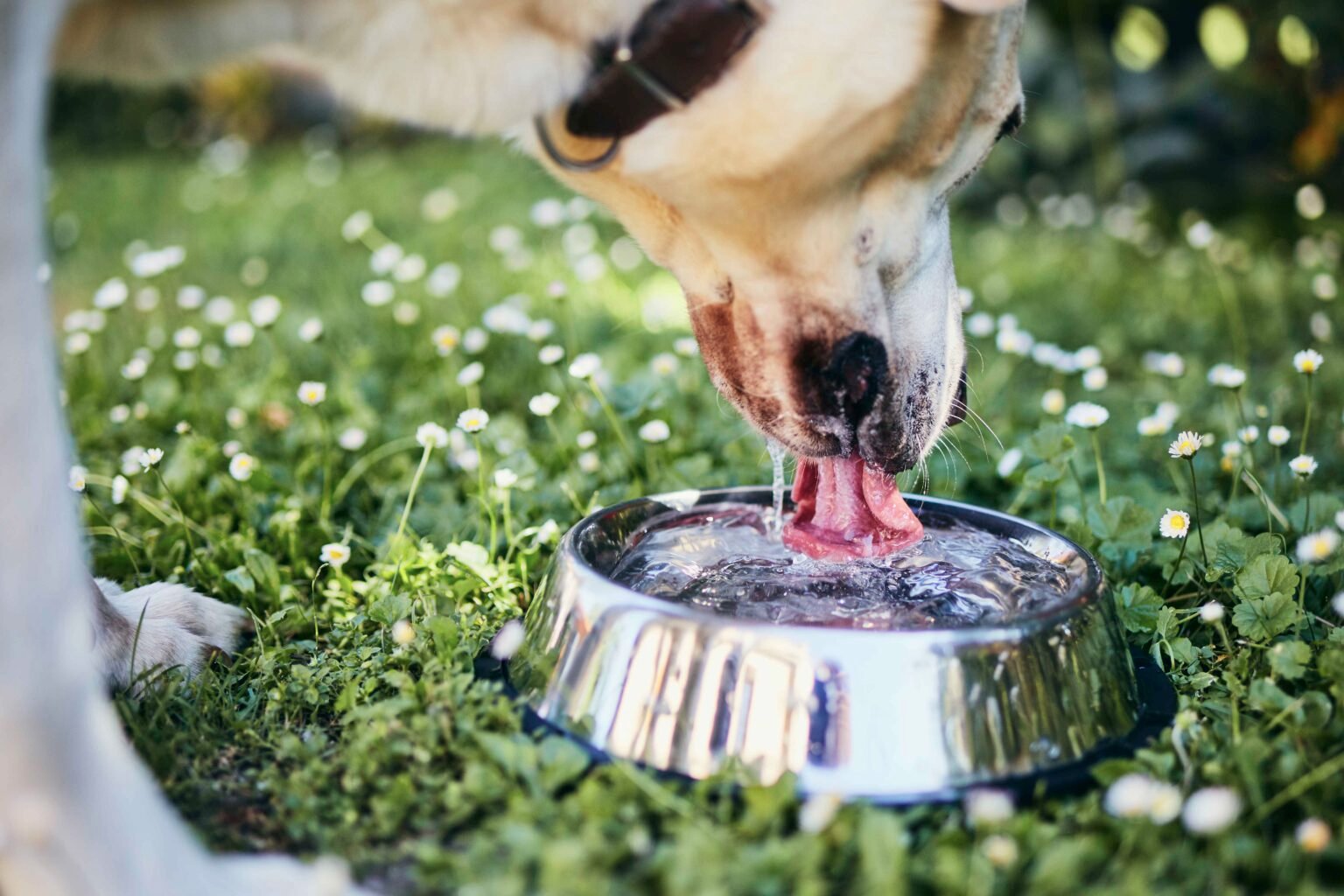
Excessive thirst in dogs can be caused by something as simple as hot weather, increased activity, or a diet containing very little moisture. However, persistent excessive drinking can also be a sign of diabetes, kidney disease, Cushing’s disease, medication effects, or other medical conditions. If your dog is consistently drinking much more than usual, especially alongside increased urination, weight loss, vomiting, weakness, or changes in appetite, contact your veterinarian.
In veterinary medicine, persistent excessive drinking (polydipsia) and excessive urination (polyuria) are recognized as classic early warning signs for several serious underlying health conditions. The challenge for owners is determining what is a temporary spike and what requires a medical investigation.
While daily water intake varies, drinking more than 100 milliliters per kilogram of body weight per day (about 1.5 ounces per pound) is generally considered a commonly used clinical threshold for excessive water consumption. If your dog is consistently drinking unusually large amounts of water, especially if they are also urinating more, losing weight, or acting lethargic, they require a veterinary examination to rule out underlying diseases.
How Much Water Should a Dog Drink?
Before you can identify excessive thirst, you need to know what normal water consumption looks like. There isn’t one perfect number that applies to every single dog, because daily water needs are influenced by several factors:
- Body weight: Larger dogs naturally need more water to stay hydrated.
- Diet: Dogs eating exclusively dry kibble will drink significantly more water from their bowl than dogs eating canned, moisture-rich wet food or a raw diet.
- Exercise and Activity: A working dog or a dog that just ran several miles will drink more than a sedentary senior dog.
- Hot weather: Dogs pant to cool down. Heavy panting results in significant fluid loss through evaporation, which must be replaced by drinking more water.
- Pregnancy and Lactation: A mother nursing a litter of puppies requires a massive increase in water intake to produce milk.
As a general estimate, current veterinary guidance (such as the Merck Veterinary Manual) suggests mammals in a thermoneutral environment typically require approximately 44–66 mL/kg/day. Drinking more than 100 mL/kg/day is commonly used as a clinical threshold for polydipsia (excessive drinking), though this is a guideline for investigation rather than a hard boundary between normal and abnormal.
What Does 100 mL/kg Look Like in Real Life?
To put that clinical guideline into perspective, here is what 100 mL/kg/day (approximately 1.5 ounces per pound) looks like for different dog sizes. If your dog is consistently drinking more than these amounts every day without an obvious environmental cause, it warrants a vet visit:
- 5 kg (11 lb) dog: Drinking more than 500 mL (about 2 cups or 16 oz) a day.
- 10 kg (22 lb) dog: Drinking more than 1 liter (about 4 cups or 33 oz) a day.
- 20 kg (44 lb) dog: Drinking more than 2 liters (about 8.5 cups or 67 oz) a day.
- 30 kg (66 lb) dog: Drinking more than 3 liters (about 12.5 cups or 101 oz) a day.
What Does Excessive Thirst in Dogs Look Like?
In many cases, owners do not measure the exact volume of water; instead, they notice behavioral changes that suggest their dog is drinking more than usual.
Signs that your dog is experiencing abnormal thirst include:
- Emptying the water bowl unusually quickly or multiple times a day.
- Pacing near the water bowl, whining, or asking for water repeatedly.
- Drinking from unusual sources, such as toilets, puddles, plant saucers, or the bathtub.
- Waking you up repeatedly during the night to drink water or ask to go outside to urinate.
- Suddenly urinating indoors (having accidents) despite being fully house-trained.
- Standing at the bowl and drinking continuously for long periods.
Excessive Thirst vs. Normal Increased Drinking
It is important to distinguish between a temporary increase and persistent polydipsia. A dog drinking an entire bowl of water immediately after a long hike in the summer sun is exhibiting a normal response to heat and exercise. However, a dog that drinks multiple bowls of water every day while resting indoors in an air-conditioned room is demonstrating a persistent issue that requires veterinary attention.
What Causes Excessive Thirst in Dogs?
In veterinary medicine, the combination of excessive thirst and excessive urination is known as PU/PD (polyuria/polydipsia). Polydipsia (drinking too much) is often the body’s compensatory response to polyuria (urinating too much), as the dog tries to replace fluids lost through the kidneys. Less commonly, the primary problem is a direct drive to drink.
Hot Weather, Exercise, or Increased Panting
As mentioned, these are normal, temporary, and harmless causes of increased water intake. The thirst will subside once the dog is rested and cooled down.
Diet and Food Moisture
A sudden switch from moisture-rich canned food to dry kibble can cause a noticeable increase in the amount of water your dog drinks from the bowl because dry food contains considerably less water.
Diabetes Mellitus
Diabetes is one of the most common causes of profound thirst in dogs. It occurs when the body does not produce enough insulin or cannot respond to it properly, causing sugar (glucose) to build up in the bloodstream. When blood glucose gets too high, it spills over into the urine, pulling large amounts of water with it. As described by Merck, this causes massive fluid loss, and the dog must drink excessively to prevent dehydration.
Kidney Disease
Healthy kidneys conserve water by concentrating urine. When the kidneys become damaged, they lose this ability. The dog begins producing large volumes of dilute urine and must drink constantly to compensate.
Note: Excessive thirst is a symptom of kidney disease, but thirst alone does not automatically mean your dog is in kidney failure.
Cushing’s Disease (Hyperadrenocorticism)
Cushing’s disease occurs when the adrenal glands produce too much cortisol. VCA Animal Hospitals notes that excess cortisol strongly stimulates thirst and urination, and also frequently causes increased appetite, panting, and an enlarged abdomen.
Addison’s Disease (Hypoadrenocorticism)
The opposite of Cushing’s, Addison’s disease occurs when the adrenal glands do not produce enough essential hormones. This can lead to an inability to retain sodium and water, resulting in increased urination and thirst, often accompanied by vomiting, diarrhea, and severe weakness.
Urinary Tract Problems
While a dog UTI (urinary tract infection) primarily causes frequent, small, uncomfortable urinations, severe infections that reach the kidneys (pyelonephritis) can alter drinking and urination patterns.
Liver Disease
The liver plays a vital role in metabolism. Advanced liver disease can disrupt the body’s fluid balance, occasionally leading to increased thirst and urination, though other symptoms like jaundice or lethargy are often present.
High Blood Calcium (Hypercalcemia)
Elevated calcium levels in the blood can interfere with the kidneys’ ability to concentrate urine. Hypercalcemia can be caused by certain cancers, parathyroid gland issues, or the ingestion of certain toxins.
Medications
Several common veterinary medications are known to cause increased thirst and urination as a side effect. These include:
- Corticosteroids (like prednisone).
- Diuretics (like furosemide).
- Certain anticonvulsants (like phenobarbital).
Diabetes Insipidus
This is a rare condition, completely different from “sugar diabetes” (Diabetes Mellitus). Merck explains that Diabetes Insipidus involves a problem with antidiuretic hormone (vasopressin) or the kidneys’ response to it, causing the dog to produce massive amounts of dilute urine and drink constantly.
Less Common Causes
Other potential differential diagnoses include specific types of cancer, severe electrolyte disturbances, or primary/psychogenic polydipsia—a rare condition where a dog drinks excessively without an underlying physical disease driving the thirst.
What Are the First Signs of Diabetes in a Dog?
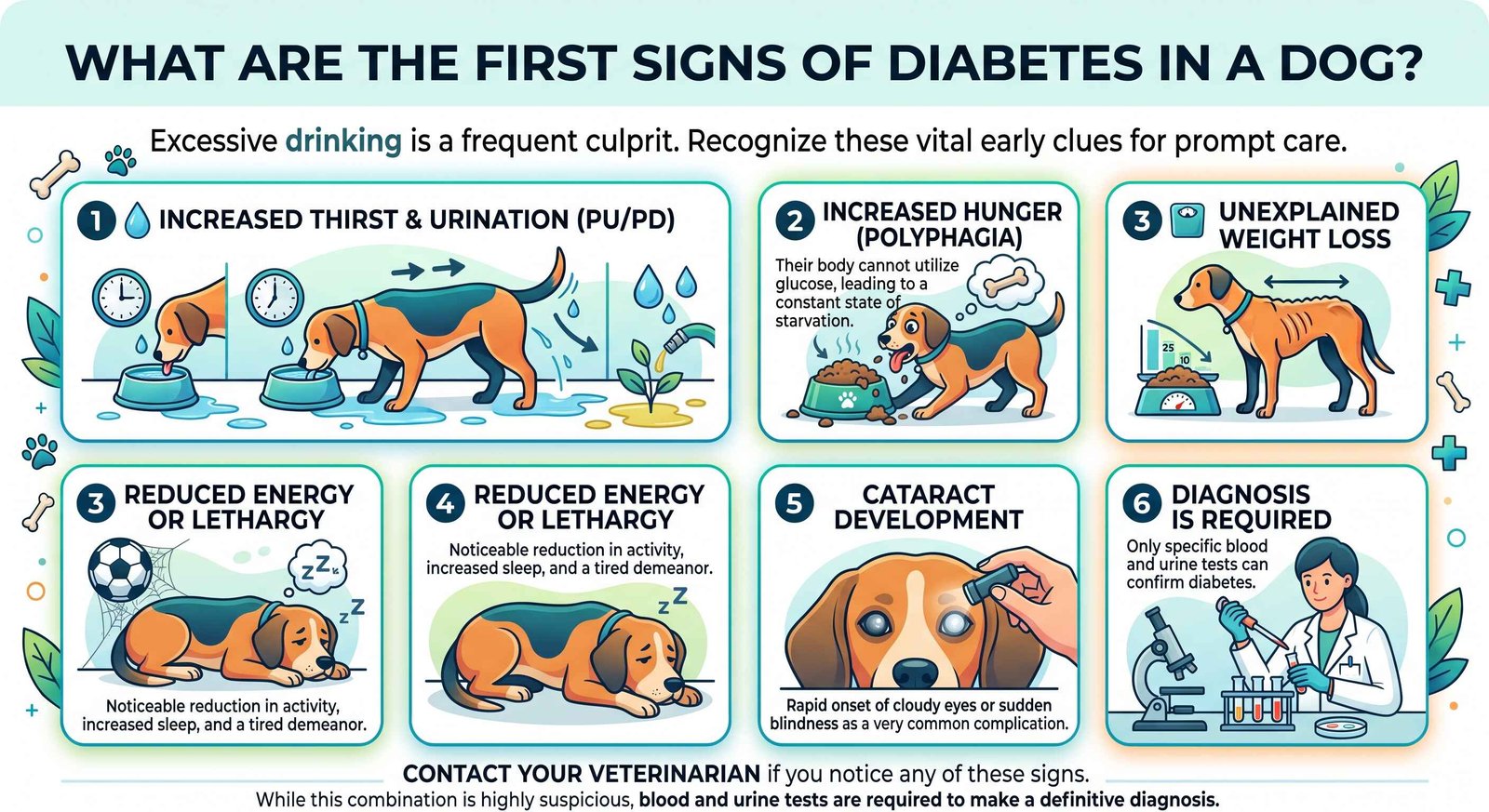
Because diabetes is a frequent culprit behind excessive drinking, owners often wonder what other clues to look for. The classic early signs include:
- Increased thirst and urination (PU/PD).
- Increased hunger (polyphagia): Because their body cannot utilize the glucose in their blood for energy, the dog feels constantly starved.
- Unexplained weight loss: Despite eating ravenously, the dog loses weight.
- Reduced energy or lethargy.
- Cataract development: The rapid development of cloudy eyes or sudden blindness is a very common complication.
While this combination is highly suspicious, these signs do not diagnose diabetes by themselves; blood and urine tests are required.
What Are the First Signs of Kidney Disease in Dogs?
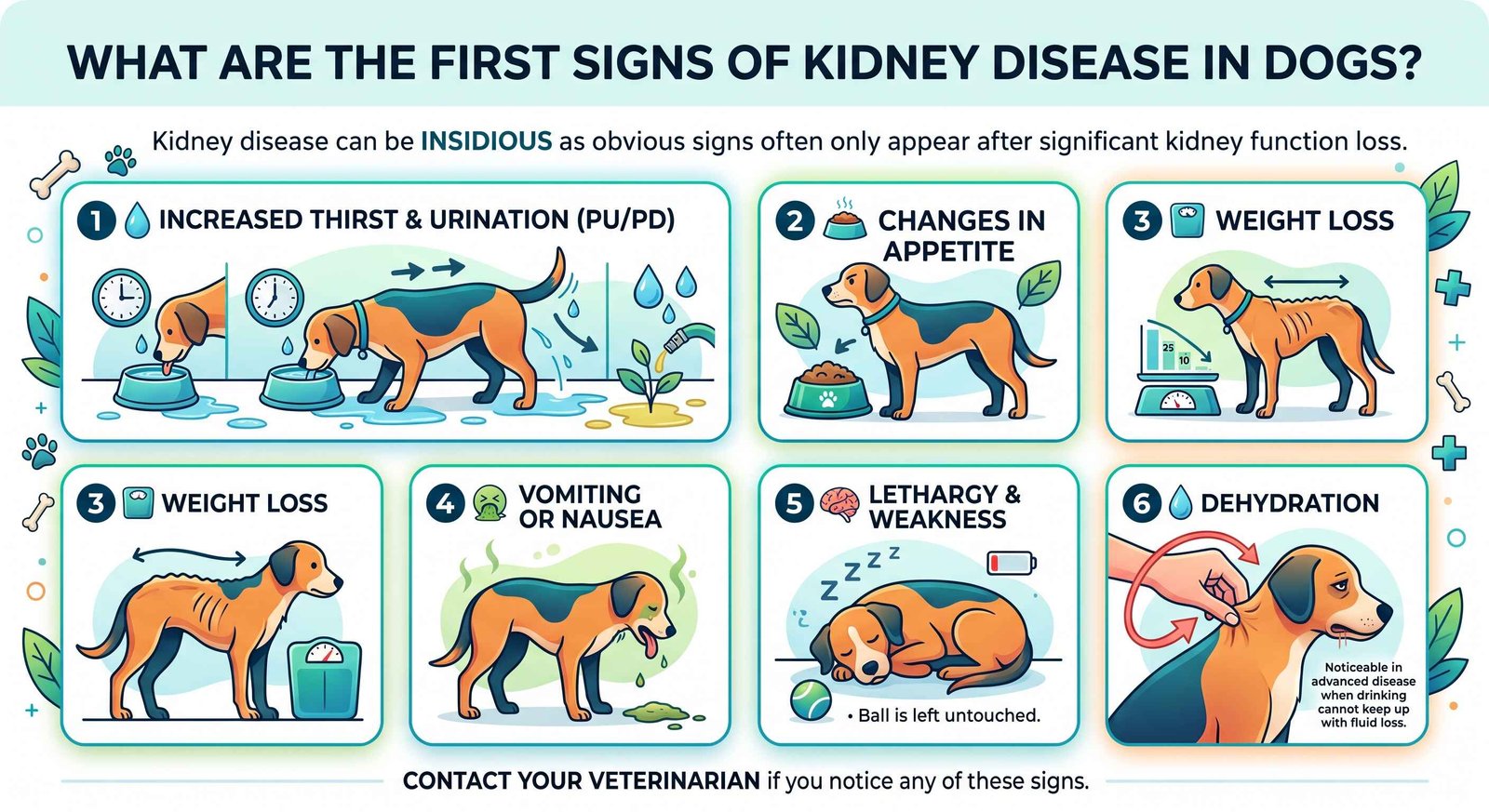
Kidney disease can be difficult to recognize early because clinical signs may not become obvious until substantial kidney function has been lost. Early signs include:
- Increased thirst and urination (PU/PD).
- Changes in appetite: The dog may become picky or lose their appetite entirely.
- Weight loss.
- Vomiting or nausea.
- Lethargy and weakness.
- Dehydration: Noticeable in more advanced disease when compensatory drinking cannot keep up with fluid loss.
What Are the First Signs of Cushing’s Disease in Dogs?
Cushing’s disease typically affects middle-aged to senior dogs and develops slowly over time. The classic signs include:
- Excessive thirst and urination.
- Increased appetite.
- Excessive panting, even when resting in a cool room.
- An enlarged, sagging abdomen (a “pot-belly” appearance).
- Muscle weakness in the hind legs.
- Hair loss or thinning, particularly on the trunk of the body.
- Recurrent urinary tract or skin infections.
Should I Be Concerned If My Dog Is Drinking a Lot of Water?
Determining whether to call the vet depends on the context and the presence of other symptoms.
Usually Less Concerning
- The dog recently exercised vigorously.
- It is an unusually hot day.
- The increase in thirst is temporary.
- You recently switched their diet to dry kibble.
- The dog is panting heavily due to stress or heat.
More Concerning (Requires Veterinary Attention)
- The increased thirst is persistent, lasting for several days.
- It is accompanied by a noticeable increase in urination or indoor accidents.
- The dog is losing weight.
- The dog has an increased or decreased appetite.
- The dog is vomiting or has diarrhea.
- The dog is showing signs of weakness or severe lethargy.
- There are noticeable changes in behavior or appearance.
- The dog is waking up in the middle of the night specifically to drink water.
When Is Excessive Thirst in Dogs an Emergency?
While persistent excessive thirst requires a scheduled vet visit, the symptom itself isn’t necessarily an immediate emergency. However, if the thirst is accompanied by severe systemic signs, your dog needs immediate, urgent care. Do not wait for a regular appointment if your dog exhibits:
- Collapse or severe weakness.
- Repeated, uncontrollable vomiting.
- Difficulty breathing or extremely labored panting.
- Signs of severe dehydration.
- An inability to keep water down (vomiting immediately after drinking).
- Bloody urine.
- Severe abdominal pain.
- Extreme lethargy.
- Seizures.
- A sudden, drastic change causing the dog to appear seriously unwell.
How Do Veterinarians Find the Cause of Excessive Thirst?
Because PU/PD can be caused by so many different conditions, your veterinarian will use a systematic approach to pinpoint the exact issue. The specific tests chosen depend on your dog’s history, physical examination, and initial blood and urine results.
Medical History
The vet will ask detailed questions, such as: How long has the drinking lasted? How much are they drinking? Has urination increased? What food and medications does the dog take? Have there been any changes in weight, appetite, or behavior?
Physical Examination
The vet will check the dog’s weight, hydration status, heart, lungs, and abdomen, looking for clues like an enlarged liver, painful kidneys, or skin changes.
Blood Tests
A comprehensive blood panel helps evaluate glucose levels (for diabetes), kidney function markers, liver enzymes, electrolyte balances, and red/white blood cell counts to check for infection or anemia.
Urinalysis
Analyzing the urine is critical. The vet will check the urine’s concentration and look for the presence of glucose, protein, blood, inflammatory cells, and bacteria.
Additional Targeted Tests
Depending on the initial findings, the vet may recommend further diagnostics, such as a urine culture, specific endocrine testing (for Cushing’s or Addison’s disease), abdominal ultrasound or X-rays, or blood pressure measurement.
How to Measure How Much Water Your Dog Drinks
Providing your veterinarian with an accurate measurement of your dog’s daily water intake is incredibly helpful.
To perform a simple 24-hour monitoring test at home:
- Measure a specific amount of water and pour it into your dog’s bowl in the morning.
- If you need to refill the bowl during the day, measure the exact amount you add and record it.
- If you have multiple dogs, you will need to separate them temporarily or supervise them closely.
- Account for all water bowls in the house.
- The following morning, measure the water remaining in the bowl and subtract it from the total amount you provided. This gives you the 24-hour intake.
- Repeat this for several days to get a reliable average, as consumption can vary.
- Note if the dog eats wet food or receives other significant sources of moisture.
- Provide this calculated daily volume to your veterinarian.
What You Should NOT Do If Your Dog Is Drinking Excessively
Crucial Safety Warnings
- Do NOT restrict your dog’s access to water unless a veterinarian specifically instructs you to do so. Excessive drinking can be a response to increased fluid loss, and restricting water can worsen dehydration.
- Do NOT assume it is simply behavioral: Always assume a physical medical cause first.
- Do NOT give human medications: Over-the-counter human drugs are often toxic to dogs.
- Do NOT start supplements as a substitute for diagnosis: Supplements will not fix undiagnosed diabetes or an active infection.
- Do NOT assume excessive thirst automatically means kidney failure: It is only one of many possibilities.
- Do NOT wait indefinitely: If the thirst is persistent or accompanied by other symptoms, schedule a vet appointment promptly.
Excessive Thirst in Dogs: What Different Symptom Combinations Can Mean
Noting the specific combination of symptoms your dog exhibits can help narrow down the possibilities. This table provides a quick reference, but remember: these combinations can occur with several conditions and cannot be used to diagnose a dog. Veterinary examination and appropriate testing are needed to determine the cause.
| If you notice excessive thirst with… | Possible causes to discuss with a vet |
|---|---|
| Increased urination | Diabetes, kidney disease, Cushing’s, medications |
| Weight loss | Diabetes, kidney disease, systemic disease |
| Increased appetite | Diabetes, Cushing’s |
| Panting + pot belly | Cushing’s |
| Vomiting + weakness | Kidney disease, Addison’s, other systemic illness |
| Hair loss + increased thirst | Cushing’s |
| Medication use | Drug-related increased thirst |
*These combinations can occur with several conditions and cannot be used to diagnose a dog. Veterinary examination and appropriate testing are needed to determine the cause.
Frequently Asked Questions About Excessive Thirst in Dogs
What is considered excessive thirst in a dog?
As a general clinical guideline, a dog drinking more than 100 milliliters of water per kilogram of body weight per day (about 1.5 ounces per pound) is typically considered to have excessive thirst (polydipsia).
How much water is too much for a dog per day?
While needs vary based on diet and exercise, a 10 kg (22 lb) dog consistently drinking more than 1 liter (about 4 cups) a day, or a 20 kg (44 lb) dog drinking more than 2 liters (about 8.5 cups) a day, should be evaluated by a veterinarian.
How can I tell if my dog is drinking too much water?
Look for persistent behavioral changes, such as emptying the water bowl unusually fast, begging for water, drinking from toilets or puddles, waking up at night to drink, or having sudden urinary accidents indoors.
Is excessive thirst in dogs an emergency?
Persistent thirst requires a scheduled vet visit, but it is not usually an immediate emergency on its own. However, if the thirst is accompanied by severe lethargy, repeated vomiting, collapse, or inability to keep water down, it becomes an urgent medical emergency.
What are the first signs of kidney failure in dogs?
Early signs often include increased thirst and urination, subtle weight loss, a decreased or picky appetite, occasional vomiting, and lethargy.
What are the first signs of diabetes in a dog?
The classic early signs of canine diabetes are increased thirst, increased urination, an unusually ravenous appetite, and unexplained weight loss. Some dogs may also develop cloudy eyes (cataracts) quickly.
What are the first signs of Cushing’s disease in dogs?
Early indicators of Cushing’s disease include excessive drinking and urination, an increased appetite, excessive panting while resting, a “pot-bellied” appearance, and symmetrical hair loss or thinning skin.
What can be mistaken for kidney failure in dogs?
Because the primary symptoms are increased thirst and urination, kidney failure can easily be mistaken for diabetes, Cushing’s disease, liver disease, high blood calcium, or the side effects of certain medications. Blood and urine tests are required to differentiate them.
Will a dog with kidney disease always drink a lot of water?
In the early to middle stages, dogs usually drink excessively to compensate for fluid lost through dilute urine. However, in the very late, end-stages of kidney failure, a dog may feel too nauseous or weak to drink, leading to severe dehydration.
Can medications make a dog excessively thirsty?
Yes. Several common veterinary medications, particularly corticosteroids (like prednisone), diuretics (like furosemide), and certain anti-seizure drugs (like phenobarbital), frequently cause increased thirst and urination as a known side effect.
Can hot weather cause a dog to drink more water?
Yes. Dogs cool themselves primarily by panting, which evaporates moisture from their respiratory tract. They must drink more water to replace this lost fluid, making increased thirst during hot weather completely normal.
Should I limit my dog’s water if they are drinking too much?
No, you should never restrict your dog’s access to water unless a veterinarian specifically instructs you to do so. If they are drinking excessively due to a medical condition, restricting water can quickly worsen dehydration.
Sources & Veterinary References
- Merck Veterinary Manual: Nutritional Requirements of Small Animals
- Merck Veterinary Manual: Diabetes Mellitus in Dogs and Cats
- Merck Veterinary Manual: Noninfectious Diseases of the Urinary System in Dogs
- VCA Animal Hospitals: Testing for Increased Thirst and Urination
- World Small Animal Veterinary Association (WSAVA): Global Nutrition Guidelines