


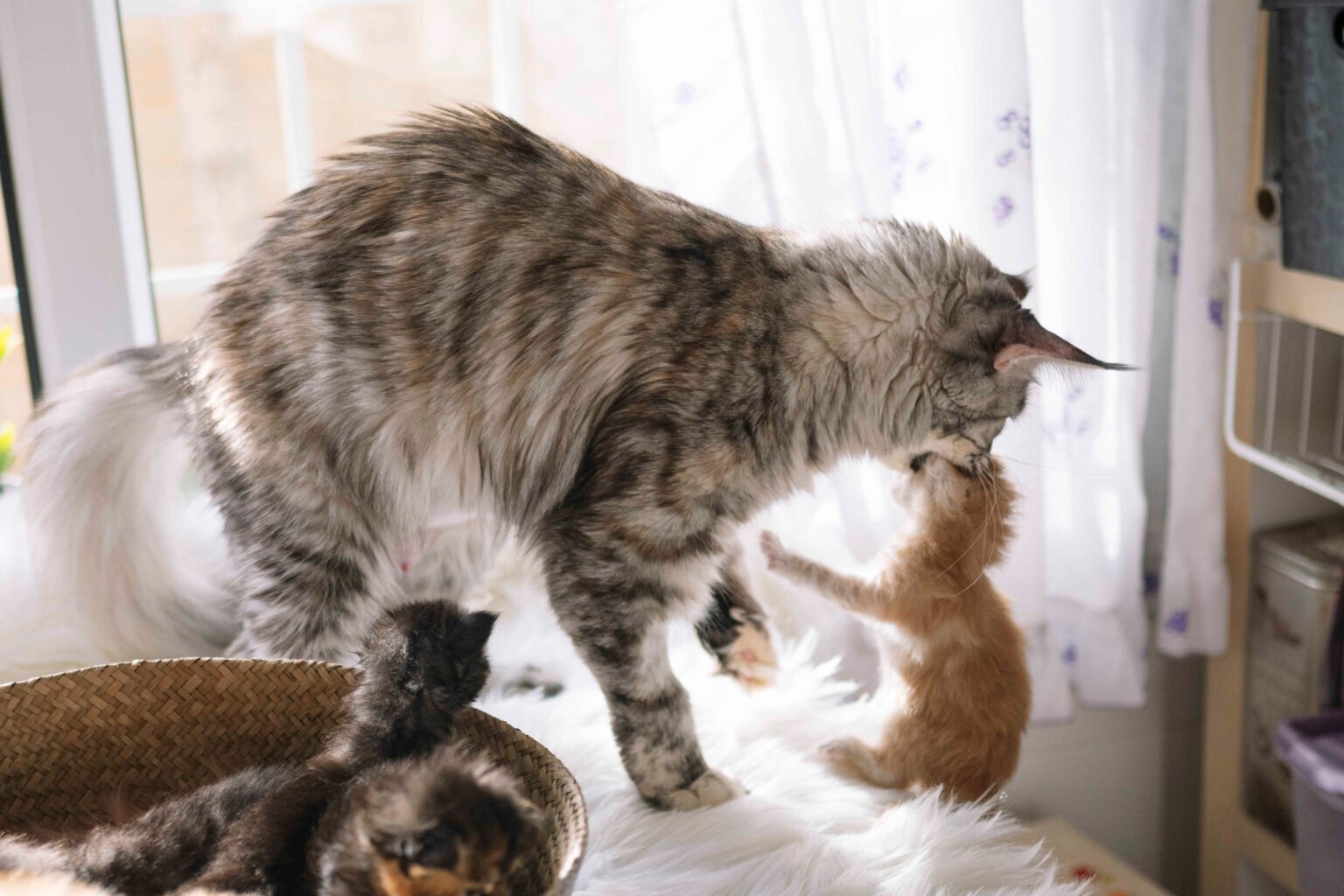
- Is It Normal for Cats to Move Newborn Kittens?
- Why Do Cats Move Their Kittens? 8 Common Reasons
- 1. Instinct to Protect (Predator Evasion)
- 2. Too Much Human Activity
- 3. The Nest Feels Unsafe or Exposed
- 4. Temperature Changes
- 5. A Dirty Nesting Area
- 6. Loud Noises
- 7. Threats From Other Pets
- 8. Stress After Birth
- Specific Moving Behaviors Explained
- Why Does My Cat Move Her Kittens to My Bed?
- Why Does My Cat Keep Moving Her Kittens?
- Why Does My Cat Move Her Kittens at Night?
- Why Does My Cat Move One Kitten at a Time?
- How Many Times Will a Mother Cat Move Her Kittens?
- Should You Stop Your Cat From Moving Her Kittens?
- When Should You Be Concerned? (Red Flags)
- Sources & References
- Frequently Asked Questions (FAQ)
You set up the perfect, cozy nesting box in a quiet corner of your bedroom. The birth went smoothly, and the new mother seems perfectly content. But a few days later, you wake up to find the box empty and the entire litter relocated to the back of a dark closet or under the living room sofa.
If you are frantically wondering why do cats move their kittens, take a deep breath. In the vast majority of cases, this is not a sign that something is wrong. Moving a litter is a deeply ingrained biological instinct that dates back to the wild ancestors of our domestic felines. However, understanding why she chose to move them can help you determine if her environment needs an adjustment.
Featured Snippet: Why Do Cats Move Their Kittens?Mother cats move their kittens primarily to protect them from perceived threats. The most common reasons include a nesting area that feels too exposed, too much human activity, temperature changes, loud noises, or a soiled nest. Moving the litter is a natural survival instinct designed to keep newborn kittens hidden, warm, and safe from predators.
Is It Normal for Cats to Move Newborn Kittens?
Yes, it is entirely normal. For a queen (a mother cat), raising neonates is a highly vulnerable time. In the wild, leaving a litter in one location for too long allows the scent of milk, urine, and feces to build up, which inevitably attracts predators.
Even though your indoor cat is perfectly safe from coyotes and owls, her DNA doesn’t know that. If she feels her current nest has been compromised by scent, noise, or light, her natural response is to relocate her family to a more secure location. For a deeper dive into natural feline instincts, check out our Cat Behavior Guide.
Why Do Cats Move Their Kittens? 8 Common Reasons
If your cat has suddenly relocated her litter, it is almost always due to one of the following eight environmental triggers. Here is a breakdown of each reason, along with actionable steps you can take to help.
1. Instinct to Protect (Predator Evasion)
As highlighted by resources from the American Veterinary Medical Association (AVMA), scent build-up is a wild cat’s worst enemy. Even if the box is relatively clean, a mother cat may move her kittens every few days simply because her biological clock tells her that staying in one place for too long is dangerous.
- What you should do:
- ✓ Allow her to move them if the new location is safe.
- ✓ Ensure the new spot is secure and out of foot traffic.
- ✓ Do not forcefully move them back, as this will only increase her anxiety.
2. Too Much Human Activity
This is the number one reason indoor cats move their litters. If you constantly check on the kittens, invite friends over to see them, or place the nesting box in a high-traffic area like a living room, the mother will feel dangerously exposed.
- What you should do:
- ✓ Reduce the number of visitors to zero for the first two weeks.
- ✓ Keep curious children away from the nesting room.
- ✓ Observe the litter quietly from a distance rather than leaning over the box.
3. The Nest Feels Unsafe or Exposed
Cats prefer to give birth and raise kittens in environments that mimic a cave-dark, enclosed, and protected on at least three sides. If her box is too large, lacks a “roof,” or is bathed in bright sunlight, she will seek out a dark closet or the space under a bed.
- What you should do:
- ✓ Provide a covered nesting box (like a large cardboard box with a small entry hole).
- ✓ Keep the lighting in the room very dim.
- ✓ Drape a breathable blanket partially over the box to create a canopy.
4. Temperature Changes
According to the Merck Veterinary Manual, newborn kittens cannot regulate their own body heat. If the nesting box is near a drafty window, an AC vent, or in direct, hot sunlight, the mother will move the kittens to prevent them from suffering from hypothermia or overheating.
- What you should do:
- ✓ Ensure the room remains at a stable, warm temperature (around 75-80°F for the first week).
- ✓ Move the box away from exterior doors, drafts, or direct HVAC vents.
- ✓ Provide a pet-safe heating pad set on low under half of the blankets, so they can crawl away if they get too warm.
5. A Dirty Nesting Area
While mother cats consume their kittens’ waste to keep the nest clean for the first few weeks, blankets can still become soiled with fluids from birth or spilled milk. A soiled nest breeds bacteria and attracts insects.
- What you should do:
- ✓ Layer several clean towels in the box before birth.
- ✓ Gently slide the top soiled towel out every day or two to reveal a fresh one beneath.
- ✓ Avoid using strong-smelling detergents when washing her bedding.
6. Loud Noises
Feline behavior guidelines outlined by the International Society of Feline Medicine (ISFM) emphasize that cats have incredibly sensitive hearing. A nesting box located near a loud television, a slamming door, a washing machine, or street noise can cause severe chronic stress for a nursing queen.
- What you should do:
- ✓ Relocate her primary box to the quietest room in the house.
- ✓ Close doors to muffle household noises.
- ✓ Ask family members to use quiet voices when near the room.
7. Threats From Other Pets
Even if your family dog or other cats are friendly, a mother cat will view them as lethal predators while she is nursing. If another pet is allowed to sniff the box or even enter the same room, she will urgently move her babies.
- What you should do:
- ✓ Strictly enforce a closed-door policy for the nesting room.
- ✓ Keep dogs entirely away from the area to prevent their scent from causing panic.
- ✓ Feed the mother cat in her private room so she doesn’t have to navigate past other pets.
8. Stress After Birth
Sometimes, the sheer exhaustion and hormonal shifts of birth cause postpartum anxiety. First-time mothers, in particular, may feel overwhelmed and pace the house, moving kittens out of pure confusion or nervous energy.
- What you should do:
- ✓ Keep her environment as calm and predictable as possible.
- ✓ Ensure she has unlimited access to high-calorie food and water directly next to the nest.
- ✓ If she seems frantic, call your vet.
Specific Moving Behaviors Explained

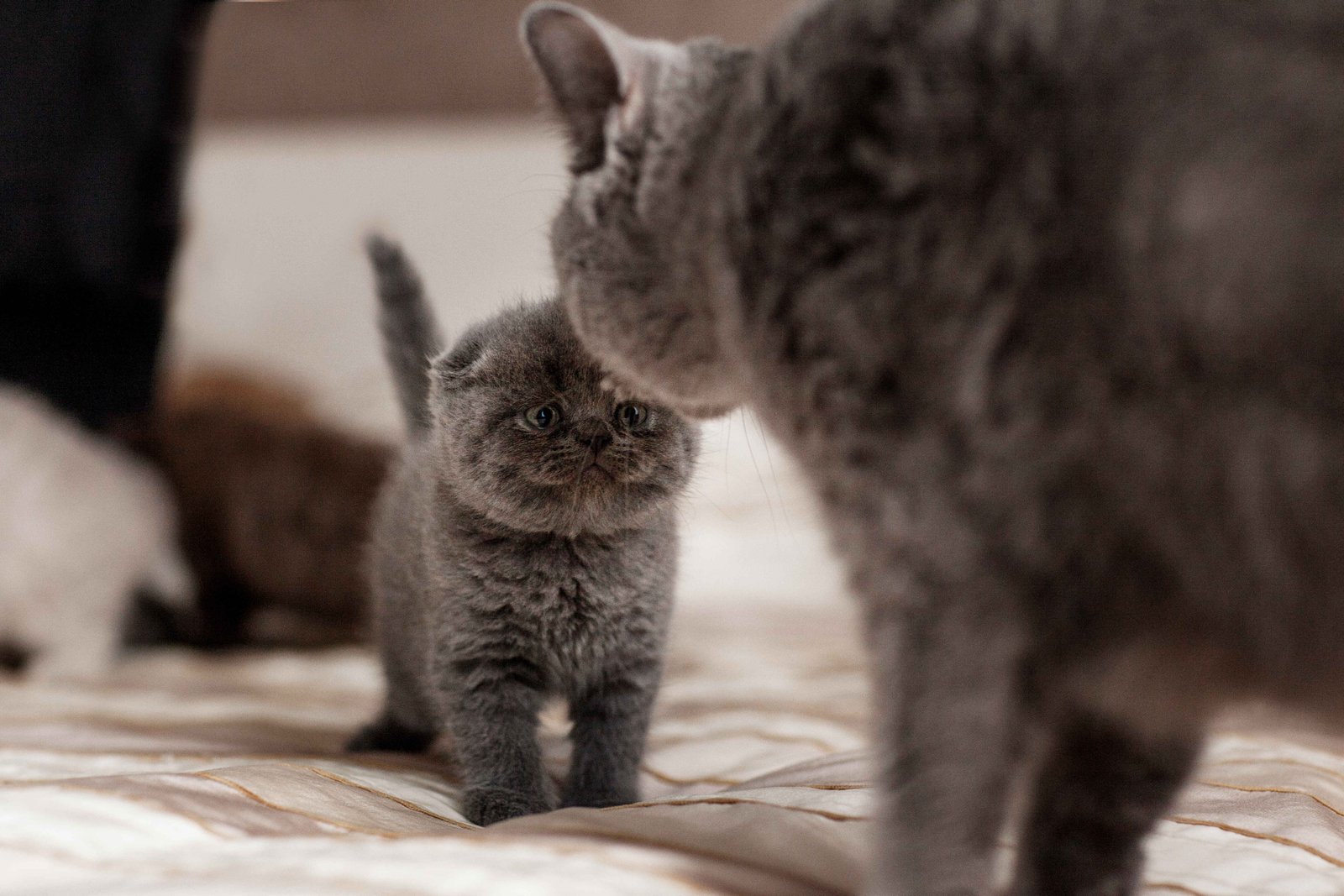
Search engines are full of very specific questions regarding this behavior. Here is what your cat’s specific moving patterns actually mean.
Why Does My Cat Move Her Kittens to My Bed?
Your bed is deeply saturated with your scent. If a mother cat feels insecure in her current nesting box, she may move her kittens to your bed because she views you as her ultimate protector and associates your scent with safety. While endearing, this is highly dangerous for the kittens as they could easily fall off the edge or be rolled on during the night. Carefully relocate them to a secure, floor-level box in your bedroom where she can still be near you.
Why Does My Cat Keep Moving Her Kittens?
Moving a litter once or twice is normal. However, if your cat is constantly moving her kittens, relocating them multiple times a day or pacing the room with a kitten in her mouth, she is experiencing severe anxiety. She feels there is no safe place in your home. You must immediately isolate her in a quiet, dark room, shut the door, and block all other pets and noises.
Why Does My Cat Move Her Kittens at Night?
Cats are crepuscular (most active at dawn and dusk) and often feel safest under the cover of darkness. The house is usually quietest at night, which provides the perfect, low-stress opportunity for her to scout a new, safer location without human interference.
Why Does My Cat Move One Kitten at a Time?
This is simple biology. A mother cat must use her mouth to carefully scruff a kitten by the back of the neck to carry it. She physically cannot carry more than one at a time. This process is time-consuming and leaves the rest of the litter vulnerable, which is why she only undertakes a move if she feels it is absolutely necessary.
How Many Times Will a Mother Cat Move Her Kittens?
There is no set number, but in the wild, a mother cat will typically move her litter 3 to 4 times before they are fully weaned. In a safe indoor environment, a cat may never move them at all, or she may move them once when they open their eyes and start becoming mobile.
Should You Stop Your Cat From Moving Her Kittens?
In most cases, no, you should not stop her.
If you catch her in the act, trying to physically take the kitten from her mouth or blocking her path will cause her extreme panic. If she has chosen a safe new spot (like a closet or under a bed), let her finish the move. Once she is settled, you can carefully move her food, water, and litter box to the new room.
When You MUST Intervene
You should only stop a mother cat from moving her kittens if she has chosen a location that is actively dangerous for the babies. Examples include:
- Inside a recliner or sleeper sofa mechanism.
- Near exposed wires or heavy machinery.
- Inside a washing machine or dryer.
- On a high shelf where kittens could fall to their deaths.
If she chooses a dangerous spot, you must gently retrieve the kittens and place them in a secure, covered box in a completely different, quiet room, then shut the door so she cannot return to the dangerous spot.
When Should You Be Concerned? (Red Flags)
While moving kittens is normal, frantic or erratic behavior is not. You should immediately call a veterinarian if you notice any of the following warning signs alongside the moving behavior:
- She Abandons a Kitten: If she moves the litter but purposefully leaves one kitten behind and ignores its cries, she may sense it is ill. The kitten will need immediate human intervention and bottle feeding.
- She Refuses to Nurse: If she moves the kittens but then sits far away from them, refuses to let them latch, or acts aggressive toward them, she may be suffering from painful mastitis or an infection.
- Excessive Panting and Pacing: Frantic pacing, muscle tremors, and heavy panting are classic signs of eclampsia (milk fever), a life-threatening drop in calcium that requires an immediate emergency vet visit.
Key Takeaways: Checklist for a Happy Mother
To prevent your cat from feeling the need to constantly move her babies, ensure you check off these environmental needs:
- ✓ Provide a box with a “roof” or canopy to make her feel hidden.
- ✓ Place the box in a low-traffic, dimly lit, completely quiet room.
- ✓ Absolutely no dogs, other cats, or loud children allowed near the nest.
- ✓ Keep the room warm and free from drafts.
- ✓ Change soiled bedding quickly and quietly.
- ✓ Ensure her food, water, and litter box are nearby so she doesn’t have to travel far.
Sources & References
- Merck Veterinary Manual: Management of the Neonatal Kitten and Maternal Behavior.
- International Society of Feline Medicine (ISFM): Feline Behavior and Stress Guidelines.
- American Veterinary Medical Association (AVMA): Understanding feline behavior for better diagnosis, stronger bonds
Frequently Asked Questions (FAQ)
What do I do if my cat keeps moving her kittens?
If your cat is constantly moving her kittens, she is highly stressed. You need to intervene by creating a single, secure environment. Prepare a dark, covered box in a quiet room, place the kittens inside, provide her food and water, and shut the door to keep out all other pets and household noises.
Will my cat reject her kittens if I touch them?
Unlike birds, cats generally will not reject their babies simply because they smell like humans. However, excessive handling causes the mother immense stress. You should only touch newborn kittens when absolutely necessary (like weighing them or changing soiled bedding).
Can a mother cat forget where she moved her kittens?
It is incredibly rare for a healthy mother cat to forget where she moved her kittens. Her maternal instincts and sense of smell are highly attuned. However, if she is suffering from a severe illness, high fever, or eclampsia, her cognitive function may decline, and she may abandon them.
How long can kittens be left alone?
Newborn kittens (under 2 weeks old) should never be left alone by the mother for more than 2 to 3 hours at a time. They require feeding every 2-3 hours and rely entirely on the mother for body heat and bathroom stimulation.
How many times will a mother cat move her kittens?
There is no strict rule, but many outdoor or feral cats will move their litter 3 to 4 times before the kittens are fully weaned to avoid predator detection. An indoor cat may move them once or twice, or perhaps never, depending on how secure she feels.
Should I move the kittens back?
No, you should not move the kittens back to the original spot unless her new chosen location is dangerous. If you move them back, she will feel her instincts are being challenged, which will drastically increase her anxiety and prompt her to just move them again.