


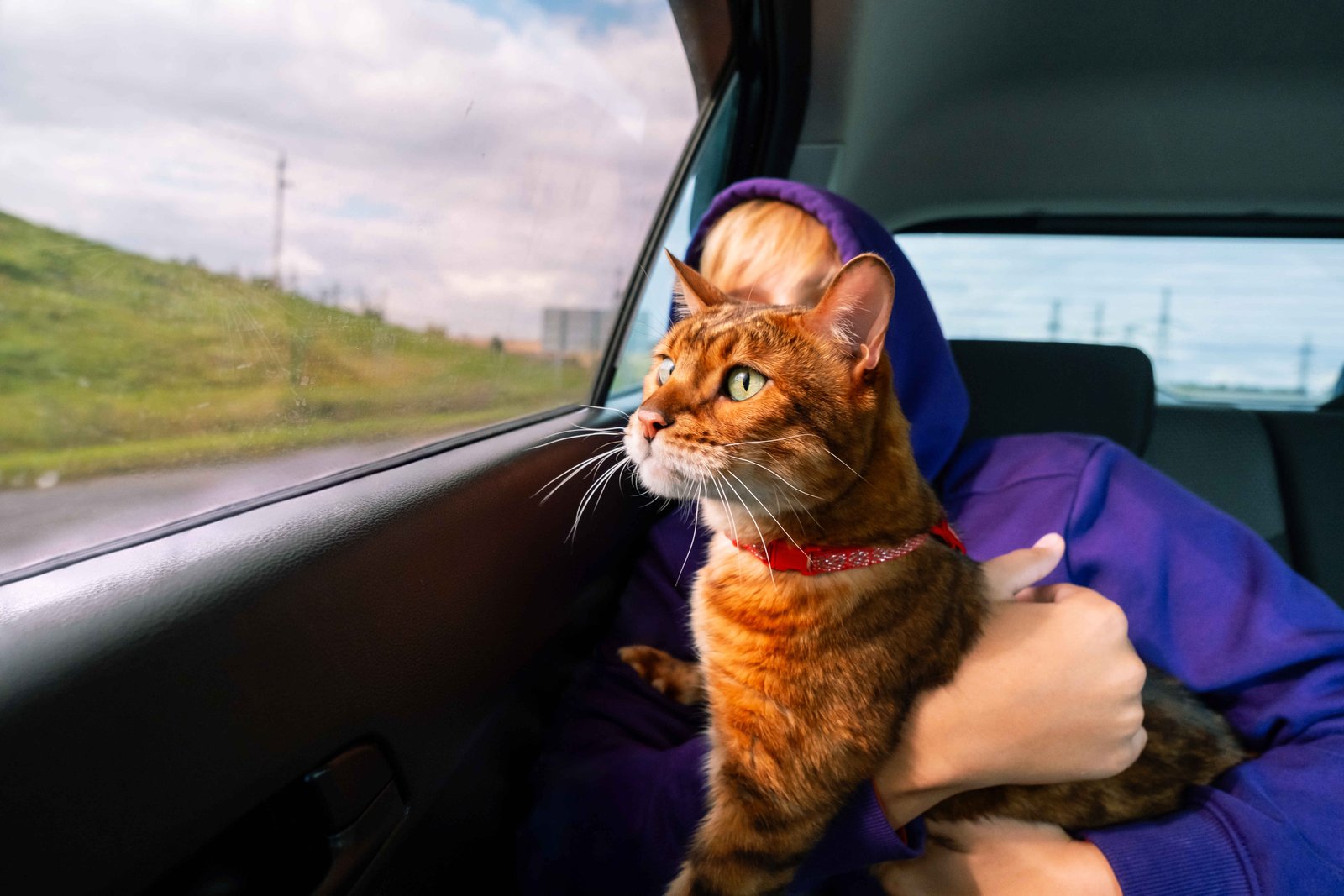
Figuring out how to travel with a cat can feel incredibly overwhelming, especially if you have an anxious feline. Unlike dogs, who often associate car rides with exciting adventures, cats are deeply territorial creatures who thrive on routine.
- How to Travel With a Cat (Quick Answer)
- What to Expect When Traveling With a Cat (Real-Life Reassurance)
- Step-by-Step Guide: Before, During, and After Cat Travel
- Phase 1: Before Travel (Preparation)
- Phase 2: During Travel (Managing the Journey)
- Phase 3: After Arrival (Acclimation)
- How to Travel With a Cat in a Car Safely
- How to Travel Long Distance With a Cat (Overnight & Hotel Tips)
- How to Travel With a Cat on a Plane
- How to Keep a Nervous Cat Calm During Travel
- Traveling With Multiple Cats (Tips for Stress-Free Cat Travel)
- What to Pack: The Ultimate Cat Travel Checklist
- Car vs Plane vs Train Travel Comparison
- Should You Sedate a Cat for Travel?
- Common Mistakes When Traveling With a Cat
- When NOT to Travel With a Cat
- Frequently Asked Questions (FAQ)
- Is it cruel to travel with a cat?
- Can cats use a litter box while traveling?
- How long can cats travel in a car?
- How do I travel internationally with a cat?
- Should cats be sedated for travel?
- Do cats get motion sickness in the car?
- How do I reduce cat travel anxiety naturally?
- References
Taking them out of their carefully scent-marked home and placing them into a moving vehicle is a massive disruption. However, relocating or taking a vacation with your furry best friend doesn’t have to be a nightmare. With the right preparation, specialized equipment, and a solid strategy, you can transform a terrifying ordeal into a smooth journey.
In this comprehensive guide, we will share a step-by-step system for traveling with cats, covering everything from car and plane travel to soothing travel anxiety, finding pet-friendly hotels, and packing the ultimate checklist.
How to Travel With a Cat (Quick Answer)
The best way to travel with a cat is to prepare them weeks in advance by acclimating them to a secure, well-ventilated carrier. During the trip, keep the environment calm, use synthetic pheromones to reduce anxiety, and plan quiet 15-minute rest stops every 2 to 3 hours for long road trips. Never let a cat roam freely in a moving vehicle.
What to Expect When Traveling With a Cat (Real-Life Reassurance)
If you are panicking about your upcoming trip, take a deep breath. Knowing what is normal can drastically reduce your own anxiety as a pet parent. Here is what you should realistically expect during transit:
- Excessive meowing is normal: Your cat will likely cry, yowl, or complain for the first 30 to 60 minutes of the trip. This is their way of expressing displeasure at the routine change. Eventually, the motion of the vehicle will encourage them to settle down and sleep.
- They may refuse to eat or drink: A stressed cat will prioritize survival over food. Do not panic if they refuse their favorite treats or water while the vehicle is moving.
- They may hold their bladder: It is incredibly common for cats to refuse to use a travel litter box until you reach your final, secure destination.
Understanding common cat behavior problems and baselines makes it easier to spot the difference between normal complaining and dangerous panic.
Step-by-Step Guide: Before, During, and After Cat Travel
Success relies on a structured process. Breaking your strategy into three distinct phases is the secret to successful feline travel.
Phase 1: Before Travel (Preparation)
Never pull the carrier out ten minutes before departure. Bring it into the living room at least two to three weeks before your trip. Remove the door so your cat can explore it freely, sleep in it, and associate it with high-value treats.
Phase 2: During Travel (Managing the Journey)
Once you are on the road or in the air, your job is environmental control. Play soft classical music, maintain a comfortable ambient temperature, and use a breathable cover over the carrier to limit visual overstimulation. Speak to them in a calm, soothing voice, but resist the urge to constantly open the carrier to pet them.
Phase 3: After Arrival (Acclimation)
When you reach your destination, do not let your cat loose in the entire house or hotel. Confine them to one small, quiet “base camp” room (like a bathroom or bedroom) with their litter box, food, and water. Let them decompress for 24 hours before allowing them to explore the rest of the space.
How to Travel With a Cat in a Car Safely
Learning how to travel with a cat in a car safely requires securing the carrier. The carrier should never be in the front seat where an airbag deployment could be fatal. Use the car’s seatbelt to strap the carrier securely into the back seat so it doesn’t become a dangerous projectile if you brake suddenly.
How to Travel Long Distance With a Cat (Overnight & Hotel Tips)
A cross-country relocation requires a highly structured timeline. Most healthy adult cats can comfortably handle 6 to 8 hours of driving in a single day. Pushing beyond this increases severe stress and dehydration risks.
Plan a quiet, 15-minute rest stop every 2 to 3 hours. Keep the car doors closed and windows rolled up. Offer water and place a disposable travel litter box on the floorboard while the engine is turned off.
Where Should Your Cat Stay Overnight?
If your trip spans multiple days, you must plan your overnight hotel stays meticulously:
- Book Pet-Friendly Hotels in Advance: Verify the hotel’s specific pet policy, as some only accept dogs.
- Inspect the Room First: Before bringing your cat inside, check the room for tight spaces where a scared cat could get hopelessly stuck (like behind a heavy armoire or under an immovable bed). Block these off with pillows or towels.
- Set Up the Base Camp: Place their travel litter box in the bathroom and their food/water nearby. Keep the environment quiet and let them decompress.
🚨 Crucial Travel Safety Warning
Never, under any circumstances, leave a cat alone in a parked car, even with the windows cracked. Temperatures inside a stationary vehicle can reach lethal, brain-damaging levels in less than fifteen minutes.
How to Travel With a Cat on a Plane
If you are flying, taking your cat in the cabin is highly preferred over cargo, which can be traumatizing and dangerous due to temperature fluctuations.
- Check Airline Policies: You must pay a pet fee and reserve their spot well in advance. Flights have strict caps on the number of pets allowed in the cabin.
- TSA Security Protocols: You will be required to remove your cat from the carrier and hold them while walking through the metal detector. Always have your cat wearing a secure harness and leash during this process so they cannot bolt into the crowded airport.
How to Keep a Nervous Cat Calm During Travel
If your feline is highly reactive, figuring out how to reduce cat travel anxiety involves sensory deprivation. Cats are stimulated by fast-moving scenery. Draping a lightweight towel over the carrier creates a dark, secure “cave” environment.
Additionally, utilize synthetic feline facial pheromones. Spray a product like Feliway directly into the carrier 15 minutes before departure to send biological comfort signals to their brain. Including an unwashed t-shirt that smells like you also provides immense comfort.
Traveling With Multiple Cats (Tips for Stress-Free Cat Travel)
Even if your cats are bonded best friends who cuddle at home, they must travel in separate carriers. The stress of travel can trigger “redirected aggression,” causing them to panic, lash out, and severely injure one another in a confined space. Place their carriers facing each other in the back seat so they can see and smell their companion safely.
What to Pack: The Ultimate Cat Travel Checklist
Being organized is your best defense against chaos on the road. Check off this essential gear before locking the front door:

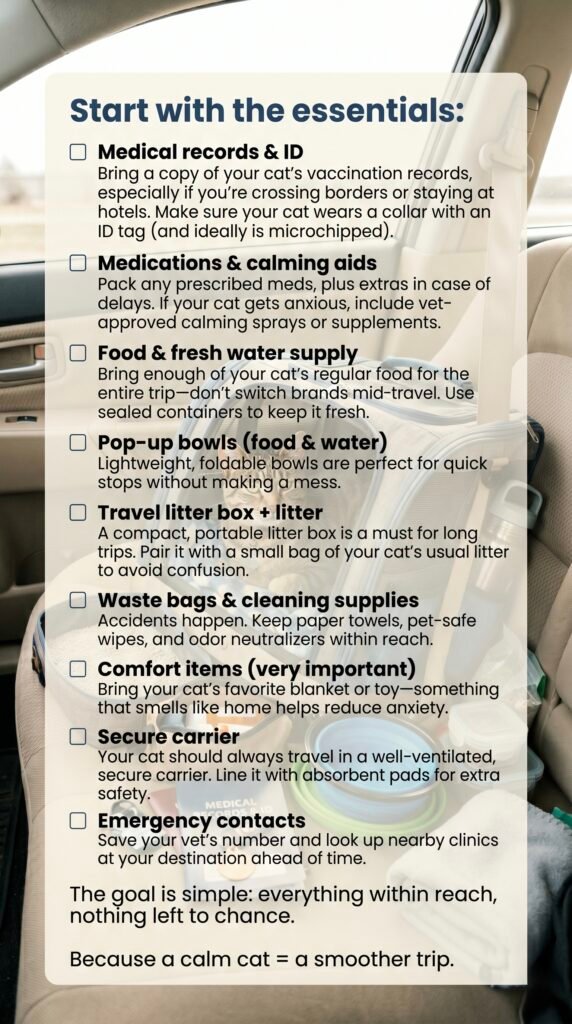
- A sturdy, well-ventilated cat carrier lined with absorbent pee pads.
- A well-fitted harness and leash (crucial for emergencies and TSA checks).
- A collapsible travel litter box, familiar litter, and waste bags.
- Pop-up silicone bowls and a gallon of fresh water from home (to prevent stomach upset from different municipal water sources).
- Their regular diet, high-value treats, and any daily medications.
- A physical copy of recent medical records and proof of rabies vaccination.
Car vs Plane vs Train Travel Comparison
| Mode of Transit | Pros | Cons |
|---|---|---|
| Car (Road Trip) | Total control over temperature, stops, and environment. Safest overall option. | Can take days to reach far destinations, causing prolonged mild stress. |
| Airplane (Cabin) | Very fast. The stress period is incredibly short compared to driving. | Loud engines, pressure changes, and strict airline carrier size limits. |
| Train | Smoother ride than a car, with less sudden braking. | Strangers nearby, limited privacy, and strict pet policies depending on the rail line. |
Should You Sedate a Cat for Travel?
When panic becomes dangerous, many owners ask: should cats be sedated for travel? Over-the-counter calming treats can take the edge off mild anxiety. However, for a truly terrified cat (open-mouth panting, vomiting, urinating in fear), you must consult your veterinarian.
Veterinarians frequently prescribe a mild, safe sedative called Gabapentin for cat travel anxiety. It dramatically lowers stress and promotes sleepiness without completely knocking the cat out, making the journey immensely safer.
Common Mistakes When Traveling With a Cat
- Opening the carrier outdoors: Never open a carrier at a rest stop or gas station unless the cat is securely harnessed and leashed. A spooked cat will bolt and can be lost forever.
- Feeding a heavy meal before leaving: This almost guarantees feline motion sickness and vomiting. Feed a light meal 3 to 4 hours before departure.
- Skipping the carrier acclimation phase: Forcing a cat into a carrier they haven’t seen since their last vet visit a year ago is a recipe for instant trauma.
When NOT to Travel With a Cat
Sometimes, leaving them home with a trusted, professional pet sitter is the safer choice. You should avoid traveling with a cat if they are highly pregnant, recovering from recent surgery, actively fighting a severe illness, or suffering from a heart condition where acute stress could be fatal.
Frequently Asked Questions (FAQ)
Is it cruel to travel with a cat?
No, it is not cruel to travel with a cat, provided it is necessary (like relocating) and you take the proper steps to manage their stress. By acclimating them to their carrier, controlling the environment, and using calming aids, you can ensure they remain safe and reasonably comfortable. However, frequently traveling with a cat purely for leisure is generally discouraged, as they prefer the stability of their home territory.
Can cats use a litter box while traveling?
Yes, but they rarely use it while the vehicle is actively moving. Provide a disposable travel litter box on the floorboard of the car during scheduled rest stops. Allow access while the doors are securely closed and the engine is off.
How long can cats travel in a car?
Most healthy adult cats can safely tolerate 6 to 8 hours of driving per day. Pushing beyond this limit significantly increases stress and dehydration risks. Plan your overnight hotel stops accordingly.
How do I travel internationally with a cat?
International travel requires extensive preparation. You will need an international health certificate endorsed by a USDA-accredited veterinarian, proof of microchipping, and up-to-date rabies vaccines. Depending on the destination, strict quarantine periods upon arrival may also apply.
Should cats be sedated for travel?
If your cat experiences extreme panic, open-mouth panting, or vomiting from fear, mild veterinary sedation is highly recommended for their well-being. Consult your vet about safe anti-anxiety medications like Gabapentin.
Do cats get motion sickness in the car?
Yes, cats can experience motion sickness. Signs include excessive drooling, lip smacking, vocalizing, and vomiting. To prevent it, ensure good airflow, keep the car cool, and avoid feeding a large meal right before the trip.
How do I reduce cat travel anxiety naturally?
To naturally reduce anxiety, cover their carrier with a breathable towel to block out scary visual stimuli. Spray the inside with synthetic calming pheromones (like Feliway) 15 minutes prior, and include an unwashed piece of your clothing for a familiar scent.