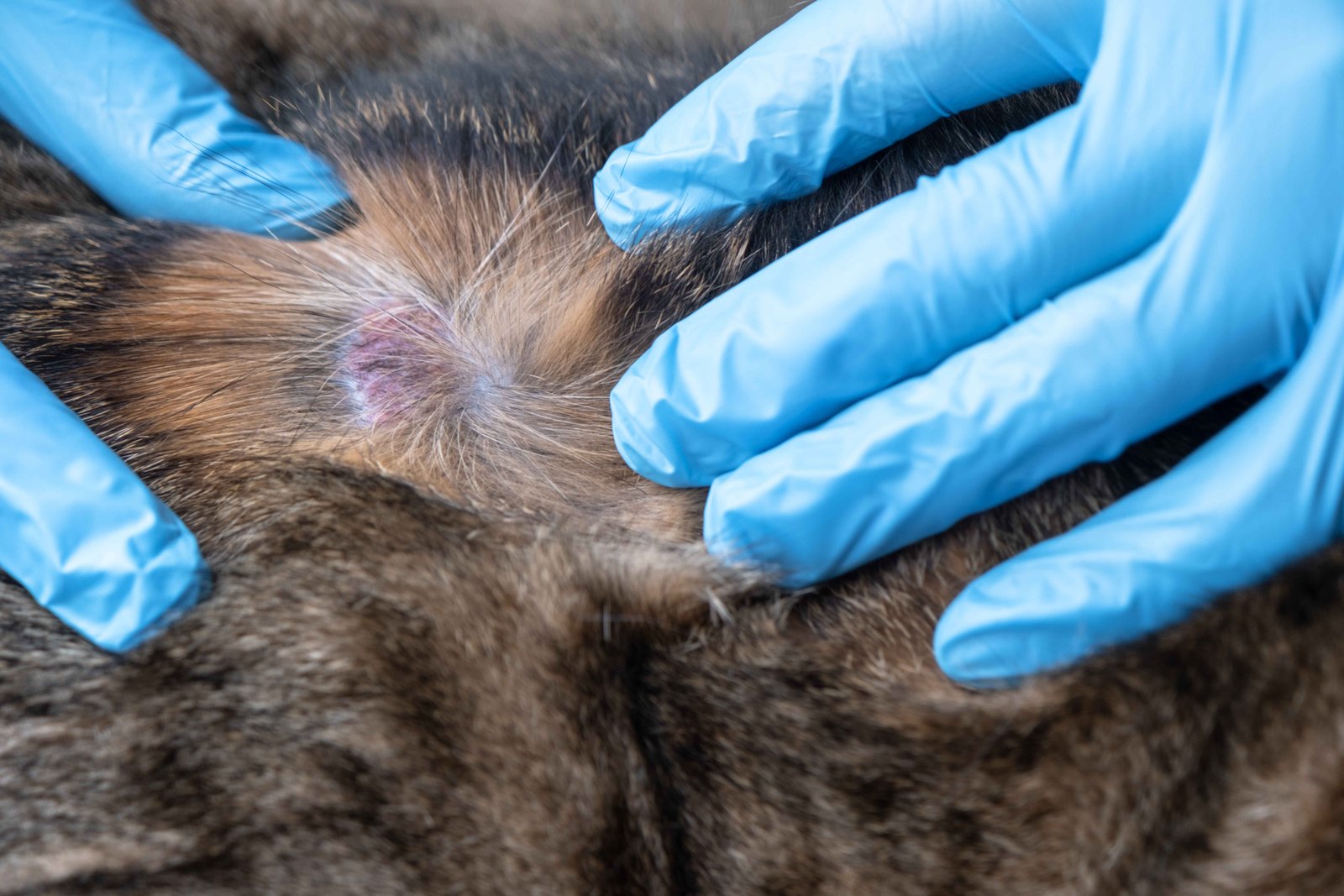


Dog skin problems can cause scratching, licking, hair loss, redness, crusts, or changes in odor. These signs overlap between conditions: a photograph or description cannot reliably distinguish an allergy from parasites, infection, or another disease. The useful first step is to document what changed and arrange an examination, rather than choose a treatment from appearance alone.
This guide explains the diagnostic process and provides an appointment worksheet. It is educational information, not a diagnosis or a claim of individual veterinary review.
When to contact your vet
Contact your clinic promptly for painful, bleeding, spreading, or weeping lesions, or scratching that prevents rest. Tell the clinic if your dog is also unusually quiet, eating less, or otherwise unwell so staff can assess urgency. Sudden facial swelling with difficulty breathing requires emergency care.
What the signs can and cannot tell you
Itching is a symptom, not a disease. Fleas and other parasites, infections, and allergies are among the possible causes. More than one problem may be present. Not seeing fleas does not establish that fleas are excluded, and odor alone does not identify yeast. The Merck Veterinary Manual’s guide to itching explains why finding and treating the cause matters.
| Observation | Useful detail to record |
|---|---|
| Scratching or licking | Location, frequency, and whether sleep or play is interrupted |
| Hair loss | Where it began; whether itching came before the missing hair |
| Redness, crusts, or sores | Date first noticed and whether the affected area is expanding |
| Odor or greasy coat | Location and any recent bathing or product changes |
| Ear discomfort | Head shaking, discharge, pain, and whether one or both ears are affected |

How skin problems are investigated
Your vet combines the history and examination with tests selected for the suspected causes. These may include flea combing, skin scrapings, microscopic examination of material from the skin, fungal testing, or a biopsy. Some cases require blood tests or other investigation of a possible underlying illness. No single test answers every skin question, and a negative result must be interpreted in context. See Merck’s overview of skin disease diagnosis.
Allergy testing has a specific role
Blood or intradermal allergy tests do not, by themselves, diagnose canine atopic dermatitis. Other causes of itching must be considered first. The 2023 AAHA allergic skin disease guidelines recommend these tests to help select allergens when immunotherapy is planned. A veterinarian may also discuss a controlled diet trial when food allergy is a possibility; casually changing brands is not the same diagnostic process.
Why treatment differs between dogs
A plan may address parasites, infection, itch, and the underlying condition separately. Relief from scratching does not necessarily mean the cause has resolved. Avoid judging success only by the first comfortable night: ask what improvement to expect, how long to continue each treatment, and when reassessment is needed.
Prescription itch medicines, topical products, and treatment for infection have different roles. There is no guaranteed medication for every itchy dog. The MSD Veterinary Manual’s atopic dermatitis chapter describes individualized management after diagnosis.
Ask before applying vinegar, essential oils, human creams, or leftover medication. A household remedy should not substitute for evaluating damaged skin. If bathing is recommended, record the exact product, frequency, contact time, and rinsing instructions. Our shampoo comparison distinguishes nonmedicated and medicated options; it does not select a treatment for an undiagnosed rash.
Bring this worksheet to the appointment
- Timeline: When did you first notice a change? Is this the first episode?
- Pattern: Which body areas are affected? Does it vary with season, location, or activity?
- Prevention: Exact parasite product, last administration date, and any missed doses.
- Food: Main diet, treats, chews, supplements, and recent changes.
- Products: Shampoos, sprays, laundry products, and medicines used before or after symptoms began.
- Other animals: Whether another pet or person in the household has developed skin symptoms.
- Photos: Dated images in similar lighting, with the body location noted.
For example, “licked the left front paw three times during dinner and woke twice overnight” is more useful for follow-up than “still itchy.” Keep the same simple observation method between visits. Do not delay care to collect a complete record.
Questions before leaving the clinic
- What is confirmed, and what remains a possibility?
- Which treatment addresses which part of the problem?
- What should I do if a dose is missed or a product irritates the skin?
- What changes require an earlier call?
- When should we review progress, even if symptoms improve?
Sources and editorial correction
The veterinary references linked above support the diagnostic and treatment context. They do not imply that those organizations reviewed or endorsed this article.
Updated October 15, 2026: Removed the unsupported “vet-approved” label, an unattributed personal anecdote, treatment guarantees, and a vinegar rinse recommendation. Replaced a reference about human allergy to pets with relevant veterinary guidance and clarified the role of allergy testing.