
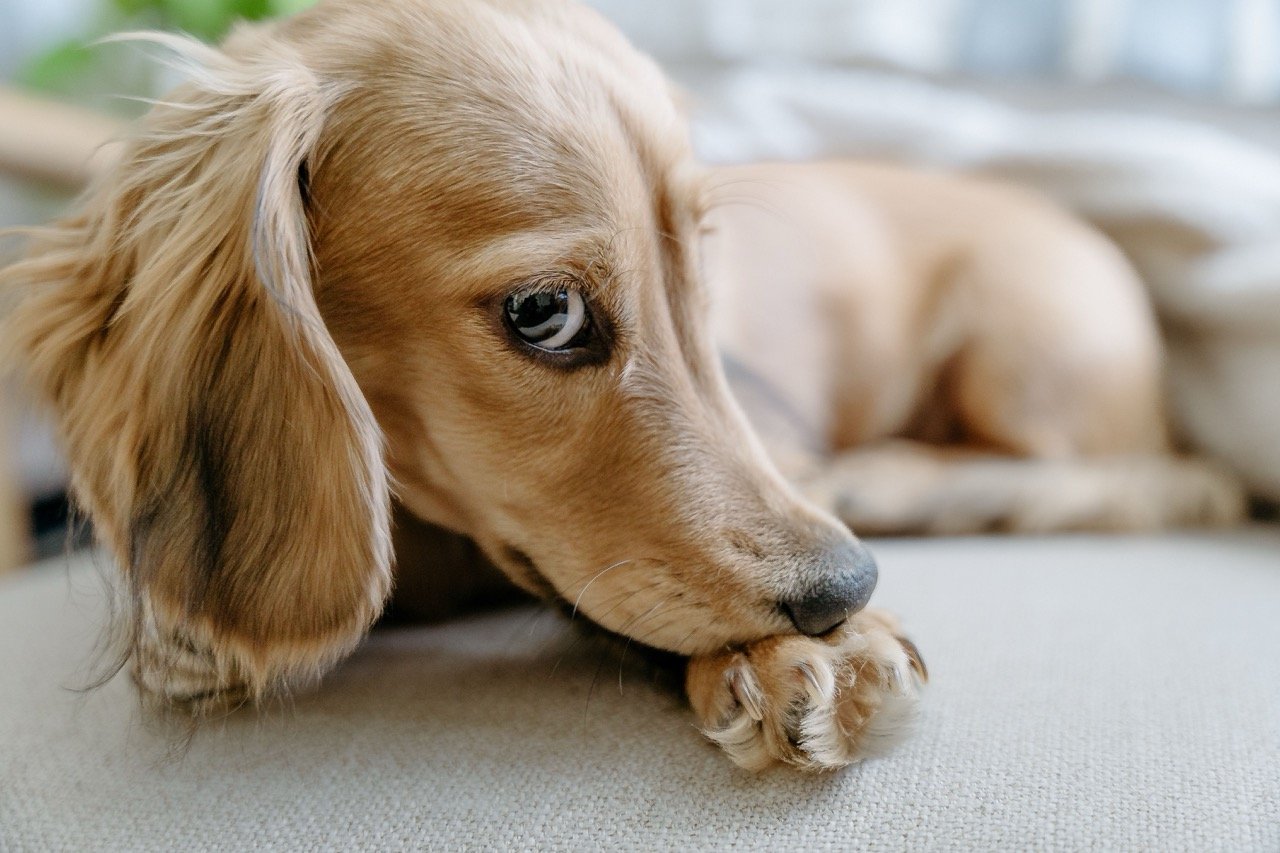
If you are wondering why dogs lick their paws, the answer is usually related to basic grooming, but excessive licking indicates a painful problem. Watching your furry best friend chew and slurp at their feet can be incredibly frustrating.
While occasional cleaning is perfectly normal, a dog licking their paws excessively requires your immediate attention to prevent severe, painful infections. This behavior often appears as dog licking paws constantly or even dog chewing paws excessively, which is a clear sign something is wrong.
In this vet-backed guide, we will break down exactly what causes this obsessive behavior, how you can provide fast relief at home, and when it is time to call the veterinarian.
Dogs lick their paws to clean them, relieve itching, or soothe irritation caused by allergies, injuries, parasites, or anxiety. Occasional licking is normal, but constant licking usually indicates an underlying problem that needs attention.
Is It Normal for Dogs to Lick Their Paws?
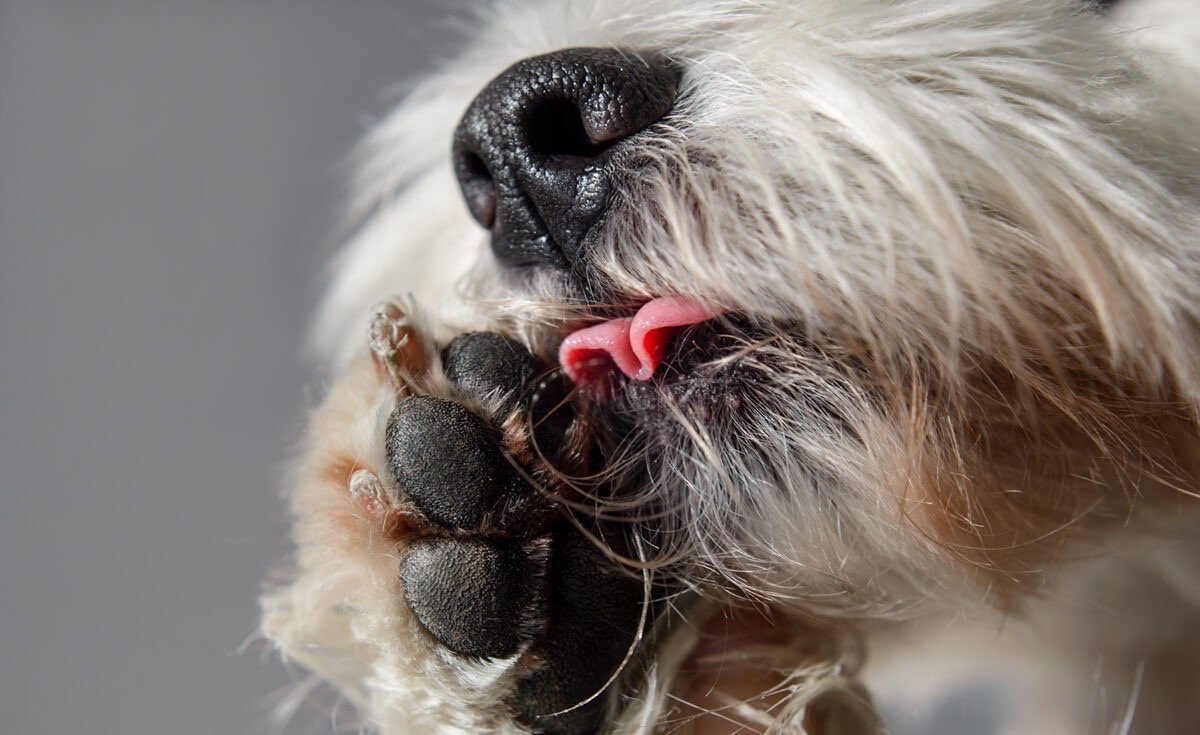
It is completely normal for dogs to clean themselves. A quick lick after a muddy walk or right before a nap is just standard canine grooming. Dogs like to keep their paw pads clean and free of debris.
However, when the behavior becomes obsessive, it crosses the line into abnormal territory. If you hear your dog constantly chewing on their feet for minutes on end, they are actively trying to soothe an underlying physical or emotional issue.
Why Do Dogs Lick Their Paws Excessively? (Top Causes)
Understanding dog paw licking causes is the absolute first step toward finding relief for your pet. Here are the most common culprits triggering the itch.
Allergies (Most Common Cause)
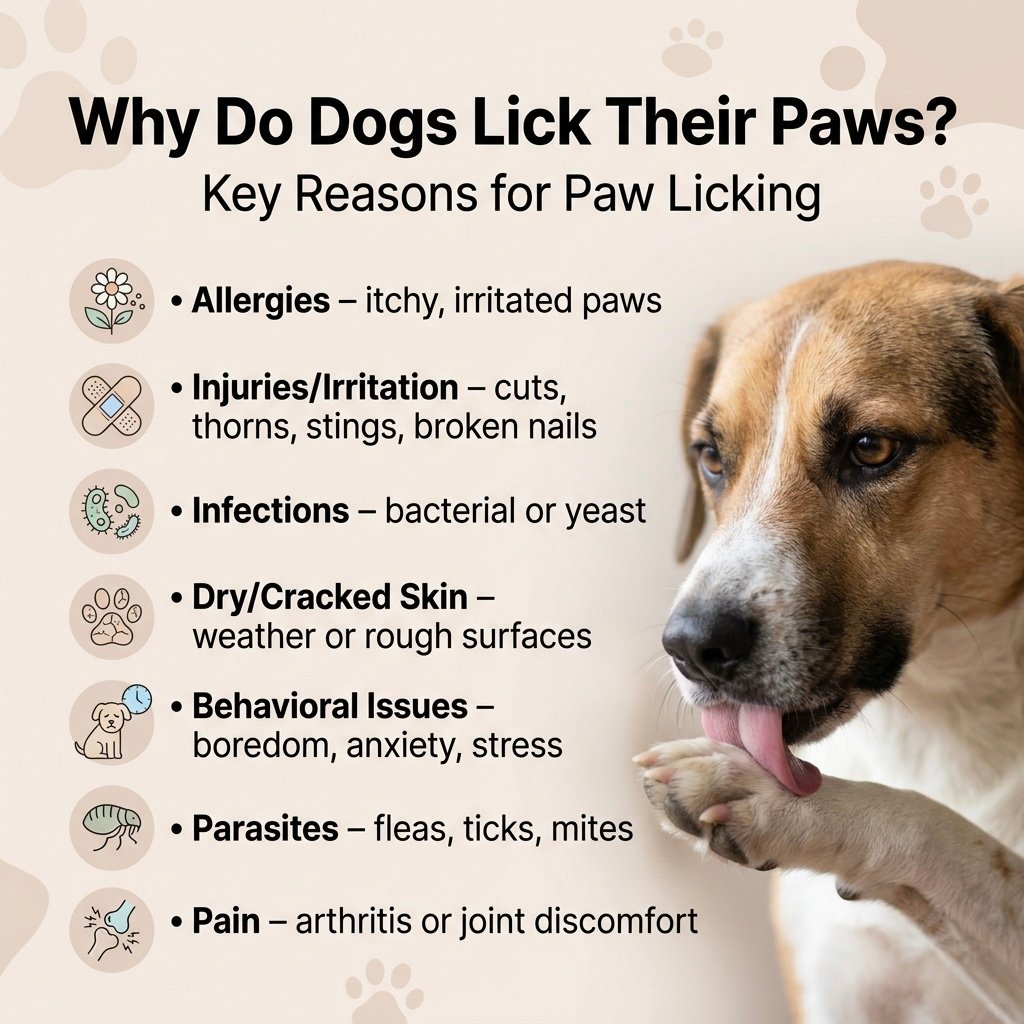
Allergies are the leading cause of itchy dog paws and red inflamed skin, often triggered by pollen, food, or environmental irritants. These dog paw allergies can quickly worsen without proper treatment. When exposed to an allergen, a dog’s body releases histamines, making their feet intensely itchy.
Injuries or Foreign Objects
Dogs explore the world on their feet. A sharp thorn, a splinter, a piece of broken glass, or winter road salt can easily get lodged between their paw pads. This causes severe paw irritation. If your dog is suddenly limping and licking one specific paw, carefully check for a hidden injury.
Parasites (Fleas & Mites)
Fleas, ticks, and microscopic mites absolutely love hiding in the warm, dark crevices between a dog’s toes. A severe mite infestation will make your dog incredibly uncomfortable and trigger frantic paw chewing.
Skin Infections (Yeast & Bacteria)
A dog’s mouth is full of bacteria. When a dog licks a minor itch, the constant moisture destroys the skin barrier. This often leads to a dog paw infection, including a yeast infection in dog paws or bacterial overgrowth, causing swelling, odor, and inflamed dog paws.
Anxiety, Stress, or Boredom
Just like humans bite their nails when nervous, dogs lick their paws to self-soothe and release calming endorphins. Obsessive licking behavior in dogs is a classic sign of separation anxiety, loud noise phobias, or a lack of mental stimulation.
Pain or Joint Problems
Dogs mask their pain incredibly well. If an older dog is licking a specific joint, they may be trying to soothe the aching from arthritis. Similarly, a sprained toe or a torn nail can trigger obsessive licking as a coping mechanism.
Dog Paw Licking Causes (Quick Table)
If you need to identify the root cause quickly, use this simple diagnostic chart:
| Cause | Key Signs | What to Do |
|---|---|---|
| Allergies | Red, inflamed paws | Clean paws, vet meds |
| Injury | Limping, licking one paw | Check for objects |
| Parasites | Intense itching | Flea/mite treatment |
| Infection | Bad smell, discharge | Vet antifungal/antibiotics |
| Anxiety | Licking when alone | More exercise, stimulation |
What Is Your Dog Trying to Tell You?
When you ask yourself, “why is my dog licking his paws?”, look closely at the context of the situation. Your dog is communicating:
- “My feet itch!” (Usually points to environmental or food allergies).
- “Something is stuck in my pad.” (A thorn, burr, or painful ice ball).
- “I am stressed and need comfort.” (Boredom, loud noises, or separation anxiety).
- “My joints hurt.” (Underlying arthritis or an acute sprain).
When Should You Worry About Paw Licking?
While a quick grooming session is fine, you should contact your veterinarian immediately if you notice clear warning signs. Watch out for severe swelling, bleeding, limping, hair loss around the paws, or a foul odor coming from the toes.
If the licking wakes them up in the middle of the night or distracts them from playing, their discomfort is severe enough to warrant professional medical help. Delaying care often leads to more complicated canine skin issues.
What Can I Give My Dog for Paw Licking?
If you want to know how to treat dog licking paws for immediate relief, there are several effective, vet-approved options:
- Omega-3 supplements: High-quality fish oil naturally reduces skin inflammation from the inside out.
- Antihistamines: Medications like Benadryl can stop an allergic reaction (always ask your vet for the correct dosage).
- Medicated shampoos: Washing the paws with a chlorhexidine or oatmeal shampoo soothes the skin.
- Paw balms: Natural balms heal dry, cracked paw pads that trigger licking.
- Prescription meds: For chronic cases, vets prescribe Apoquel or Cytopoint to block the itch signal.
How to Stop Dog Licking Paws (Effective Treatment Options)
Knowing how to stop dog licking paws depends on identifying the root cause and applying the right dog licking paws treatment approach.
Check and Clean the Paws
Always start with a physical inspection. Gently spread their toes and check for burrs, cuts, or trapped debris. Wipe their paws with a damp cloth or pet-safe wipe after every walk to physically remove irritating pollen and harsh lawn chemicals.
Address Allergies
If your dog suffers from itchy dog paws, addressing allergies is the most effective long-term solution. Upgrading their diet or consulting your vet for allergy medication is vital. For immediate relief, explore safe home remedies for itchy dogs to quickly soothe their inflamed skin.
Natural Remedies
These are proven home remedies for dog licking paws that provide fast relief. A highly diluted paw soak using apple cider vinegar for dogs can help restore the skin’s pH balance and deter yeast growth. Never apply vinegar to open or bleeding sores.
Improve Skin Health
A strong skin barrier stops itching before it starts. By adopting a proactive approach and learning how to prevent dog skin problems, like regular grooming and flea control, you can save your dog from endless future discomfort.
Reduce Stress & Boredom
If the licking is strictly behavioral, increase their daily cardiovascular exercise. Introduce puzzle toys, frozen Kongs, and engaging training sessions to tire out their brain and successfully redirect their anxious energy.
💡 Quick Relief Tips
- Rinse paws after walks to remove hidden allergens.
- Use an oatmeal soak to naturally cool inflamed skin.
- Apply a pet-safe paw balm to treat dryness and cracking.
- Prevent licking using a recovery cone if they break the skin.
- Keep paws perfectly dry after baths to prevent yeast growth.
Home Remedies vs Vet Treatment
Home remedies like oatmeal baths and paw wipes are fantastic for temporary relief of mild, seasonal dryness. However, if your dog has an active bacterial infection, open sores, or severe chronic allergies, home care will eventually fail.
Prescription antibiotics, strong antifungals, or advanced allergy shots from a veterinarian are required to provide a true, lasting cure for a dog licking paws excessively.
Can Paw Licking Lead to Infections?
Yes, absolutely. The medical term “lick granuloma” refers to a thick, infected, weeping sore created entirely by a dog’s own tongue. According to veterinary dermatologists at the Merck Veterinary Manual, the constant moisture breaks down the skin tissue, trapping bacteria and yeast.
This creates a vicious, painful cycle where the infection causes more itching, which causes more licking. Breaking this cycle early with an Elizabethan collar (a cone) while treating the dog skin infection is critical.
How Often Is Too Much Paw Licking? (Dog Licking Paws Excessively Explained)
If your dog licks their paws for more than a few minutes a day, or if the behavior interrupts their sleep and daily routine, it is far too much.
Obsessive chewing is never a normal habit; it is a clear cry for help. Similar to how understanding why dogs lick their nose can reveal a lot about their stress levels, monitoring their paw licking helps you gauge their overall physical comfort.
References & Scientific Further Reading
- Merck Veterinary Manual: Pyoderma in Dogs and Cats
- American Kennel Club (AKC): Why Does My Dog Lick Their Paws?
- Cornell Canine Health Center: Allergy testing and immunotherapy
Frequently Asked Questions (FAQs)
Why is my dog licking its paws constantly?
If your dog is licking its paws constantly, it is usually a sign of an underlying medical issue, such as severe environmental allergies, a food allergy, a hidden injury, or an active yeast or bacterial infection requiring veterinary treatment.
Why does my dog lick his paws at night?
Dogs often lick their paws at night because there are no other distractions. When the house is quiet, the sensation of itchy, allergic skin or aching joints becomes much more noticeable, prompting them to self-soothe through repetitive dog licking paws at night.
Can food allergies cause paw licking?
Yes, food allergies are a major cause of itchy paws. When a dog is allergic to a protein like chicken or beef, the allergic reaction often manifests as severe skin inflammation, specifically targeting the paws, ears, and belly, leading to obsessive chewing.
Should I let my dog lick his paws?
You should allow brief, occasional licking for normal grooming. However, you should never let your dog lick their paws obsessively. Constant licking traps moisture against the skin, which quickly turns a minor itch into a painful, expensive bacterial or yeast infection.
Why are my dog’s paws red and itchy?
Red itchy dog paws are usually caused by environmental allergies, such as pollen or grass, or contact with harsh lawn chemicals. The redness is a sign of inflammation, which is often worsened by the dog’s saliva when they continuously lick the irritated area.
Can anxiety cause paw licking?
Yes, anxiety is a very common cause. Dogs lick their paws to release endorphins and self-soothe during stressful events. If your dog suffers from separation anxiety, boredom, or a fear of loud noises, they may develop a compulsive paw-licking habit.
How do I treat my dog’s itchy paws naturally?
You can use a dog itchy paws treatment at home by soaking your dog’s paws in a cool colloidal oatmeal bath to reduce inflammation. Alternatively, wiping their feet with a damp cloth after walks removes pollen, and adding Omega-3 fish oil to their diet improves overall skin health.
Conclusion
Understanding exactly why dogs lick their paws empowers you to stop their discomfort before it turns into a severe infection. Whether it is a simple grass allergy, a hidden thorn, or a sign of deep anxiety, your dog is relying on you to read their body language.
Start by keeping their paws clean and protecting their skin barrier. If the excessive licking persists, do not hesitate to contact your veterinarian for a professional diagnosis and lasting relief.