
A kitten feeding schedule depends mainly on age, size, health, and whether the kitten is nursing, eating wet food, dry food, or a combination. Very young kittens need frequent meals, while older kittens can gradually move toward fewer meals per day. This guide explains how often to feed kittens, how much they need, what to feed them, and when they can go overnight without food.
Kittens have incredibly high energy requirements compared to adult cats. Because their stomachs are small and their growth rate is rapid, they require nutritionally complete kitten food divided into appropriate portions throughout the day to sustain healthy development.
Kitten Feeding Schedule by Age
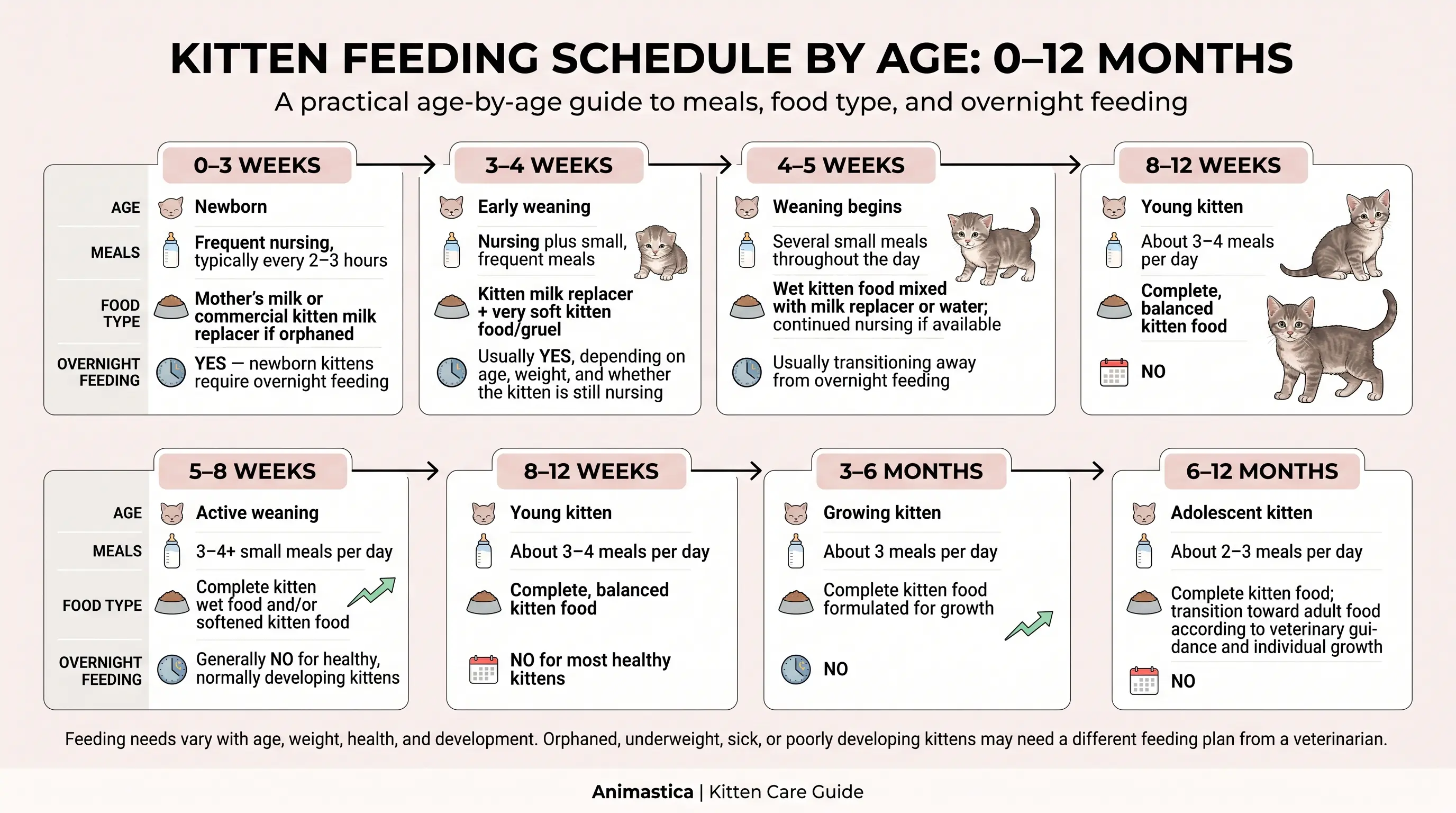
Establishing a routine helps ensure your kitten receives adequate nutrition at each developmental milestone. This table provides a standard framework for kitten feeding by age.
| Kitten Age | Typical Feeding Pattern | Food |
|---|---|---|
| 0–3 weeks | Frequent nursing/feeding | Mother’s milk or appropriate kitten milk replacer |
| 3–4 weeks | Begin transition | Milk + gradual introduction of kitten food |
| 4–5 weeks | Several small meals | Wet kitten food / softened food + milk as appropriate |
| 5–8 weeks | Several meals throughout the day | Complete kitten food |
| 8–12 weeks | Multiple meals daily | Wet, dry, or combination kitten food |
| 3–6 months | Several scheduled meals | Complete kitten food |
| 6–12 months | Gradually fewer meals | Kitten food formulated for growth |
Important: This table is a general guide, not a rigid medical prescription. Individual kittens vary significantly, especially if they are orphaned, underweight, sick, or still nursing heavily.
How Often Should You Feed a Kitten?
Kittens have small stomachs and cannot process large amounts of food at once. To support their rapid growth and high metabolic rate, they must eat frequently.
As noted by veterinary experts at Cornell University, kittens require significantly more food per pound of body weight than adult cats and generally benefit from more frequent feeding.
How often should newborn kittens eat?
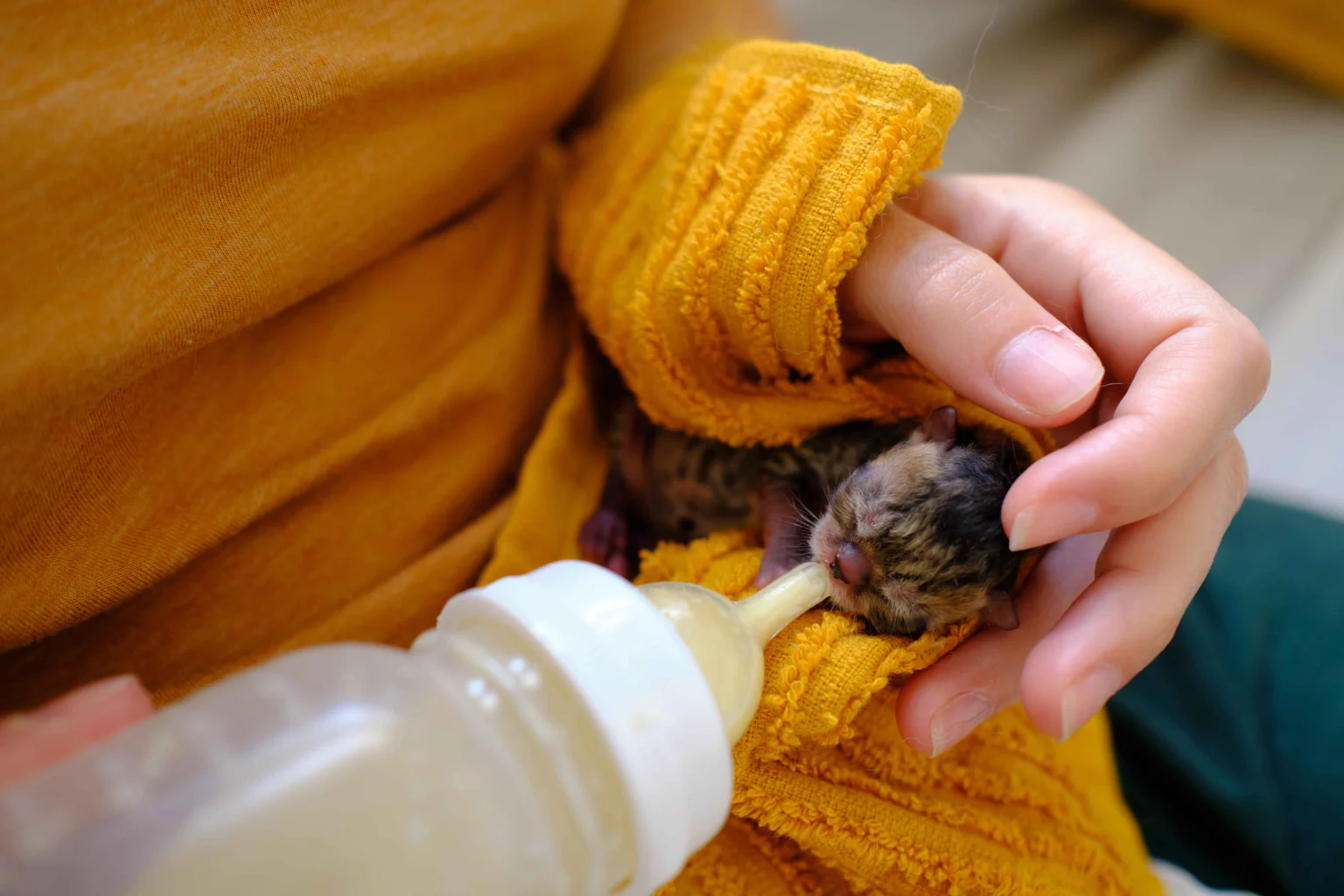
Newborn kittens (0–2 weeks) generally need to nurse or be bottle-fed every 2 to 4 hours, around the clock. Their tiny stomachs require constant, small replenishments of milk to maintain blood sugar and hydration. According to VCA Animal Hospitals, orphaned newborns require frequent feeding and strict monitoring to ensure survival.
How often should 4-week-old kittens eat?
At four weeks, kittens should be fed every 4 to 6 hours. This is the age when they begin sampling solid foods while still relying heavily on milk.
How often should 5-week-old kittens eat?
A 5-week-old kitten is actively weaning and should be offered 4 to 5 small meals of wet kitten food or gruel throughout the day, supplemented by nursing or bottle feeding as needed.
How often should 8-week-old kittens eat?
Once fully weaned around 8 weeks, kittens should eat at least four scheduled meals per day of complete, solid kitten food. International Cat Care recommends providing at least four meals per day for kittens in the 8 to 12-week age range.
How often should 3-month-old kittens eat?
A 3-month-old kitten is highly active and still growing rapidly. Feeding them at least three to four meals a day helps keep their energy levels stable.
How often should 6-month-old kittens eat?
By six months, a kitten’s growth rate begins to slow slightly. You can gradually reduce feeding frequency to two or three scheduled meals per day.
How Much Food Should a Kitten Eat Per Day?
There is no single universal measurement for kitten food because the appropriate daily amount depends on several variables:
- Age and body weight
- Individual growth rate and activity level
- The calorie density of the specific food
- Whether you are feeding wet food, dry food, or a combination
- Whether the kitten is still nursing
How much wet food should a kitten eat?
Wet food has a high moisture content (often 70–80%), meaning a kitten will need to consume a larger physical volume of it to meet their caloric needs compared to dry food. Portions must be adjusted regularly as the kitten gains weight.
How much dry food should a kitten eat?
Dry food is calorically dense. A small physical amount delivers a high number of calories, making it easy to accidentally overfeed. Precise measurement is critical when feeding dry kibble.
How do I calculate how much food my kitten needs?
The feeding instructions printed on your kitten-food packaging serve as your primary starting point. Find your kitten’s current age and weight on the chart to determine the total daily amount, then divide that amount by the number of meals they eat per day. This is a baseline; adjust portions based on your veterinarian’s assessment of your kitten’s body condition.
Kitten Feeding Schedule Chart
This chart provides a clear overview of meal frequency and overnight feeding expectations.
| Age | Meals | Main Food | Overnight |
|---|---|---|---|
| Newborn | Frequent feeds | Milk | Yes |
| 3–4 weeks | Frequent small feeds | Milk + weaning food | Depends |
| 4–5 weeks | Several small meals | Wet/softened kitten food | Depends |
| 5–8 weeks | Several meals | Complete kitten food | Usually transitioning |
| 8–12 weeks | Several meals | Complete kitten food | Usually not required |
| 3–6 months | Several meals | Kitten food | Usually not required |
| 6–12 months | Fewer scheduled meals | Kitten food | Usually not required |
Can Kittens Sleep Through the Night Without Feeding?
The need for overnight feeding changes drastically within the first two months of a kitten’s life.
Can 4-week-old kittens sleep through the night without eating?
At 4 weeks, kittens are just beginning to sample solid foods but still rely heavily on milk. While they sleep for longer stretches, an orphaned or bottle-fed 4-week-old typically still requires a late-night and early-morning feed to maintain proper blood sugar and hydration levels.
Can 5-week-old kittens go 8 hours without food?
If a 5-week-old kitten is robust, healthy, and consuming adequate solid kitten food or gruel during the day, they can generally safely go 6 to 8 hours overnight without a scheduled feeding.
Do 5-week-old kittens need to be fed overnight?
Unless the kitten is underweight, failing to thrive, or a veterinarian has specifically prescribed overnight nutritional support, a healthy 5-week-old does not routinely need to be woken up for overnight feedings.
When can kittens sleep through the night?
Most kittens can easily sleep through the night without a meal once they are fully weaned onto solid food, which generally occurs between 6 and 8 weeks of age.
What Should You Feed a Kitten?
Best food for growing kittens
Always select a commercially prepared diet explicitly labeled as “complete and balanced for kittens” or “for growth and reproduction.” These formulas have the specific protein, fat, calcium, and phosphorus ratios required for skeletal and neurological development. You can feed wet food, dry food, or a combination of both.
Wet food vs. dry food for kittens
Neither is universally superior; a balanced comparison reveals benefits for both. Wet food provides critical hydration and its soft texture makes the weaning process much easier. Dry food is calorically dense, convenient for owners, and helps support dental health later in life. Feeding a combination ensures the kitten develops a palate for various textures.
Can kittens eat adult cat food?
No. Adult cat food is formulated for maintenance. Feeding adult food to a growing kitten can result in severe nutritional deficiencies that negatively impact their bone development, organ function, and overall health.
Kitten Formula Feeding Schedule
Inappropriate feeding of neonatal kittens can quickly become a veterinary emergency. If a mother cat is absent, precise care is required. (See our full guide on newborn kitten care for more details).
When do kittens need milk replacer?
Kittens require commercial milk replacer if they are orphaned, if the mother is ill or rejects them, or if the litter is too large for the mother to nurse adequately.
How often should orphaned kittens be fed?
Orphaned neonates (0–2 weeks) require bottle feeding every 2 to 4 hours, day and night. By 3 to 4 weeks, this can usually be extended to every 4 to 6 hours.
What kind of milk should kittens drink?
Kittens must drink a high-quality, commercial Kitten Milk Replacer (KMR) purchased from a veterinarian or pet supply store.
Why shouldn’t kittens be given cow’s milk?
Cow’s milk does not have the correct nutritional profile for felines and contains high levels of lactose. Feeding cow’s milk to a kitten will almost certainly cause severe diarrhea, leading to life-threatening dehydration.
When Should Kittens Start Eating Solid Food?
When do kittens start eating wet food?
The weaning process usually begins around 3.5 to 4 weeks of age, when kittens naturally begin showing interest in the mother’s food.
How to introduce solid food to a kitten
Start by offering a shallow dish of “gruel”—a mixture of high-quality wet kitten food blended with warm kitten milk replacer. VCA describes solid-food introduction beginning around 3.5 to 4.5 weeks of age. You can encourage them by gently dabbing a tiny amount on their lips so they can taste it. Over the following weeks, gradually reduce the amount of added liquid.
How long does kitten weaning take?
Weaning is a gradual process that takes several weeks. It typically begins around week 4 and is fully complete by week 8.
What should a 5-week-old kitten eat?
A 5-week-old kitten is actively transitioning. They should eat a combination of softened wet kitten food, perhaps some softened dry kibble, and milk replacer (or mother’s milk) as they continue the shift to a fully solid diet.
Can 5-Week-Old Kittens Drink Water?
Yes. Clean drinking water becomes important as soon as a kitten begins eating solid food. By 4 to 5 weeks of age, provide a shallow, heavy ceramic or stainless-steel dish of fresh water. While wet food provides a significant portion of their daily hydration, independent access to clean drinking water is vital for normal kidney function and digestion.
How to Tell If a Kitten Is Hungry
Recognizing hunger cues helps you adjust the schedule safely. Signs include:
- Persistent searching or rooting behavior in very young kittens.
- Increased interest in your food or the feeding area.
- Restlessness or pacing.
- Repeatedly approaching you or their food bowl.
- Vocalization (crying or meowing).
Note: Persistent crying does not automatically mean hunger. It can also indicate that the kitten is cold, in pain, needs to eliminate, or is feeling unwell.
How to Create a Kitten Feeding Routine
A structured routine aids digestion and helps with behavioral training.
Set consistent meal times
Feed your kitten at the same times each day. Predictability reduces anxiety and discourages begging behavior.
Measure portions rather than guessing
Use a measuring cup or a kitchen scale. Pouring food directly from the bag easily leads to accidental overfeeding.
Monitor your kitten’s weight and growth
Weighing your kitten weekly ensures they are staying on their growth curve. Adjust the daily caloric intake as they gain weight.
Adjust the schedule as your kitten grows
Gradually consolidate their meals. For example, move from four meals a day at 12 weeks down to three meals a day at 16 weeks.
Keep feeding and sleeping areas separate
Place food and water bowls in a quiet location, completely separate from the litter box area.
Common Kitten Feeding Mistakes
Avoid these common pitfalls to ensure healthy development:
- Feeding adult cat food exclusively: Deprives kittens of crucial growth nutrients.
- Overfeeding: Assuming every cry means they need more calories.
- Underfeeding: Not adjusting portion sizes upward as the kitten rapidly grows.
- Giving cow’s milk: Triggers severe diarrhea.
- Abruptly changing food: Can cause gastrointestinal upset. When changing the actual food, VCA recommends a gradual seven-day transition to prevent upset.
- Leaving wet food out too long: Wet food can spoil and grow bacteria if left out for more than a few hours.
- Assuming every kitten needs the same amount: Genetics and activity levels change dietary needs.
- Ignoring poor weight gain: A failure to thrive is a major medical red flag.
- Forgetting fresh water: Hydration is just as important as calories.
- Treating a feeding chart as a substitute for veterinary advice: Charts are guidelines; vets provide medical care.
When to Contact a Veterinarian
Kittens have very few physical reserves, so health problems can escalate rapidly. Contact a veterinarian immediately if you observe:
- A kitten refusing multiple meals.
- Repeated vomiting or diarrhea.
- Weakness or unusual lethargy.
- Difficulty swallowing or latching onto a bottle/nipple.
- Dehydration concerns (e.g., dry gums, sunken eyes).
- Poor weight gain or sudden weight loss.
- A very young or orphaned kitten failing to feed properly, which can quickly lead to fading kitten syndrome.
Key Takeaways
- Young kittens need more frequent feeding due to small stomachs and high energy demands.
- Feeding frequency decreases as kittens mature and transition to solid food.
- Always use complete, balanced food explicitly formulated for growing kittens.
- Very young, nursing, or orphaned kittens have highly specific feeding requirements.
- Always provide access to clean water once kittens are drinking independently.
- Monitor growth and body condition rather than relying only on a generic feeding chart.
Sources & Veterinary References
- Cornell Feline Health Center: Feeding Your Cat
- VCA Animal Hospitals: Feeding Growing Kittens
- VCA Animal Hospitals: Raising Kittens
- International Cat Care: Feeding Your Cat or Kitten
Frequently Asked Questions About Kitten Feeding
How many times a day should I feed my kitten?
Unweaned kittens need feeding every 2 to 6 hours. Fully weaned kittens (8–12 weeks) should eat at least four times a day, while kittens aged 3 to 6 months generally eat at least three meals daily.
How much should a kitten eat per day?
The exact amount depends on age, weight, and food calorie density. Use the feeding instructions on your specific kitten food label as a baseline, and adjust portions based on your kitten’s growth rate.
Can kittens sleep through the night without feeding?
Yes, healthy kittens that are fully weaned and consuming enough calories during the day can generally sleep through the night without a scheduled meal.
Can a 5-week-old kitten go 8 hours without food?
If they are healthy and eating solid kitten food or gruel reliably during the day, a 5-week-old kitten can usually go 8 hours overnight without feeding.
Can a 5-week-old kitten drink water?
Yes. Once kittens begin transitioning to solid food around 4 to 5 weeks of age, they should have independent access to a shallow dish of fresh water.
Should I let my kitten eat as much as it wants?
No. Unrestricted free-feeding can easily lead to excessive weight gain and poor eating habits. It is safer to provide measured, portion-controlled meals.
How can I tell if my kitten is hungry?
Hungry kittens may pace, root around, approach their feeding area frequently, or vocalize. Ensure you measure daily portions, as crying does not always mean they require extra calories.
Is wet food or dry food better for kittens?
Both have benefits. Wet food provides essential hydration and is easier for weaning kittens to chew, while dry food is calorie-dense and convenient. A combination of both is often recommended.
When can kittens stop eating kitten food?
Most kittens should transition from a growth-formulated kitten diet to an adult maintenance diet when they reach approximately 12 months of age.