
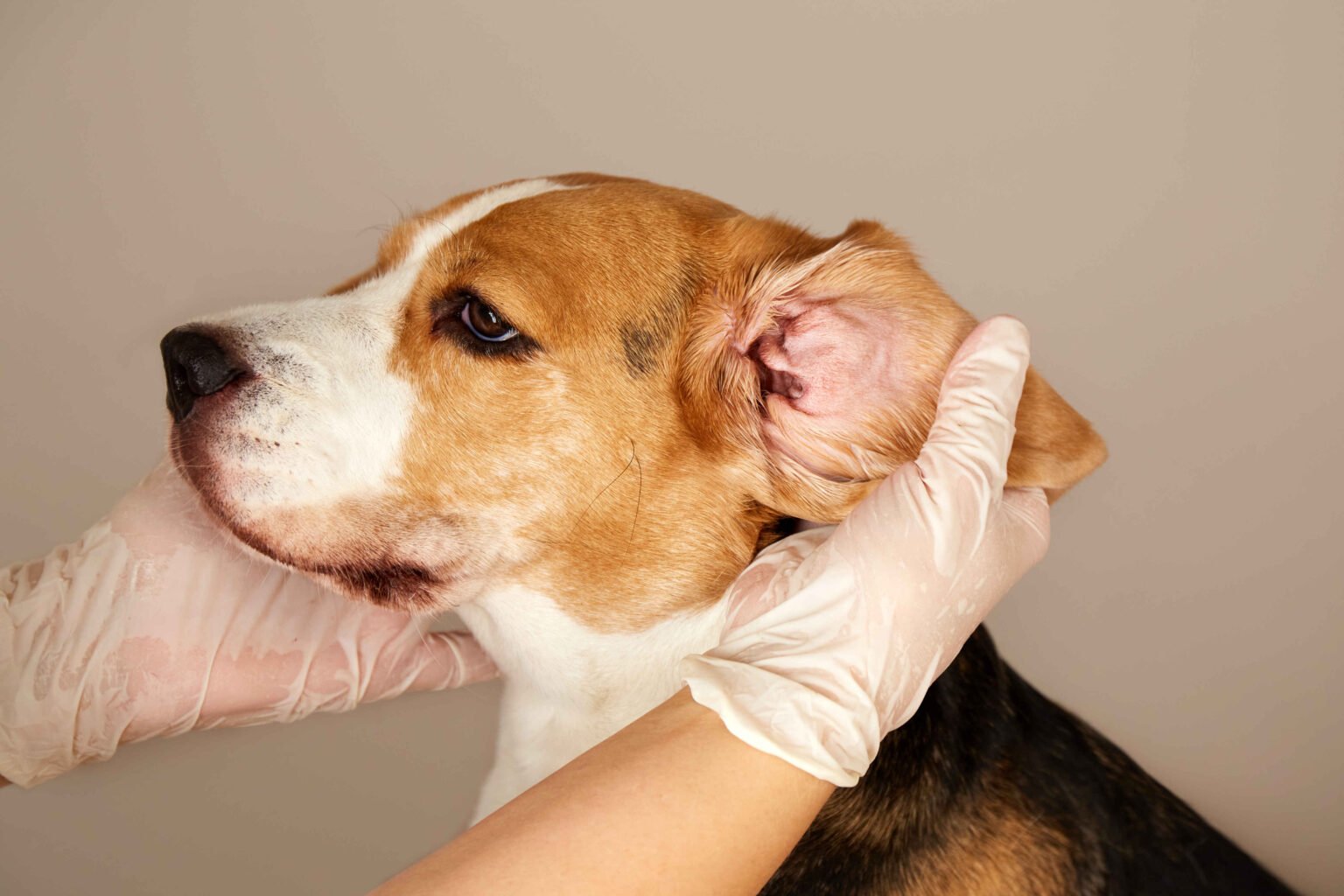
Dog ear infections commonly cause head shaking, scratching, redness, odor, discharge, and ear pain. However, an irritated ear is not automatically a bacterial infection. Yeast overgrowth, allergies, ear mites, foreign material, moisture, and other conditions can produce similar signs.
This distinction matters because treatment depends on what is actually happening inside the ear. Veterinary examination, otoscopy, and ear cytology can help identify inflammation, yeast, bacteria, parasites, foreign material, and problems involving the eardrum. Recurrent cases also require attention to the underlying cause rather than repeatedly treating the secondary infection alone.
Quick Answer: What Are the Signs of an Ear Infection in Dogs?
Common signs include:
- Frequent head shaking
- Scratching or pawing at one or both ears
- Redness or swelling inside the ear
- Unusual ear odor
- Brown, yellow, bloody, or other abnormal discharge
- Pain when the ear or head is touched
- Crusting or irritated skin around the ear
- Holding one ear differently from the other
Head tilt, loss of balance, unusual eye movements, marked pain, or difficulty walking require prompt veterinary attention because they may indicate deeper ear involvement or another neurological problem.
What Is a Dog Ear Infection?
The term “ear infection” is often used broadly, but veterinarians distinguish between inflammation of different parts of the ear. The most common problem in dogs is otitis externa, which means inflammation of the external ear canal.
Importantly, inflammation and infection are not exactly the same thing. A dog can initially develop ear inflammation because of allergies, parasites, or another primary problem. Changes inside the inflamed ear can then allow normally low numbers of yeast or bacteria to multiply and become secondary problems.
Otitis Externa
Otitis externa affects the external ear canal between the opening of the ear and the eardrum. It can affect one or both ears and may be sudden, recurrent, or chronic.
Otitis Media
Otitis media involves the middle ear. It may occur alongside chronic or recurrent external ear disease and can require more extensive investigation and treatment. The Merck Veterinary Manual’s overview of otitis media and interna describes the clinical signs, diagnosis, and management of disease involving these deeper parts of the ear.
Otitis Interna
Otitis interna involves the inner ear, where structures important for balance are located. Inner-ear disease can produce signs such as head tilt, abnormal eye movements, loss of balance, or difficulty walking normally.
Dog Ear Infection Symptoms
The appearance of an affected ear varies considerably. Some dogs initially show only mild scratching or head shaking, while others develop obvious pain, swelling, odor, and discharge. These are among the common signs of ear infections and otitis externa described by the Merck Veterinary Manual.
1. Head Shaking
Repeated head shaking is one of the most noticeable signs of ear discomfort. Dogs shake their heads in an attempt to relieve itching, irritation, pressure, or the sensation of something being inside the ear.
Occasional head shaking is not necessarily abnormal. Repeated or sudden head shaking, particularly when accompanied by scratching, odor, redness, or discharge, deserves closer attention.
2. Scratching or Pawing at the Ear
An itchy dog may repeatedly scratch the affected ear with a hind foot or rub the side of the head against furniture, carpet, or the floor. If itching also affects other parts of the body, see our guide to itchy dogs and common causes of itching, since widespread itching may point to a broader skin or allergy problem rather than an isolated ear issue.
Persistent scratching can damage the skin around the ear and, in some cases, contribute to swelling or trauma of the ear flap.
3. Redness and Swelling
The entrance to the ear canal may appear red, inflamed, thickened, or swollen. Chronic inflammation can gradually cause more substantial changes to the ear canal.
4. Ear Discharge
Ear discharge may appear waxy, brown, yellow, dark, bloody, or purulent depending on the condition affecting the ear.
Color alone cannot reliably tell you whether the problem is bacterial, yeast-related, parasitic, or something else. Different conditions can produce similar-looking discharge, and mixed infections can occur.
5. Unusual Ear Odor
Microbial overgrowth and inflammation can produce a noticeable odor. A sudden strong or unpleasant smell from one or both ears is a reason to inspect the ears for other changes.
Odor alone, however, does not identify the organism involved.
6. Pain When the Ear Is Touched
Dogs with painful ears may pull away, cry, lower their head, avoid being touched, or become defensive when someone approaches the ear.
A normally tolerant dog that suddenly resists having its head or ears handled may be experiencing significant discomfort.
7. Crusting, Scabs, or Skin Damage
Repeated scratching and inflammation can cause crusting, erosions, or damaged skin around the ear flap and canal entrance.
8. Behavioral Changes
Persistent pain and itching can affect behavior. Some dogs become restless, irritable, withdrawn, less playful, or reluctant to have their head touched.
9. Head Tilt or Balance Problems
Head tilt, stumbling, circling, loss of balance, or abnormal rhythmic eye movements can occur with disorders affecting deeper portions of the ear or the vestibular system.
When Ear Symptoms Are More Urgent
Contact a veterinarian promptly if your dog develops a persistent head tilt, loss of balance, unusual eye movements, severe pain, difficulty walking, facial weakness, marked swelling, or rapidly worsening symptoms. These signs are not typical of a minor uncomplicated ear irritation.
What Causes Ear Infections in Dogs?
Successful management requires more than identifying yeast or bacteria. Veterinarians also look for the primary problem that changed the ear environment and allowed inflammation or secondary infection to develop.
Allergies
Allergic skin disease and other dog skin problems can contribute to recurrent otitis externa. Environmental allergies and adverse food reactions can cause inflammation of the ear canal, and secondary yeast or bacterial overgrowth may then develop. The AAHA guidelines for allergic skin disease in dogs also emphasize the importance of identifying and managing underlying allergic disease.
In some dogs, recurring ear problems may be one of the most noticeable manifestations of allergic disease.
Yeast
Malassezia yeast can normally be present in small numbers on canine skin and in the ears. When inflammation changes the ear environment, yeast may multiply excessively and contribute to otitis externa.
Bacteria
Small numbers of certain bacteria may also be present in healthy ears. Changes caused by inflammation, moisture, narrowing of the ear canal, or other disease can allow bacterial populations to increase.
Some chronic bacterial infections can be particularly difficult to manage, which is one reason cytology and, in selected cases, culture and susceptibility testing are useful.
Ear Mites and Other Parasites
Ear mites and other parasites can cause inflammation and intense itching. Although ear mites are especially associated with cats and young animals, they are among the potential causes veterinarians consider when evaluating an itchy ear.
Foreign Material
Plant material and other foreign objects can enter the ear canal and cause sudden irritation, inflammation, head shaking, and secondary infection. A foreign body is particularly worth considering when symptoms begin suddenly in only one ear.
Water and Moisture
Moisture remaining in the ear after swimming or bathing can alter the ear canal environment. In susceptible dogs, this may contribute to microbial overgrowth, particularly when another underlying factor is already present. Dogs that regularly enjoy swimming may therefore need particular attention to drying and monitoring their ears afterward.
Ear Anatomy
Features that reduce ventilation or encourage moisture and debris retention can contribute to ear problems in some dogs. Anatomy is usually best considered a predisposing factor rather than assuming that a particular ear shape automatically causes infection.
Other Underlying Conditions
Chronic skin disease, abnormal tissue growth, endocrine disease, immune-mediated disease, excessive keratin production, and structural changes within the ear canal may also contribute to recurrent otitis in individual dogs.
Dog Ear Infections: Yeast vs. Bacterial Problems
Owners frequently try to determine whether an ear problem is caused by yeast or bacteria based on smell or discharge. Those clues can be useful to a veterinarian, but they are not reliable enough to diagnose the cause at home.
| Feature | Yeast-Associated Otitis | Bacterial Otitis |
|---|---|---|
| Itching | Common | Possible and variable |
| Redness | Common | Common |
| Odor | Can be noticeable | Can be noticeable |
| Discharge | Variable | Variable |
| Pain | Possible | Possible, sometimes substantial |
| Can you reliably diagnose it by appearance? | No | No |
Why Cytology Matters
A veterinarian can collect material from the ear and examine it under a microscope. Ear cytology can reveal yeast, different bacterial shapes, inflammatory cells, and other findings that help guide treatment. Dogs can also have mixed microbial populations, so the problem does not always fit neatly into a “yeast or bacteria” category. Research published in Veterinary Dermatology has also examined microscopic staining methods for identifying microbial aggregates in dogs with microbial otitis externa.
What Can Be Mistaken for an Ear Infection in Dogs?
Head shaking and scratching indicate ear discomfort, but they do not prove that an infection is present. Several conditions can produce similar signs.
Allergic Ear Inflammation
Allergies can inflame the ear canal even before a secondary infection develops. This distinction is particularly important in dogs with recurrent ear problems.
Ear Mites
Parasites can cause intense itching and dark debris. Microscopic examination helps distinguish mites from other causes of ear inflammation.
A Foreign Body
A grass awn or other material inside the canal can cause sudden, intense head shaking and discomfort, often affecting one ear.
Excess Earwax
Wax accumulation can cause odor or visible debris, but abnormal wax production can also occur because of underlying ear disease. Cleaning away the visible material does not necessarily address the cause.
Skin Disease
Dermatological conditions affecting the skin elsewhere on the body can also involve the ears.
Growths or Structural Changes
Polyps, tumors, chronic thickening, and other structural abnormalities can narrow or obstruct the ear canal and contribute to persistent or one-sided disease.
Aural Hematoma
Forceful scratching or head shaking can damage blood vessels within the ear flap, allowing blood to accumulate between tissue layers. This produces a swollen ear flap and requires veterinary assessment. The underlying cause of the head shaking also needs to be addressed.
How Do Veterinarians Diagnose Dog Ear Infections?
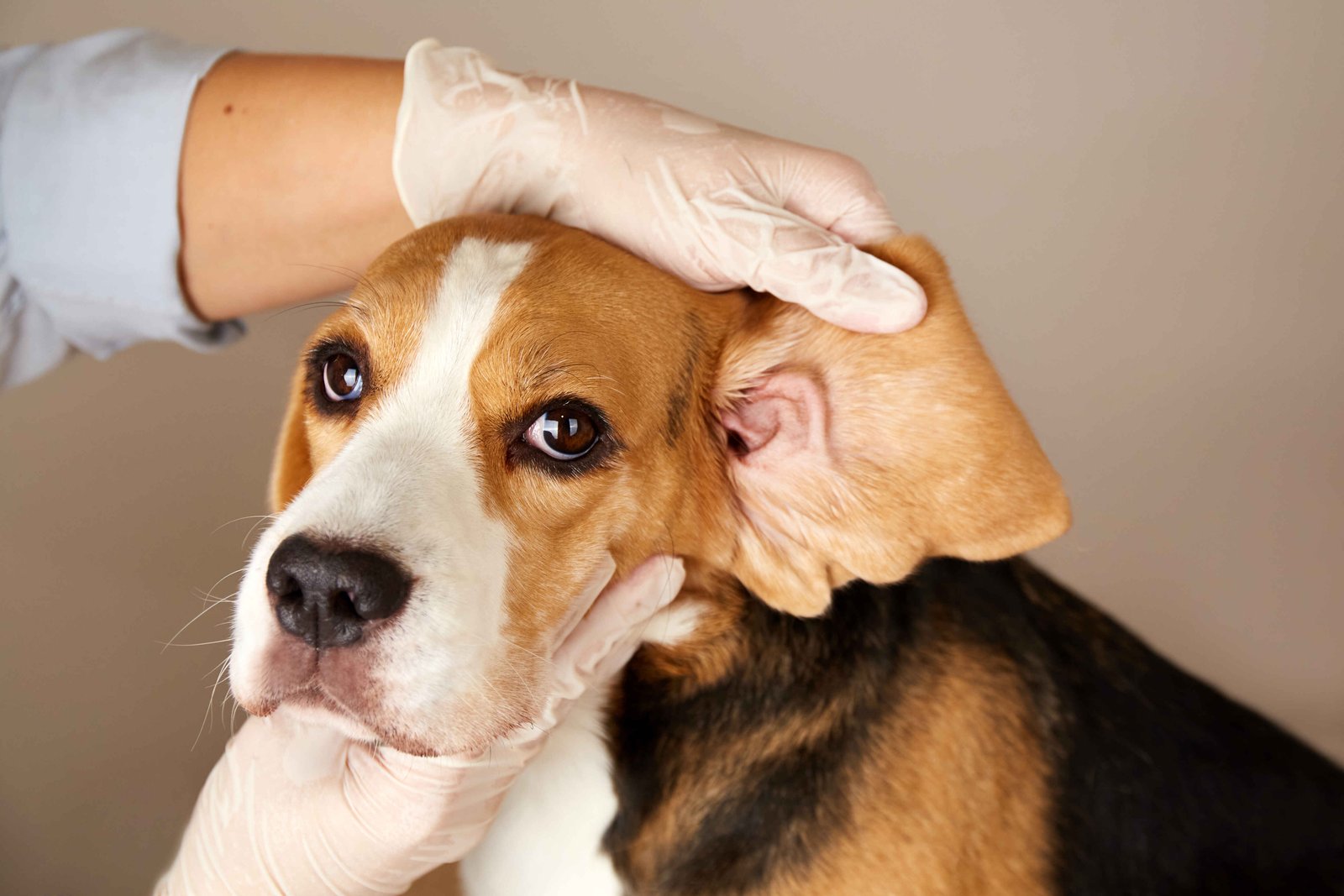
Diagnosis typically involves more than simply looking at the outside of the ear. The goal is to determine what is happening inside the canal and, particularly in recurrent cases, why the problem developed.
Medical History and Physical Examination
Your veterinarian may ask when symptoms started, whether one or both ears are affected, whether the problem has happened before, whether your dog swims frequently, and whether there are signs of allergies or skin disease elsewhere on the body.
Otoscopy
An otoscope allows the veterinarian to examine the ear canal and, when visible, the eardrum. It can help identify inflammation, narrowing, discharge, foreign material, masses, parasites, and abnormalities of the tympanic membrane.
Dogs with extremely painful or obstructed ears may require sedation or treatment of severe inflammation before a complete examination can be performed safely.
Ear Cytology
Cytology involves examining a sample of ear material under a microscope. It is particularly valuable for identifying microbial overgrowth and inflammatory cells and for selecting appropriate treatment.
Culture and Susceptibility Testing
Bacterial culture is not required for every straightforward case. It can become particularly useful in chronic, recurrent, severe, or treatment-resistant bacterial disease, including cases where certain rod-shaped bacteria are identified.
Additional Testing
Dogs with chronic, recurrent, one-sided, or unusually severe ear disease may require additional investigation for allergies, parasites, masses, middle-ear disease, or other underlying conditions. Advanced imaging such as CT or MRI may be considered when deeper ear disease is suspected.
Dog Ear Infections Treatment
Dog ear infections treatment depends on the diagnosis. There is no single ear drop that is appropriate for every red, itchy, or smelly ear.
A veterinary treatment plan may address three separate issues: the primary cause, secondary microbial overgrowth or infection, and the pain and inflammation affecting the ear.
Ear Cleaning
Removing excessive wax and discharge can help some topical medications reach the ear canal more effectively. The appropriate cleaning method and product depend on the condition of the ear and whether the eardrum is intact.
Very painful ears may require professional cleaning or management of inflammation before routine home cleaning becomes tolerable.
Antifungal Treatment
When cytology supports clinically significant yeast overgrowth, treatment commonly includes an appropriate topical antifungal medication. Anti-inflammatory therapy may also be included when needed.
Antibacterial Treatment
Bacterial otitis externa is commonly managed with appropriately selected topical medication. The choice depends on the organisms seen on cytology, previous treatment, severity, and other clinical findings.
Systemic antibiotics are not automatically required for uncomplicated external-ear disease. Deeper infection or particular complicated cases may require a different approach.
Managing Pain and Inflammation
Inflammation can make the ear swollen, itchy, and painful. Veterinary treatment therefore often includes medication aimed at controlling inflammation in addition to addressing secondary microbes.
Treating the Underlying Cause
For dogs with recurrent disease, controlling the underlying problem can be as important as treating the current episode. A dog with allergy-associated otitis, for example, may continue developing ear problems if the allergic inflammation remains uncontrolled.
Can I Treat My Dog’s Ear Infection at Home?
You can provide supportive care at home, but attempting to diagnose and treat a suspected infection without knowing its cause carries important limitations.
Yeast overgrowth, bacterial infection, ear mites, allergic inflammation, foreign material, and deeper ear disease can overlap in appearance. In addition, some ear products may be inappropriate when the eardrum is damaged.
Home Care Is Not the Same as Treating the Infection
Keeping an ear dry, preventing self-trauma, monitoring symptoms, and correctly using a veterinarian-recommended cleaner can support recovery. These measures do not replace diagnosis or appropriate antimicrobial, antifungal, antiparasitic, or anti-inflammatory treatment when those treatments are needed.
Dog Ear Infections Treatment at Home: What Is Safe?
When discussing dog ear infections treatment at home, the safest approach is to separate supportive care from medications intended to treat a diagnosed condition.
Keep the Ear Dry
Until the problem has been evaluated, avoid allowing water to enter an irritated ear during swimming or bathing.
Reduce Self-Trauma
Repeated scratching can damage the skin and ear flap. If your dog cannot stop scratching, contact your veterinarian rather than simply waiting for the behavior to resolve.
Use Ear Cleaners as Directed
If your veterinarian recommends cleaning, use the product and schedule they recommend for your dog’s particular condition.
An ear that is extremely painful, swollen, or obstructed should not be aggressively cleaned at home.
Monitor Changes
Pay attention to whether odor, discharge, redness, pain, head shaking, or scratching is improving or worsening. New head tilt, balance problems, or neurological signs require prompt reassessment.
Do Home Remedies for Dog Ear Infections Work?
Searches for dog ear infections home remedies often lead to vinegar mixtures, hydrogen peroxide, oils, and homemade cleaning solutions. The problem is that a home remedy cannot determine whether the eardrum is intact or whether the underlying problem is yeast, bacteria, parasites, allergy, a foreign object, or deeper ear disease.
Vinegar Mixtures
Vinegar-based mixtures are frequently recommended online. Current veterinary guidance cautions against irritating home remedies in inflamed ears because they can worsen irritation, swelling, and secretions.
Hydrogen Peroxide
Hydrogen peroxide is not a universal ear treatment and may irritate sensitive or inflamed tissue. It should not be used as a substitute for appropriate veterinary evaluation and ear-cleaning guidance.
Oils
Putting oil into an ear does not establish or address the underlying diagnosis. Oils may also interfere with examination or leave material inside an already inflamed canal.
Homemade Ear Cleaners
The safety of an ear-cleaning product depends partly on the condition of the ear canal and eardrum. For that reason, homemade mixtures should not be assumed to be safe simply because their ingredients are common household products.
Over-the-Counter Ear Products
Some products are designed for routine ear hygiene rather than treatment of active disease. A cleaner marketed for healthy ears should not automatically be considered an appropriate treatment for a painful, infected, or potentially damaged ear.
Important Safety Warning
Do not place medication or an improvised cleaning solution deep into a painful or inflamed ear unless you know it is appropriate for your dog. Some substances can cause complications if the eardrum is damaged. Severe pain, neurological signs, or an ear that cannot be safely examined should be assessed by a veterinarian.
How Do I Clean My Dog’s Ears If They Have an Ear Infection?
Cleaning can be part of treatment, but not every painful ear should immediately be cleaned at home.
If your veterinarian has confirmed that home cleaning is appropriate:
- Use the ear-cleaning product they recommend.
- Follow the prescribed frequency rather than cleaning more often because the ear still looks dirty.
- Avoid pushing cotton swabs or other objects deep into the ear canal.
- Stop and contact your veterinarian if cleaning causes substantial pain, bleeding, marked dizziness, or other concerning symptoms.
- Use prescribed medication exactly as directed after cleaning if your veterinarian has instructed you to do so.
Routine ear hygiene and treatment of active otitis are different tasks. A product suitable for maintaining a healthy ear may not be appropriate for an actively inflamed ear.
Why Does My Dog Keep Shaking His Head and Scratching His Ear?
Persistent head shaking and ear scratching indicate discomfort but do not identify the cause.
Possible explanations include:
- Otitis externa
- Yeast or bacterial overgrowth
- Allergic inflammation
- Ear mites or other parasites
- A foreign object inside the ear
- Excessive wax or debris
- Water trapped after swimming or bathing
- Skin disease affecting the ears
Sudden, intense shaking involving only one ear can be particularly suggestive of acute irritation or foreign material, although veterinary examination is needed to determine the cause.
Will a Dog Ear Infection Go Away on Its Own?
Do not assume persistent ear symptoms will resolve without treatment. Some mild irritation may improve when a temporary trigger disappears, but true otitis can persist or worsen when the underlying cause remains.
Does Every Dog Ear Infection Need Antibiotics?
No. “Ear infection” is not synonymous with “bacterial infection.” Yeast-associated disease requires a different treatment approach, parasites require appropriate antiparasitic treatment, and allergic otitis can exist without a secondary infection.
Antibiotics should therefore not be used simply because an ear is red or itchy.
What Happens If an Ear Infection Is Left Untreated?
Persistent inflammation can become painful and may contribute to progressive thickening and narrowing of the ear canal. Chronic external-ear disease can also occur alongside middle-ear involvement.
Early assessment is particularly important when symptoms are severe, recurrent, or accompanied by neurological or balance abnormalities.
When Does a Dog Ear Infection Need a Vet?
Arrange veterinary assessment when ear symptoms persist, recur, are painful, or are accompanied by significant discharge or swelling.
Veterinary evaluation is especially appropriate if your dog has:
- Repeated or intense head shaking
- Persistent scratching
- Strong odor or substantial discharge
- Blood coming from the ear
- Marked redness or swelling
- Pain when the head or ear is touched
- Symptoms that return after treatment
- A chronically narrowed or thickened ear canal
- Symptoms that fail to improve with prescribed treatment
Seek Prompt Veterinary Care
Contact a veterinarian promptly if your dog develops:
- A persistent head tilt
- Loss of balance or repeated falling
- Abnormal rapid eye movements
- Difficulty walking normally
- Facial weakness or asymmetry
- Severe or rapidly increasing pain
- Marked lethargy or other signs of systemic illness
If your dog is also showing changes in appetite, energy, behavior, breathing, digestion, or other symptoms beyond the ear itself, review these warning signs that a dog may be sick and contact your veterinarian if you are concerned.
Why Does My Dog Keep Getting Ear Infections?
Repeated ear infections are a reason to look beyond the microorganisms found during the current episode. A 2023 review of recurrent otitis externa in dogs emphasizes the importance of identifying primary causes, predisposing factors, and changes that perpetuate chronic ear disease rather than focusing only on secondary infection.
Underlying Allergies
Allergic disease is a major consideration in dogs with recurrent otitis. In some dogs, the ears may be one of the primary locations where allergic inflammation appears.
Persistent Inflammation
If inflammation remains uncontrolled, the environment inside the ear can continue to favor secondary microbial overgrowth.
Chronic Structural Changes
Repeated inflammation can gradually cause thickening, narrowing, glandular changes, and other alterations to the ear canal that make future episodes harder to manage.
Middle-Ear Disease
Recurrent external-ear disease can sometimes occur alongside otitis media. Veterinary investigation may therefore extend beyond the external canal when infections repeatedly return despite appropriate therapy.
Moisture and Predisposing Anatomy
Dogs that swim frequently or have ear characteristics that favor moisture retention may require an individualized preventive ear-care plan.
Treatment Stopped Too Early
An ear can look substantially better before inflammation or microbial overgrowth has completely resolved. Follow the prescribed treatment period and attend recommended rechecks rather than stopping medication solely because visible symptoms have improved.
Why Recurrence Matters
If your dog repeatedly develops ear problems, the important question is not only “What organism is in the ear?” but also “Why does this ear keep becoming inflamed?” Long-term control often depends on identifying and managing the underlying cause.
How Long Do Ear Infections Last in Dogs?
There is no single treatment duration for every dog. The time needed depends on the underlying cause, severity of inflammation, organisms involved, whether the ear canal has become chronically altered, and whether the middle ear is affected.
Acute external-ear cases may improve within a relatively short treatment period, while chronic or complicated cases can require weeks to months of management.
The safest endpoint is not simply “the ear looks better.” Veterinary re-examination and, when indicated, repeat cytology help determine whether inflammation and secondary infection have adequately resolved.
How to Prevent Ear Infections in Dogs
Not every case is preventable, particularly when allergies or chronic underlying disease are involved. However, appropriate ear care can reduce some modifiable risk factors.
Check the Ears Regularly
Become familiar with how your dog’s healthy ears normally look and smell. Changes are easier to recognize when you know your dog’s baseline.
Keep Susceptible Ears Dry
For dogs prone to ear problems, gently drying the external ear after swimming or bathing can help reduce prolonged moisture exposure.
Do Not Overclean Healthy Ears
More cleaning is not necessarily better. Unnecessary or aggressive cleaning can irritate the ear canal. Ask your veterinarian how often your individual dog needs routine cleaning.
Manage Allergies
When allergic disease contributes to recurrent otitis, long-term allergy management can be an important part of preventing repeated episodes.
Complete Prescribed Treatment
Use medications for the prescribed period and attend recommended follow-up examinations, even when the ear appears substantially improved.
A Practical Ear-Care Framework for Dog Owners
When your dog starts scratching or shaking their head, use this framework rather than immediately reaching for an old bottle of ear drops.
| Step | What to Do | Why It Matters |
|---|---|---|
| 1. Observe | Check for scratching, shaking, odor, discharge, redness, swelling, and pain. | Establishes what has changed from normal. |
| 2. Check severity | Look for severe pain, head tilt, balance problems, bleeding, or neurological changes. | Helps identify dogs needing prompt assessment. |
| 3. Avoid guessing | Do not diagnose yeast versus bacteria from color or smell alone. | Different conditions can look similar. |
| 4. Get the cause identified | Seek veterinary assessment for persistent, painful, recurrent, or significant symptoms. | Examination and cytology can guide treatment. |
| 5. Follow treatment | Use prescribed medication and cleaning products as directed. | Incomplete treatment can contribute to recurrence. |
| 6. Investigate recurrence | Discuss allergies and other underlying causes if infections repeatedly return. | Long-term control depends on more than treating secondary microbes. |
Common Mistakes to Avoid
- Assuming every smelly ear is infected. Inflammation has multiple possible causes.
- Diagnosing yeast or bacteria from discharge color alone. Cytology provides much better information.
- Using leftover prescription ear medication. The current problem may have a different cause, and the condition of the eardrum may have changed.
- Using irritating home remedies. Inflamed tissue can become more irritated.
- Cleaning an extremely painful ear aggressively. Severe inflammation may need to be controlled first.
- Stopping treatment as soon as the ear looks better. Clinical improvement does not necessarily mean the problem has completely resolved.
- Ignoring repeated infections. Recurrence can indicate allergies, chronic inflammation, middle-ear disease, or another underlying problem.
- Ignoring balance or neurological symptoms. These signs warrant prompt veterinary evaluation.
Frequently Asked Questions About Dog Ear Infections
Can a dog’s ear infection go away by itself?
Mild temporary irritation may occasionally settle when its trigger disappears, but persistent signs of otitis should not simply be assumed to resolve on their own. Infection, allergy, parasites, foreign material, and deeper ear disease can produce similar symptoms and may require specific treatment.
Can I give my dog anything for an ear infection?
Do not use leftover medication or human ear products unless your veterinarian has confirmed they are appropriate. Treatment depends on the cause and on factors such as the condition of the ear canal and eardrum.
Will a dog’s ear infection go away without antibiotics?
Not every ear problem requires antibiotics. Yeast-associated otitis, allergic inflammation, parasites, and foreign bodies require different approaches. Even bacterial external-ear disease is commonly treated with appropriately selected topical therapy rather than automatically requiring systemic antibiotics.
What can be mistaken for an ear infection in dogs?
Allergic inflammation, ear mites, foreign material, excessive wax, skin disease, growths within the ear canal, and other ear disorders can produce scratching, head shaking, redness, odor, or discharge.
How do I clean my dog’s ears if they have an ear infection?
If your veterinarian recommends home cleaning, use the cleaner and frequency they specify. Avoid pushing cotton swabs deep into the canal, and do not aggressively clean an ear that is severely painful, swollen, bleeding, or associated with balance problems.
How long do ear infections last in dogs?
Duration varies. Straightforward external-ear disease may improve relatively quickly with appropriate treatment, whereas chronic, recurrent, resistant, or middle-ear disease can require weeks or longer. Follow-up examination and repeat cytology may be used to confirm resolution.
Why does my dog keep shaking his head and scratching his ear?
Common possibilities include otitis externa, allergies, yeast or bacterial overgrowth, parasites, a foreign body, moisture, and excessive debris. Persistent or intense symptoms warrant veterinary assessment.
Can dogs have yeast and bacteria in the ear at the same time?
Yes. Mixed microbial overgrowth can occur. This is one reason ear cytology is useful: treatment can be selected based on what is actually present rather than relying on the appearance or smell of the ear alone.
Key Takeaways
- Common dog ear infection symptoms include head shaking, scratching, redness, odor, discharge, swelling, and pain.
- Not every inflamed ear is a bacterial infection.
- Yeast, bacteria, parasites, allergies, foreign bodies, and other conditions can produce overlapping symptoms.
- Ear cytology is an important tool for identifying microbial overgrowth and guiding treatment.
- Home care can support recovery but should not replace diagnosis and appropriate treatment.
- Irritating homemade ear remedies can worsen an already inflamed ear.
- Repeated ear infections warrant investigation for an underlying cause, particularly allergic disease.
- Head tilt, loss of balance, unusual eye movements, or other neurological signs require prompt veterinary attention.
Veterinary References
- Merck Veterinary Manual. Otitis Externa in Animals.
- Merck Veterinary Manual. Ear Infections and Otitis Externa in Dogs.
- Merck Veterinary Manual. Otitis Media and Interna in Animals.
- American Animal Hospital Association (AAHA). 2023 AAHA Management of Allergic Skin Diseases in Dogs and Cats Guidelines.
- Nuttall T. Managing recurrent otitis externa in dogs: what have we learned and what can we do better? Journal of the American Veterinary Medical Association. 2023;261(S1):S10-S22.
- Parnell-Turner H, Griffin CE, Rosenkrantz WS, Keating MK, Bidot WA. Evaluation of paired staining methods to identify microbial aggregates in dogs with microbial otitis externa and suspected biofilm. Veterinary Dermatology. 2021;32(5):448-e122.