

Raw dog food recipes are balanced meals made directly from fresh meat, raw bones, and secreting organs, specifically designed to mimic a dog’s natural, ancestral diet. The most common formula follows an 80/10/10 ratio and can significantly improve a dog’s digestion, coat health, and overall energy levels.
Believe it or not, beneath your dog’s cuddly exterior and goofy smile lies the digestive system of a scavenger and carnivore. For thousands of years before the invention of commercial kibble, canines thrived on organic, native, whole-prey diets. Today, a massive movement of pet parents is returning to those roots to improve their dog’s health naturally.
In the beginning, creating homemade raw dog food can feel intimidating. You have to understand nutritional ratios, source quality ingredients, and handle raw meat safely. However, once you establish a routine, raw feeding becomes second nature. In this comprehensive guide, we will break down the exact science of raw feeding and provide you with an easy, perfectly balanced raw dog food diet plan to help your furry best friend thrive.
A balanced raw diet must follow the 80/10/10 ratio: 80% muscle meat, 10% raw edible bone, and 10% secreting organs (with exactly half of that being liver). Feeding just a plain chicken breast is not a balanced diet!
3 Easy Raw Dog Food Recipes for Beginners
The great thing about the raw dog food diet is that every single meal does not have to be mathematically perfect. Balance is achieved over time (usually over the course of a week). Here are three highly balanced, easy to prep recipes.
Recipe 1: The Chicken Starter Raw Recipe (Beginner-Friendly)
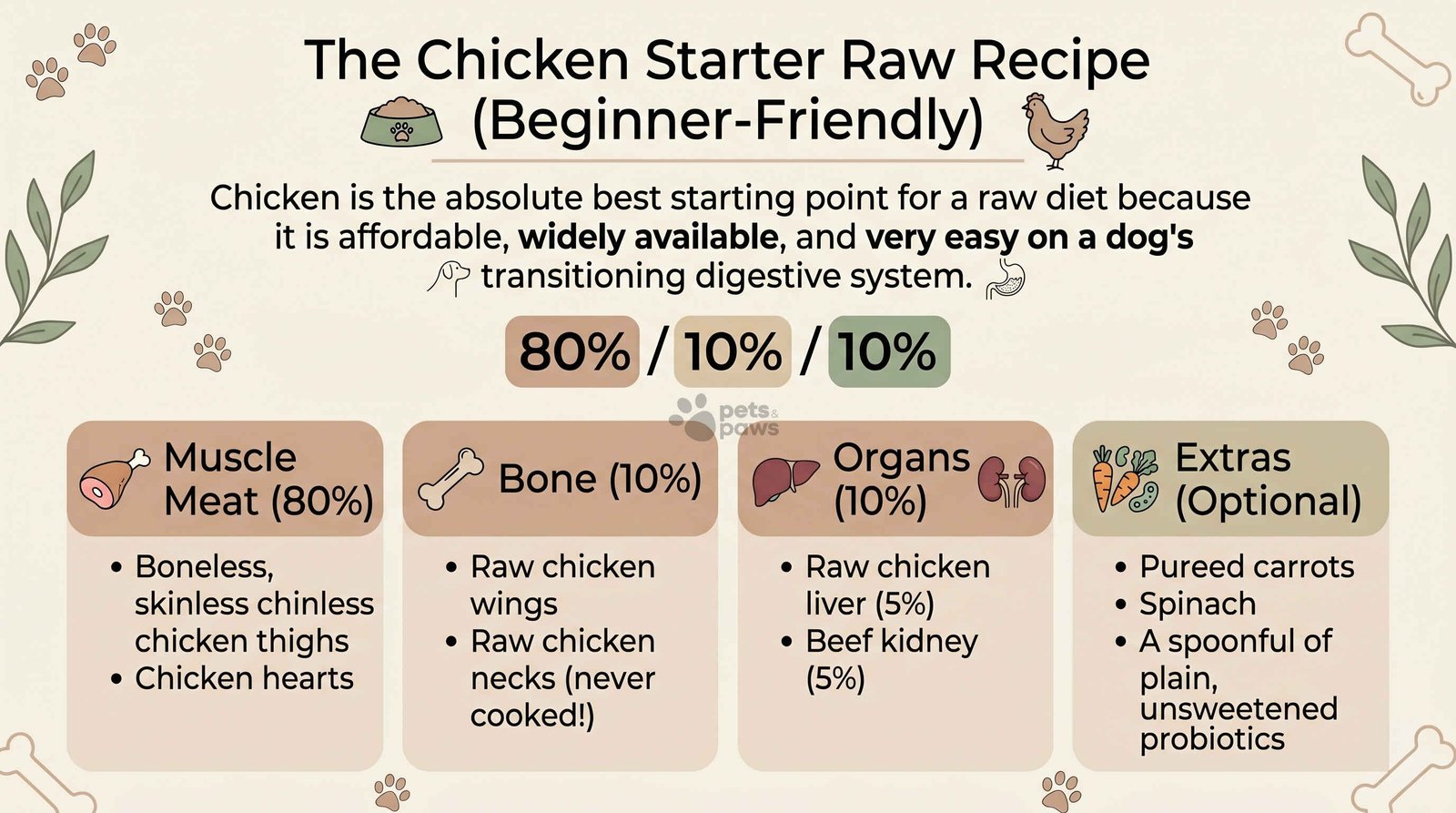
Chicken is the absolute best starting point for a raw diet because it is affordable, widely available, and very easy on a dog’s transitioning digestive system.
- Muscle Meat (80%): Boneless, skinless chicken thighs and chicken hearts.
- Bone (10%): Raw chicken wings or chicken necks (never cooked!).
- Organs (10%): Raw chicken liver (5%) and beef kidney (5%).
- Extras (Optional): Pureed carrots, spinach, and a spoonful of plain, unsweetened kefir for probiotics.
Recipe 2: The Beef BARF Raw Recipe
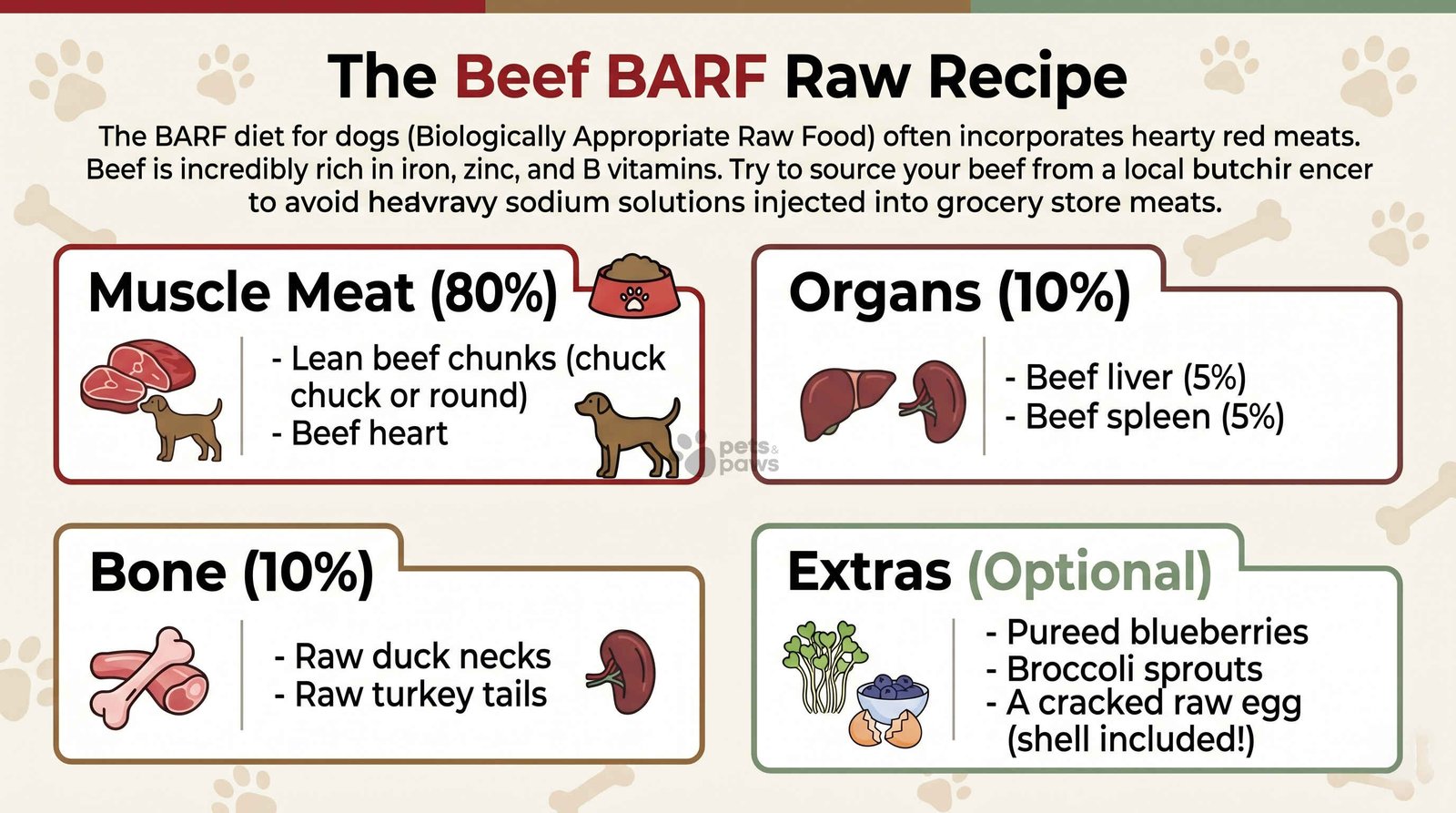
The BARF diet for dogs (Biologically Appropriate Raw Food) often incorporates hearty red meats. Beef is incredibly rich in iron, zinc, and B vitamins. Try to source your beef from a local butcher to avoid heavy sodium solutions injected into grocery store meats.
- Muscle Meat (80%): Lean beef chunks (chuck or round) and beef heart.
- Bone (10%): Raw duck necks or raw turkey tails.
- Organs (10%): Beef liver (5%) and beef spleen (5%).
- Extras (Optional): Pureed blueberries, broccoli sprouts, and a cracked raw egg (shell included!).
Recipe 3: The Sardine Omega Raw Recipe
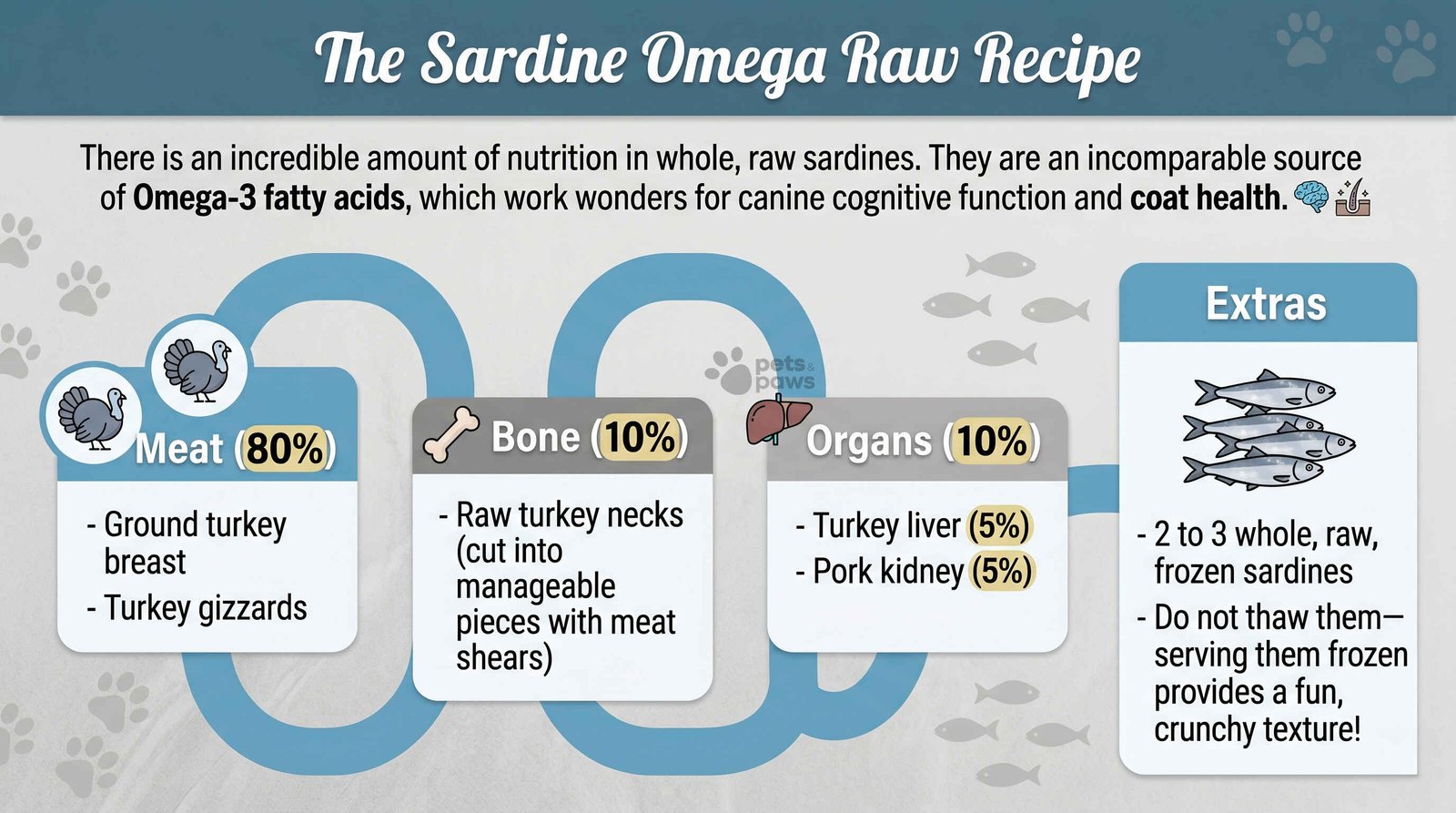
There is an incredible amount of nutrition in whole, raw sardines. They are an incomparable source of Omega-3 fatty acids, which work wonders for canine cognitive function and coat health.
- Muscle Meat (80%): Ground turkey breast and turkey gizzards.
- Bone (10%): Raw turkey necks (cut into manageable pieces with meat shears).
- Organs (10%): Turkey liver (5%) and pork kidney (5%).
- Extras: 2 to 3 whole, raw, frozen sardines. Do not thaw them, serving them frozen provides a fun, crunchy texture!
What Are Raw Dog Food Recipes?
At their core, raw dog food recipes are highly calculated formulas designed to replicate what a dog would eat if they caught prey in the wild. Unlike commercial dry kibble, which is extruded at massively high heat (destroying natural enzymes and vitamins), a raw diet is served entirely uncooked. This preserves the natural, bioavailable state of the proteins, fats, and essential amino acids.
Raw Dog Food Diet (80/10/10 Explained)
One of the biggest, most dangerous mistakes new raw feeders make is tossing a steak in a bowl and assuming the dog is fed. Meat alone is terribly unbalanced and will quickly lead to severe calcium and vitamin deficiencies. You must follow strict ratios to ensure proper dog nutrition.
| Component | Percentage | Purpose |
|---|---|---|
| Muscle Meat | 70%–80% | Provides essential proteins, amino acids, and water-soluble vitamins. (Includes heart and lung). |
| Raw Meaty Bones | 10% | Provides vital calcium and phosphorus; acts as natural dental floss. |
| Secreting Organs | 10% (5% must be Liver) | Nature’s multivitamin. Provides massive amounts of Vitamin A, B-vitamins, and iron. |
| Extras (Vegetables) | 0%–10% (Optional) | Provides antioxidants and phytonutrients. Must be pureed for dogs to digest. |
Is Raw Dog Food Safe for Dogs?
This is a highly debated topic. The AVMA advises extreme caution regarding raw meat handling due to the risk of bacterial pathogens like Salmonella and Listeria. These bacteria pose a far greater threat to the humans preparing the food than to the dog eating it, as dogs have highly acidic stomachs designed to neutralize wild bacteria.
When prepared with strict kitchen hygiene, sourced from reputable human-grade butchers, and balanced correctly, a raw dog food diet is incredibly safe and biologically appropriate. However, it is generally not recommended for immunocompromised dogs, very young puppies, or households with immunocompromised humans.
Raw Dog Food Benefits
Advocates of raw feeding report massive, visible transformations in their dogs after making the switch from heavily processed commercial kibble:
- Cleaner Teeth and Fresher Breath: Chewing on raw meaty bones naturally scrapes plaque and tartar away, acting as nature’s toothbrush.
- Healthier Skin and Coat: The high levels of natural, unoxidized fats and Omega-3s in fresh meat lead to incredibly soft, shiny, and flake-free coats.
- Smaller, Less Odorous Stools: Because raw food contains zero carbohydrate fillers (like corn or soy), your dog’s body absorbs almost all of it. This results in significantly less backyard waste.
- Increased Energy and Vitality: Free from the heavy carbohydrate load of kibble, dogs often experience more stable, sustained energy levels without sugar crashes.
Raw Dog Food for Beginners (Step-by-Step Guide)
You cannot simply dump a bowl of raw meat in front of a dog who has eaten dry kibble their entire life. Their stomach pH needs time to become acidic enough to dissolve bone. Here is how to safely transition:
- The Fast (Day 1): Fast your dog for 12 to 24 hours to completely clear their digestive tract of slow-moving kibble.
- Single Protein (Days 2-4): Introduce a single, bland protein (like boneless chicken breast) in very small meals.
- Adding Bone (Days 5-7): Introduce soft, raw meaty bones like chicken necks. Monitor their stool; if it is too loose, add slightly more bone. If it is chalky and white, reduce the bone.
- Adding Organs (Week 2): Slowly introduce liver. Liver is incredibly rich; adding too much too quickly will cause explosive “pudding stool.” Start with a tiny sliver.
- Adding Variety (Week 3): Once your dog is successfully digesting chicken, bone, and organs, slowly introduce a second protein, such as beef or pork.
What Ingredients to Use in Raw Dog Food
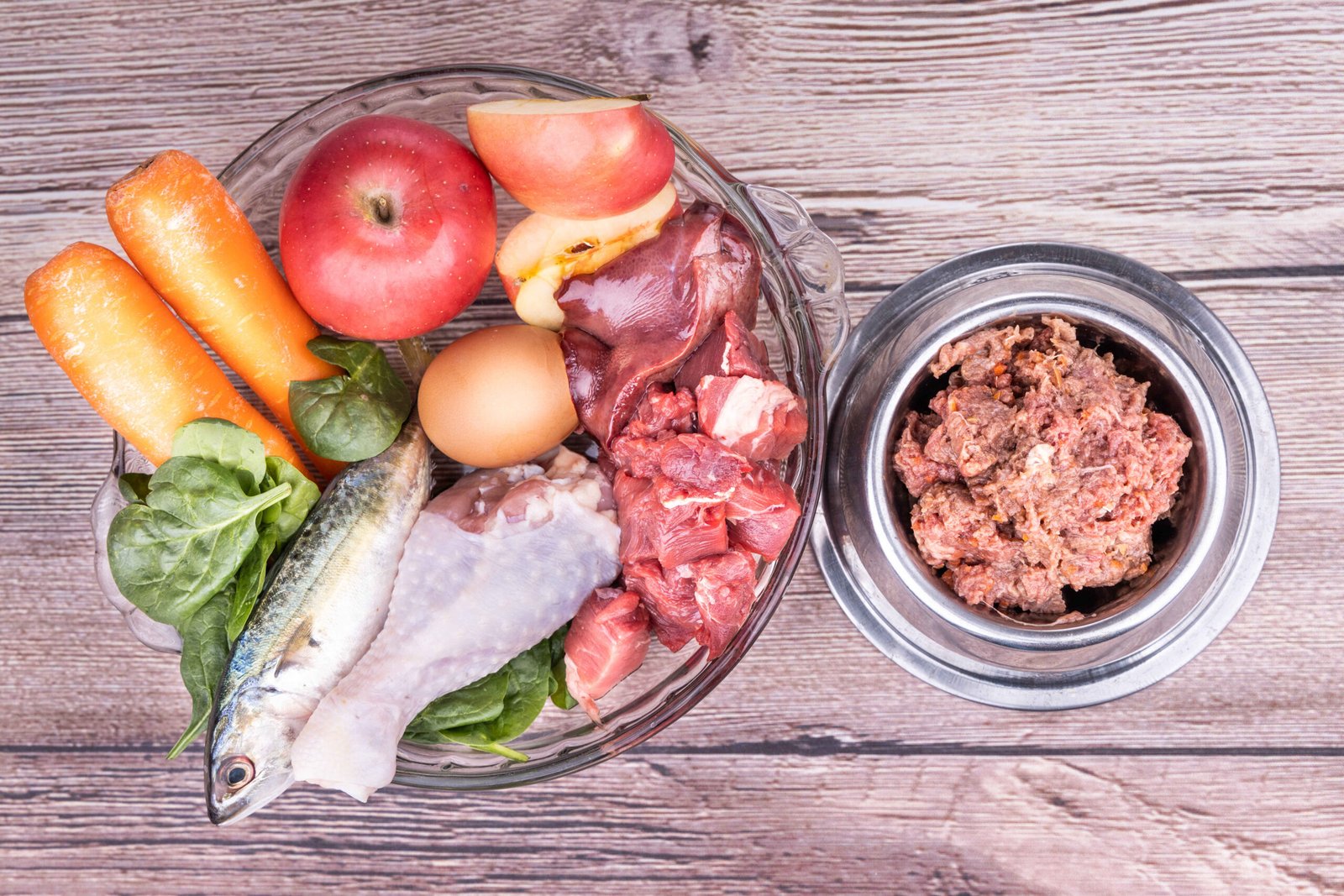
Sourcing the right ingredients is the key to how to make raw dog food at home successfully.
Best Proteins
Chicken, turkey, beef, pork, and lamb are excellent foundations. Do not forget that the heart, lungs, and green tripe are classified as muscle meats, not secreting organs, and should make up a large portion of the bowl.
Best Bones
You need bones that are fully edible and soft enough to crush. Chicken wings, chicken necks, duck feet, turkey necks, and rabbit ribs are perfect. Avoid large, dense weight-bearing bones from large animals (like beef femurs), as these can fracture a dog’s teeth.
Best Organs
Liver is absolutely mandatory for Vitamin A. For the remaining 5% of the organ requirement, utilize the kidney, spleen, pancreas, or testicles.
Ingredients to Avoid in Raw Dog Food
You must rigorously avoid these highly dangerous items when prepping your dog’s meals:
- Cooked Bones: CRITICAL SAFETY NOTE: Never, ever feed your dog cooked bones. Cooking calcifies bones, making them brittle, sharp, and highly prone to splintering and puncturing the intestines.
- Processed Meats: Never use bacon, sausage, or deli meats. They are packed with lethal amounts of sodium and deadly spices.
- Seasoned or “Enhanced” Meat: Always check the label on grocery store chicken to ensure it has not been injected with a “sodium broth solution” to plump it up.
How Much Raw Food to Feed Your Dog
Determining your dog’s daily portion is straightforward mathematics based on their current weight and body condition.
- For weight loss: Feed 2% of their ideal adult body weight.
- For maintenance: Feed 2.5% of their ideal adult body weight.
- For active dogs/weight gain: Feed 3% to 4% of their ideal adult body weight.
Example: A 50-pound dog eating a 2.5% maintenance diet requires 1.25 pounds (20 ounces) of raw food per day.
Essential Safety Tips for Handling Raw Meat
The biggest argument against homemade raw dog food is the risk of bacterial contamination in the kitchen. You must practice strict hygiene:
- Designate Tools: Use a separate cutting board, knife, and mixing bowl specifically and exclusively for your dog’s raw food prep.
- Wash Vigorously: Wash your hands, surfaces, and dog bowls with hot, soapy water immediately after handling raw meat.
- Freeze First: According to raw feeding experts at Perfectly Rawsome, freezing certain meats (like pork and wild game) for 3 weeks before feeding is crucial to kill off potential parasites like Trichinella.
Common Mistakes in Raw Feeding
Avoid these frequent pitfalls to ensure your dog stays healthy and safe:
- Only Feeding Meat: A diet of just hamburger meat will cause severe, crippling nutritional deficiencies.
- Forgetting Organs: Liver is nature’s multivitamin. Leaving it out deprives your dog of essential fat-soluble vitamins.
- Switching Too Fast: Transitioning overnight without fasting your dog will guarantee a massive bout of diarrhea.
- Mixing Kibble and Raw: Kibble and raw meat digest at drastically different rates. Feeding them in the exact same bowl can cause severe stomach upset and bacterial overgrowth.
If you want to treat your dog during the transition without upsetting their stomach, check out our guide on how to make safe, limited-ingredient DIY dog treats.
Frequently Asked Questions (FAQ)
What is the best raw dog food recipe?
The best raw dog food recipe is a carefully balanced meal utilizing the 80/10/10 ratio (80% muscle meat, 10% raw bone, 10% secreting organs). For beginners, a simple chicken-based recipe using chicken thighs, raw chicken necks, and chicken liver is the easiest and safest place to start.
Is raw feeding safe for dogs?
It can be very safe if the diet is properly mathematically balanced and the raw meat is handled with strict, human-grade kitchen hygiene. However, it is not recommended for immunocompromised dogs or households with very young children due to the risk of bacterial cross-contamination.
What is the BARF diet?
BARF stands for “Biologically Appropriate Raw Food” or “Bones and Raw Food.” It is a specific type of raw diet that heavily emphasizes the strict inclusion of raw meaty bones, secreting organs, and a small percentage of pureed vegetables and fruits to mimic a wolf’s natural ancestral diet.
Can I feed my dog raw food every day?
Yes, you can absolutely feed your dog raw food every single day, provided the meals are comprehensively nutritionally balanced over the course of the week. Many raw feeders prep their dog’s daily meals in bulk once a month and freeze them.
What raw food is best for beginners?
Chicken-based recipes are definitively the easiest for beginners. Chicken is highly affordable, readily available at any grocery store, very bland on a transitioning dog’s stomach, and the bones (like wings and necks) are soft enough for a beginner dog to easily crunch through.
Do vets recommend raw feeding?
Veterinary opinion is highly divided. Many holistic and integrative veterinarians strongly support the massive health benefits of raw feeding, while traditional veterinary organizations (like the AVMA) strongly caution against it strictly due to the risk of Salmonella and bacterial contamination in the home.
References & Further Reading
- American Kennel Club (AKC): Raw Dog Food: Dietary Concerns, Benefits, and Risks
- American Veterinary Medical Association (AVMA): Raw or Undercooked Animal-Source Protein Diets
- Perfectly Rawsome: Raw Feeding Guides, Ratio Calculators, and Nutritional Breakdowns
- U.S. Food & Drug Administration (FDA): Get the Facts! Raw Pet Food Diets can be Dangerous