


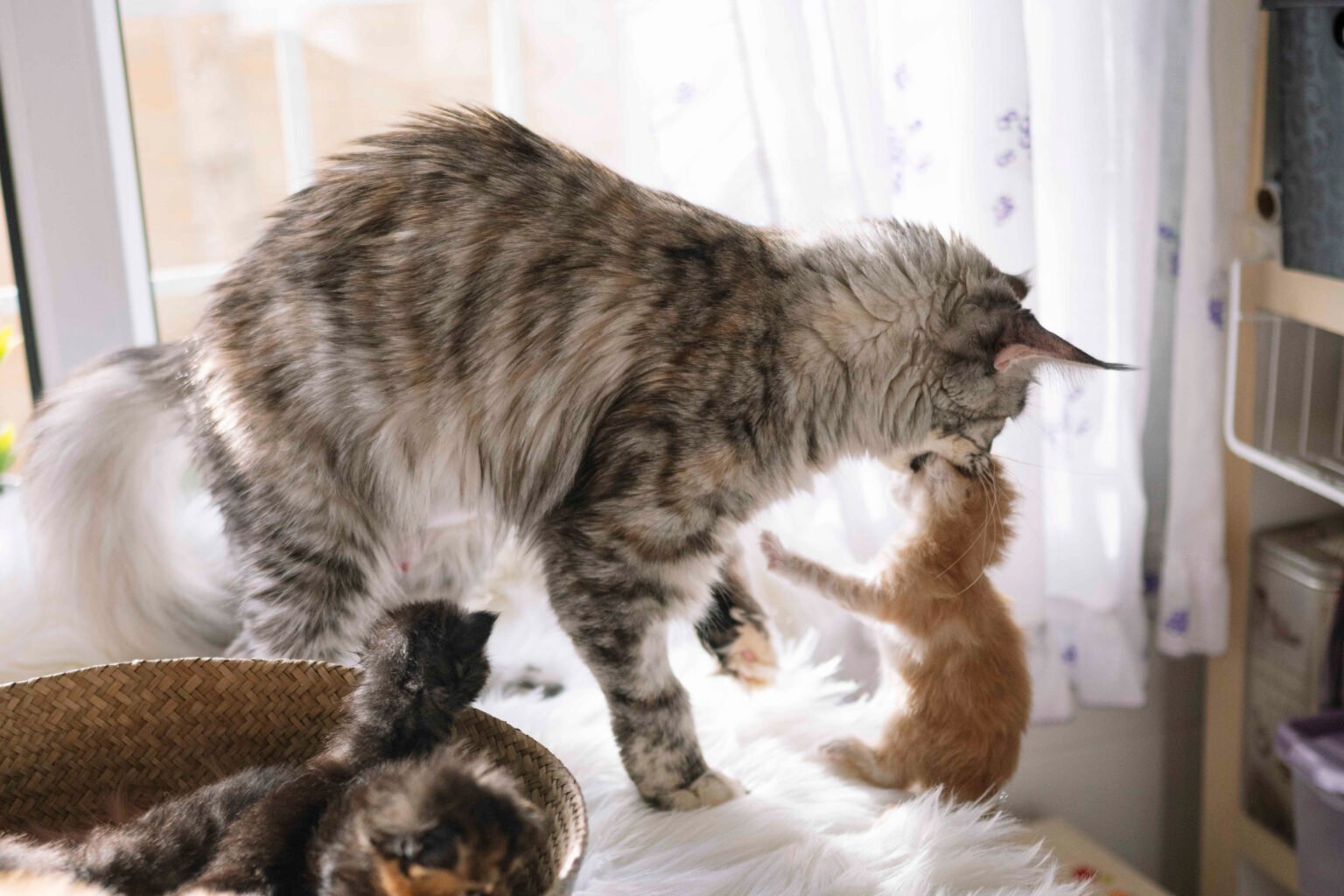
Discovering your cat pushing away her newborns is a terrifying experience that prompts urgent and emotional questions: Why is my cat rejecting her kittens? Is it normal behavior, or a medical emergency? Most importantly, can the kittens survive without her care?
- Is It Normal for a Mother Cat to Reject Her Kittens?
- Signs Your Cat Has Truly Rejected Her Kittens
- 9 Reasons Why Your Cat Is Rejecting Her Kittens
- 1. Weak or Sick Kitten
- Veterinary Insight
- 2. First-Time Mother
- 3. Stress After Giving Birth
- 4. Mastitis or Illness
- 5. Large Litter
- 6. Premature Birth
- 7. No Milk Production (Agalactia)
- 8. Environmental Problems
- 9. Natural Survival Instinct
- Common Mistakes Owners Make
- What Should You Do if Your Cat Rejects Her Kittens?
- Can Rejected Kittens Survive?
- When Should You Call a Veterinarian?
- How to Prevent a Mother Cat From Rejecting Her Kittens
- Myths About Mother Cats Rejecting Their Kittens
- Sources & References
- Conclusion
- Frequently Asked Questions (FAQ)
- Why would a mother cat reject her kittens?
- Why is my cat rejecting only one kitten?
- Can rejected kittens survive?
- What should I do if a mother cat abandons her kittens?
- Will my cat accept them again?
- How long can kittens survive without nursing?
- Can I touch newborn kittens?
- Should I bottle feed rejected kittens?
- Can stress cause kitten rejection?
- How do I know if my cat has mastitis?
While temporary distancing to eat or rest is normal, true rejection is a life-threatening situation usually triggered by severe environmental stress, an underlying illness, or maternal confusion. The good news is that with swift human intervention, rejected kittens can absolutely survive and thrive. When an owner notices true rejection, the very first steps are removing the kittens to keep them warm and contacting a veterinarian for emergency guidance.
In this guide, you will learn how to tell the difference between normal behavior and actual rejection, the nine most common causes, and exactly what you need to do to save the litter.
Quick Symptoms Guide
| If your cat… | You should… |
|---|---|
| Pushes one kitten away | Monitor closely |
| Refuses all kittens | Call a vet |
| Won’t nurse | Check for mastitis |
| Leaves nest for hours | Keep kittens warm |
| Attacks kittens | Emergency |
Is It Normal for a Mother Cat to Reject Her Kittens?
In the animal kingdom, rejecting a single, unviable kitten is a normal natural instinct designed to protect the healthy members of the litter. However, rejecting an entire healthy litter is not normal and typically indicates a medical or environmental crisis.
It is crucial to distinguish between actual rejection and temporary distancing. A healthy mother will occasionally leave the nesting box to stretch, eat, drink, or use the litter box. She may rest on the cool floor nearby to take a break from nursing. This is normal. Actual rejection happens when she refuses to care for them when she is in the nest, or when she abandons the nest entirely for prolonged periods.
| Behavior | Normal Distancing | True Rejection |
|---|---|---|
| Time Away | Short breaks (15–30 minutes) | Leaves for hours at a time |
| Response to Crying | Returns to the nest quickly | Ignores frantic crying |
| Nursing | Allows kittens to latch easily | Covers belly, swats, or bites kittens |
| Grooming | Cleans kittens regularly | Leaves kittens dirty and wet |
| Physical Contact | Sleeps curled around the litter | Pushes kittens away into the cold |
Signs Your Cat Has Truly Rejected Her Kittens
If you suspect your cat is neglecting her litter, watch closely for these definitive signs of true rejection:

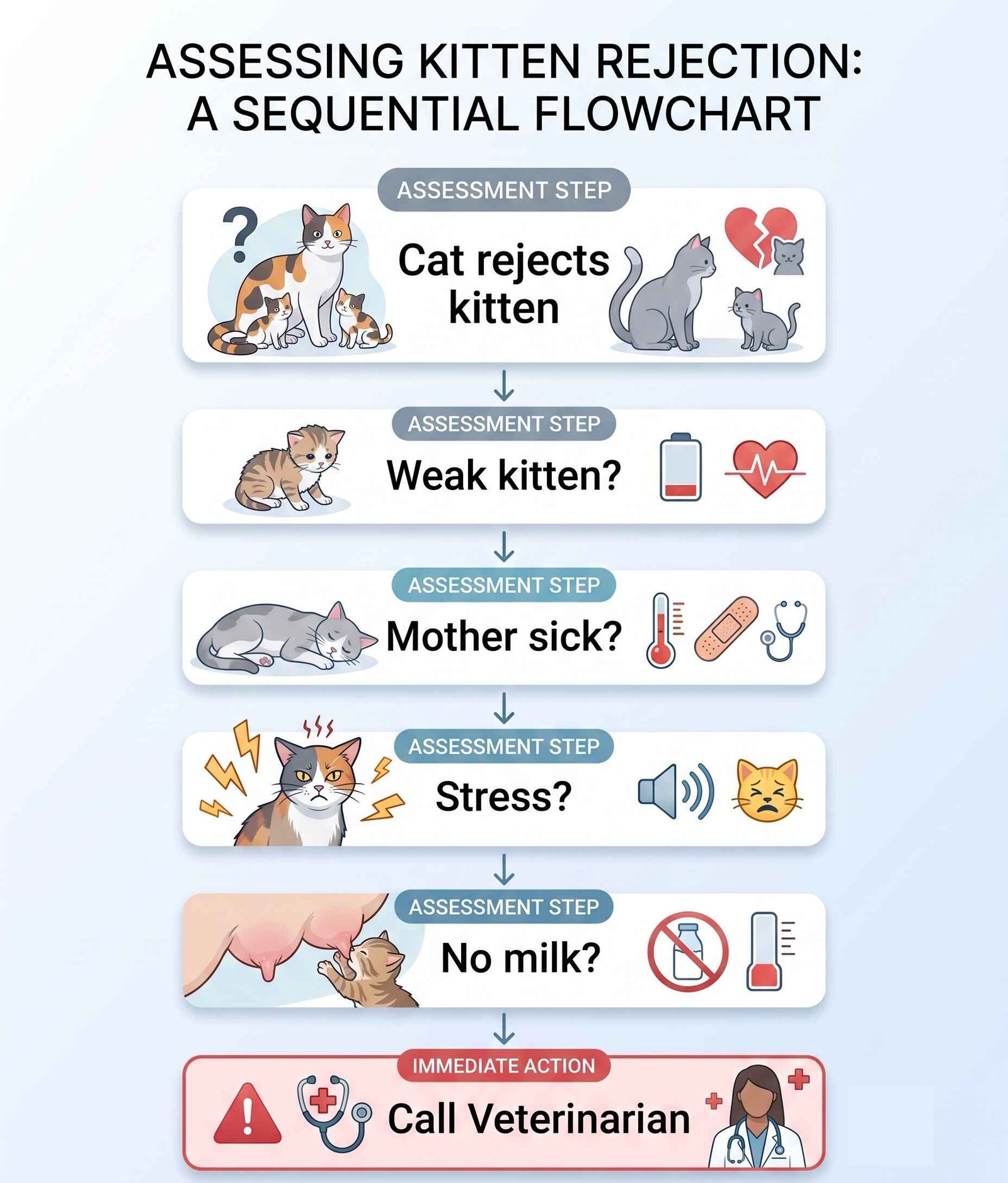
9 Reasons Why Your Cat Is Rejecting Her Kittens
Understanding the root cause is the first step to saving the litter. Here are the nine most common reasons behind maternal rejection.
1. Weak or Sick Kitten
As noted by the Merck Veterinary Manual, mother cats have a highly tuned instinct to detect when a kitten’s body temperature drops or if it has a congenital defect. To avoid wasting limited milk on a baby that won’t survive, she will push it away. This is often the first sign of Fading Kitten Syndrome.
Veterinary Insight
“Newborn kittens can become critically ill within hours if they stop nursing. Prompt warming and veterinary assessment are essential.”
2. First-Time Mother
Inexperienced queens can suffer from extreme hormonal confusion. The pain of birth, combined with a lack of the “bonding hormone” (oxytocin), can cause a young mother to be terrified of her own squirming, crying newborns.
3. Stress After Giving Birth
Feline behavior guidelines from the International Society of Feline Medicine (ISFM) emphasize that a mother cat requires a silent, dark, and highly secure environment. If her nesting box is exposed to loud noises, constant human visitors, poking children, or roaming household dogs, she will panic. This severe anxiety overrides her maternal instincts. (Learn more about stress behaviors in our guide: Why Do Cats Move Their Kittens?)
4. Mastitis or Illness
Nursing is agonizing if the mother has an infection. Cat Mastitis (a painful bacterial infection of the mammary glands) makes her teats hot, swollen, and hard, causing her to bite kittens that try to feed. Other life-threatening conditions like Eclampsia in Cats (calcium deficiency) also cause severe maternal neglect.
5. Large Litter
If a queen has an exceptionally large litter, intense milk competition occurs. She physically may not have enough nipples or milk to support everyone. Consequently, she may reject the smallest, weakest kittens to ensure the strongest survive.
6. Premature Birth
If kittens arrive too early, the mother’s body is not prepared. Her milk may not have come in, and her hormonal triggers for bonding are absent. Premature babies require intensive Newborn Kitten Care to survive.
7. No Milk Production (Agalactia)
Sometimes a mother simply cannot produce milk. If she knows she is unable to feed her hungry babies, she may leave the nest out of pure frustration and distress. These kittens must immediately be placed on a strict Kitten Feeding Schedule using a bottle and formula.
8. Environmental Problems
A poor nesting environment guarantees rejection. Common environmental disturbances that prompt a mother to abandon the nest include:
- Room temperature: Too hot or freezing cold drafts.
- Bright lights: Harsh overhead lighting mimicking an exposed area.
- Household renovations: Loud banging, drilling, and unfamiliar vibrations.
- Unfamiliar animals: New pets or outdoor cats seen through a window.
- Strong cleaning products: Bleach or heavy citrus scents erasing the kittens’ familiar smell.
- Excessive handling: Humans touching the babies too frequently in the first critical week.
9. Natural Survival Instinct
Consistent with animal welfare resources from the American Veterinary Medical Association (AVMA), in evolutionary biology, a wild or profoundly stressed cat will prioritize her own survival over her offspring if she feels trapped or starving. If she believes the environment guarantees their death anyway, her instincts tell her to abandon them so she can survive to breed again in a safer location.
Common Mistakes Owners Make
When panic sets in, well-meaning owners often make dangerous errors. Avoid these common mistakes:
- Feeding cow’s milk: Cats cannot digest cow’s milk; it causes severe, life-threatening diarrhea. Only use feline milk replacer.
- Warming kittens too quickly: Rapid heating can cause fatal shock. Warm them slowly using a low heating pad wrapped in a towel.
- Waiting too long before calling a vet: Neonates fade in a matter of hours. Delaying care is often fatal.
- Handling kittens excessively: Over-handling causes immense stress for the mother and can exacerbate rejection.
- Separating healthy kittens unnecessarily: If the mother is only rejecting one sick kitten, do not remove the healthy ones that she is still actively nursing.
What Should You Do if Your Cat Rejects Her Kittens?
If you confirm rejection, time is of the essence. Neonatal kittens deteriorate in a matter of hours.
- Keep Kittens Warm: A cold kitten cannot digest food. Immediately move them to a secure box with a pet-safe heating pad set on low (ensure they have room to crawl away if they get too hot).
- Check Nursing: Weigh the kittens daily on a digital scale. If they are losing weight or crying constantly, they are starving.
- Reduce Stress: Dim the lights, remove all other pets, and ensure the room is completely silent to see if the mother will calm down and return.
- Call the Vet: Contact your veterinarian to rule out maternal illness (like mastitis) and get advice on neonatal care.
- Bottle Feed if Necessary: If she refuses to nurse, you must take over. Provide Newborn Kitten Care by bottle-feeding feline milk replacer every 2 hours and stimulating them to eliminate, following neonatal protocols recommended by the ASPCA.
Can Rejected Kittens Survive?
Yes! It is entirely possible for rejected kittens to survive and thrive into healthy adult cats. However, they rely 100% on human intervention. Because they lack their mother’s milk and warmth, you must act as their surrogate.
Medical Timeline: How Long Can Kittens Go Without Nursing?
| Time Without Nursing | What Happens to the Kitten |
|---|---|
| 2 hours | Risk of dehydration begins |
| 4 hours | Hypoglycemia (low blood sugar) risk increases |
| 8 hours | Serious medical emergency |
| 24 hours | Survival becomes unlikely without intervention |
By maintaining a strict Kitten Feeding Schedule and providing round-the-clock warmth and stimulation, you can save their lives.
When Should You Call a Veterinarian?
Do not wait to see if things improve if you notice any of these severe red flags. Call an emergency vet immediately:
How to Prevent a Mother Cat From Rejecting Her Kittens
Prevention is always better than reaction. To set a pregnant cat up for success:
- Quiet Nesting Area: Set up a covered box in a dark, low-traffic closet or spare bathroom weeks before birth.
- Proper Nutrition: Feed the mother a high-calorie kitten kibble during pregnancy and lactation.
- Minimize Handling: Do not hold or touch the newborn kittens for the first two weeks unless medically necessary to avoid altering their scent.
- Stress Reduction: Keep all dogs, noisy children, and household visitors completely away from the nesting room.
- Prenatal Vet Care: Ensure the mother receives checkups during pregnancy to identify potential health risks early.
Myths About Mother Cats Rejecting Their Kittens
| Myth | Fact |
|---|---|
| Human scent causes rejection | False. While excessive handling causes stress, cats rarely reject babies just because they smell like humans. |
| Every rejected kitten will die | False. With proper human intervention and bottle-feeding, rejected kittens can survive and thrive. |
| Mother cats always know best | Not always. Pain, illness, or severe stress can cause a mother to reject perfectly healthy kittens by mistake. |
| You shouldn’t interfere | False. If kittens are starving, cold, or being attacked, you must intervene immediately to save their lives. |
Sources & References
- Merck Veterinary Manual: Management of the Neonatal Kitten and Maternal Behavior.
- International Society of Feline Medicine (ISFM): Feline Behavior and Stress Guidelines.
- ASPCA: Newborn Kitten Care and Bottle Feeding.
- American Veterinary Medical Association (AVMA): Resources on Animal Welfare and Normal Feline Behavior.
Conclusion
A mother cat rejecting her kittens is a distressing event, but understanding the underlying causes empowers you to take life-saving action. Rejection has many causes—ranging from a sick kitten to a sick mother—and while it is sometimes a temporary stress response, true rejection is always a medical emergency. By acting quickly to warm the kittens, reducing household stress, and working closely with your veterinarian, you can ensure a happy, healthy outcome for the entire litter.
Frequently Asked Questions (FAQ)
Why would a mother cat reject her kittens?
Mother cats reject kittens due to environmental stress (noise, dogs, visitors), underlying medical issues like mastitis, lack of milk production, or inexperience in first-time mothers.
Why is my cat rejecting only one kitten?
Cats rely on instinct to conserve resources. If one kitten is suffering from a birth defect, hypothermia, or illness, she may reject it to focus her milk and energy on the healthy kittens.
Can rejected kittens survive?
Yes. Rejected kittens can survive if humans immediately intervene to provide a heat source, stimulate them for bathroom needs, and bottle-feed them feline milk replacer.
What should I do if a mother cat abandons her kittens?
Immediately step in to provide care. Move the abandoned kittens to a warm, safe area with a low heating pad, and prepare to feed them feline milk replacer every two hours. Consult a veterinarian as soon as possible.
Will my cat accept them again?
If the rejection was caused by a temporary environmental stressor (like a loud noise or dog in the room), she may accept them once the environment is calm. If she is ill, rejection is usually permanent until she is treated.
How long can kittens survive without nursing?
Newborn kittens have no fat reserves and can suffer from fatal low blood sugar very quickly. They should not go more than 2 to 3 hours without nursing.
Can I touch newborn kittens?
You should avoid touching newborn kittens unless absolutely necessary. While your scent won’t automatically cause rejection, excessive handling causes the mother severe stress.
Should I bottle feed rejected kittens?
Yes. If the mother refuses to nurse or is aggressive, you must step in and bottle-feed the kittens every 2 hours using specialized kitten formula.
Can stress cause kitten rejection?
Yes, extreme stress is a leading cause. High stress spikes cortisol levels, which can physically block the hormones required for maternal bonding and milk let-down.
How do I know if my cat has mastitis?
A cat with mastitis will have mammary glands that are swollen, hard, red, and hot to the touch. She will likely refuse to nurse, act lethargic, and may run a fever.