


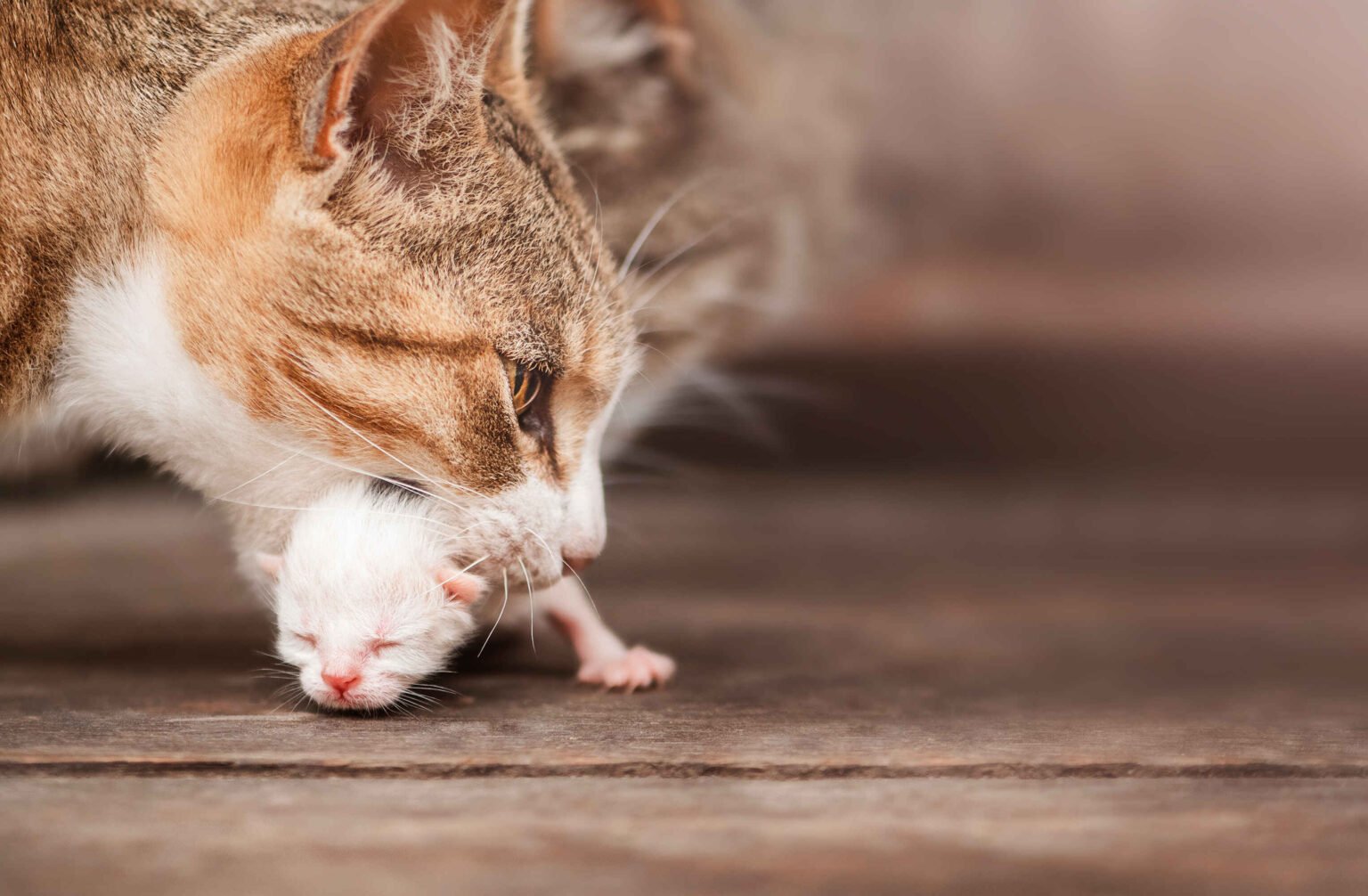
Finding a mother cat eating one of her kittens is one of the most distressing things a cat owner can witness. If you are frantically searching to find out why do mother cats eat their kittens, it is important to know that this behavior is rarely random. In most cases, it is triggered by illness, extreme stress, birth complications, or deeply ingrained natural survival instincts, not cruelty.
- What Happens Before a Mother Cat Eats Her Kittens?
- Why Would a Mother Cat Eat Her Kittens? The Biology Explained
- Is It Normal?
- When Is It NOT Normal?
- Can This Happen in Indoor Cats?
- Can Humans Cause This? (Human Interference)
- 7 Reasons a Mother Cat Eats Her Kittens
- 1. The Kitten Was Stillborn
- 2. The Kitten Was Extremely Weak (Fading Kitten Syndrome)
- 3. Extreme Environmental Stress
- 4. Inexperienced First-Time Mothers
- 5. Poor Nutrition and Low Body Condition
- 6. Pain After Birth (Dystocia)
- 7. Medical Illness (Mastitis, Metritis, or Eclampsia)
- Can You Foster the Remaining Kittens?
- How Long Should You Watch the Mother?
- Signs the Remaining Kittens Are Safe
- Prevention & What Veterinarians Usually Check
- Sources & References
- Frequently Asked Questions (FAQ)
- Is it normal for cats to eat their kittens?
- Why did my cat eat only one kitten?
- Why did my cat eat only the runt?
- Can a male cat eat kittens?
- Do wild cats eat their kittens?
- Can stress alone cause this?
- Can first-time mothers eat kittens?
- Will she recognize her kittens after separation?
- Should I bottle-feed the remaining kittens?
- How do I stop my cat from eating kittens?
- Should I remove newborn kittens?
- Why does my cat reject one kitten?
- Will she do it again?
- Is it common for cats to eat stillborn kittens?
- Should I intervene if a cat moves her kittens?
- How long do kittens stay with their mother?
To keep the rest of the litter safe, you must quickly identify the root cause. This complete guide will walk you through the underlying biology, how to spot the warning signs before a tragedy occurs, and exactly what you need to do to protect the surviving kittens and ensure a positive long-term outcome.
Why Do Mother Cats Eat Their Kittens?It is uncommon but can happen. Mother cats may eat dead, stillborn, or severely ill kittens to protect the rest of the litter from disease and predators. In rare cases, a mother cat may attack healthy kittens because of extreme postpartum stress, illness, birth complications, or poor maternal behavior.
What Happens Before a Mother Cat Eats Her Kittens?
A mother cat rarely attacks without warning. Maternal cannibalism is usually preceded by a breakdown in her normal nesting instinct, clinically known as maternal neglect or aggression. Before an attack occurs, observant owners often notice several behavioral red flags:
- Refusing to nurse: Pushing the babies away, guarding her belly, or growling when they attempt to latch.
- Moving kittens repeatedly: Frantically pacing and carrying her babies from room to room means her anxiety is severely elevated. Discover why cats move their kittens to understand this panic response.
- Excessive grooming: Licking a kitten obsessively until the skin is raw, or biting the umbilical cord far too close to the belly.
- Biting too hard: Rough handling that causes a neonatal kitten to scream in pain rather than softly mew.
- Abandoning one kitten: Pushing a single kitten to the cold edge of the box and ignoring its cries, often a sign of why is my cat rejecting her kittens.
- Refusing food and hiding: Leaving the nest to hide in a dark closet for hours, completely ignoring the lactating queen’s need to nourish her litter.
Severity Meter: When to Worry
- Normal: Eating the placenta, cleaning stillborn kittens, gently moving kittens to a warmer spot.
- Monitor: Rejects one kitten, refuses to nurse temporarily, excessive pacing, rough grooming.
- Emergency: Attacks healthy kittens, abandons entire litter, bites repeatedly, severe maternal bleeding.
Why Would a Mother Cat Eat Her Kittens? The Biology Explained
When researching why do mother cats eat their kittens, it is important to remember that to humans, this behavior is unimaginable. But in the animal kingdom, a breeding queen is driven by intense survival instincts. Her primary evolutionary goal is to ensure the health of the strongest offspring and protect the nesting box from predators.
When a queen resorts to maternal cannibalism, she is almost always trying to eliminate a perceived threat. The process is deeply rooted in her biology:

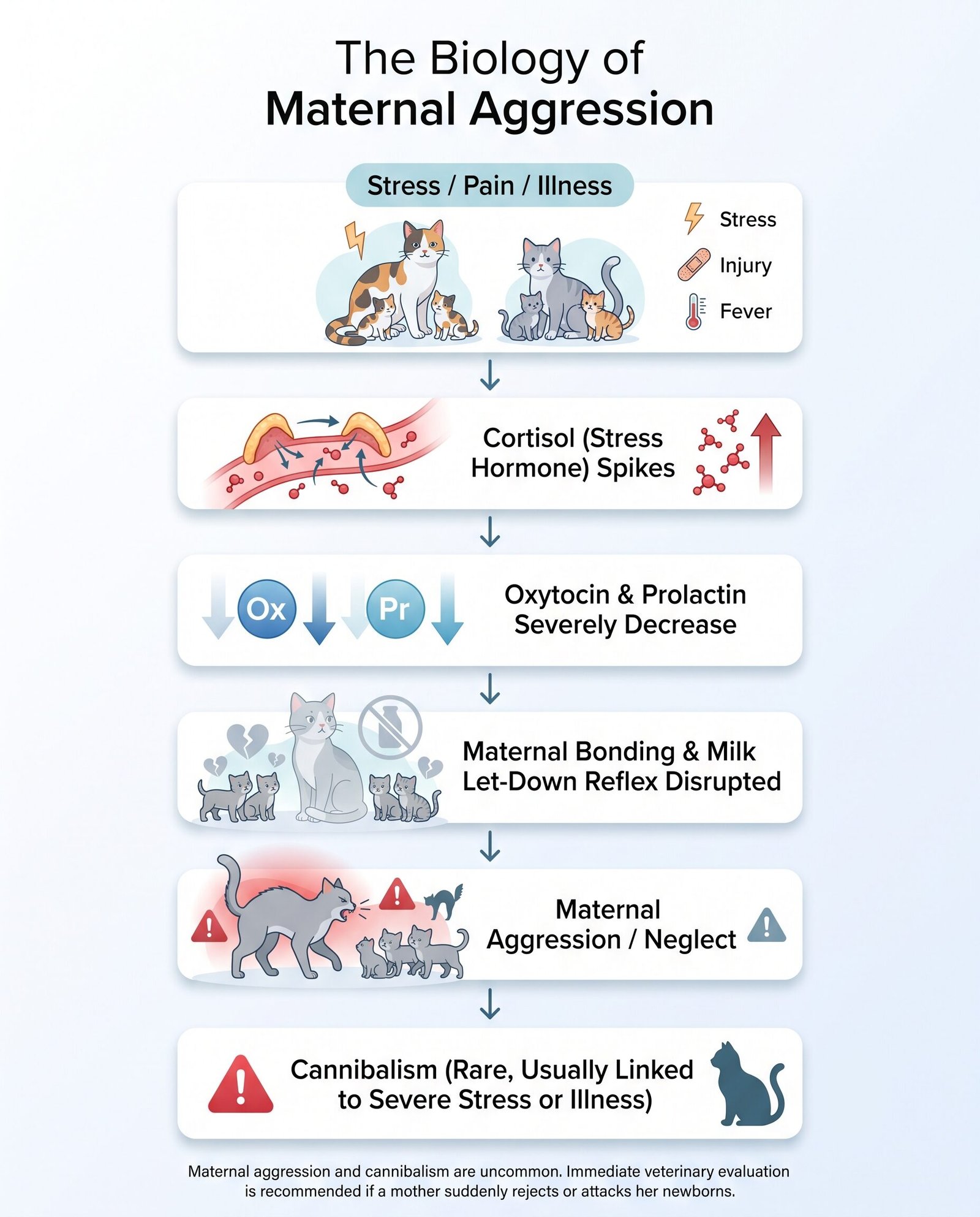
When cortisol rises, it physically blocks the hormones that tell her to be a mother. Severe hormonal disruption may interfere with normal maternal recognition and caregiving behaviors, causing the queen to act on a panicked defense instinct rather than a nurturing one.
Is It Normal?
Whether this behavior is “normal” depends entirely on the health and viability of the neonatal kittens in question.
| Behavior | Normal? | Dangerous? |
|---|---|---|
| Eats placenta | ✔ Yes (Nearly 100% of queens do this) | No |
| Cleans stillborn kitten | ✔ Yes | No |
| Rejects one weak kitten | Sometimes | Dangerous for the kitten |
| Bites healthy kitten | ❌ No | ✔ Yes (Emergency) |
| Eats healthy kitten | ❌ No | ✔ Yes (Emergency) |
When Is It NOT Normal?
While dealing with a stillborn kitten is a natural biological process, there are specific scenarios where maternal behavior crosses into a medical emergency. Immediately contact a veterinarian if the mother cat:
- Attacks healthy, nursing kittens.
- Repeatedly attempts to bite or harm the litter.
- Refuses to nurse or care for the entire litter.
- Develops a high fever or is hot to the touch.
- Has foul-smelling or discolored vaginal discharge.
- Exhibits muscle tremors, stiffness, or seizures.
- Stops eating and drinking completely.
Can This Happen in Indoor Cats?
A highly searched question is whether a pampered indoor cat is capable of this. Yes, it can absolutely happen with indoor cats.
A safe, temperature-controlled environment does not erase thousands of years of feline evolution. Indoor cats still experience powerful hormonal shifts, postpartum pain, and maternal aggression. Furthermore, an indoor cat may be easily stressed by everyday household occurrences, such as a vacuum cleaner or a ringing doorbell, triggering the exact same fight-or-flight response as a wild cat facing a coyote.
Can Humans Cause This? (Human Interference)
Owners often feel immense guilt when a tragedy occurs in the nesting box, asking: “Did I touch the kittens too much? Did I cause this?”
Unfortunately, well-meaning human interference is a leading cause of maternal stress. You can absolutely trigger maternal rejection or aggression if you:
- Constantly pick up the neonatal kittens, altering their scent so the mother no longer recognizes them.
- Move the nesting box to a bright, noisy area like a living room.
- Invite friends over to “see the babies” during the critical first 48 hours of bonding.
- Allow the family dog or other household cats to sniff around the birthing area.
7 Reasons a Mother Cat Eats Her Kittens
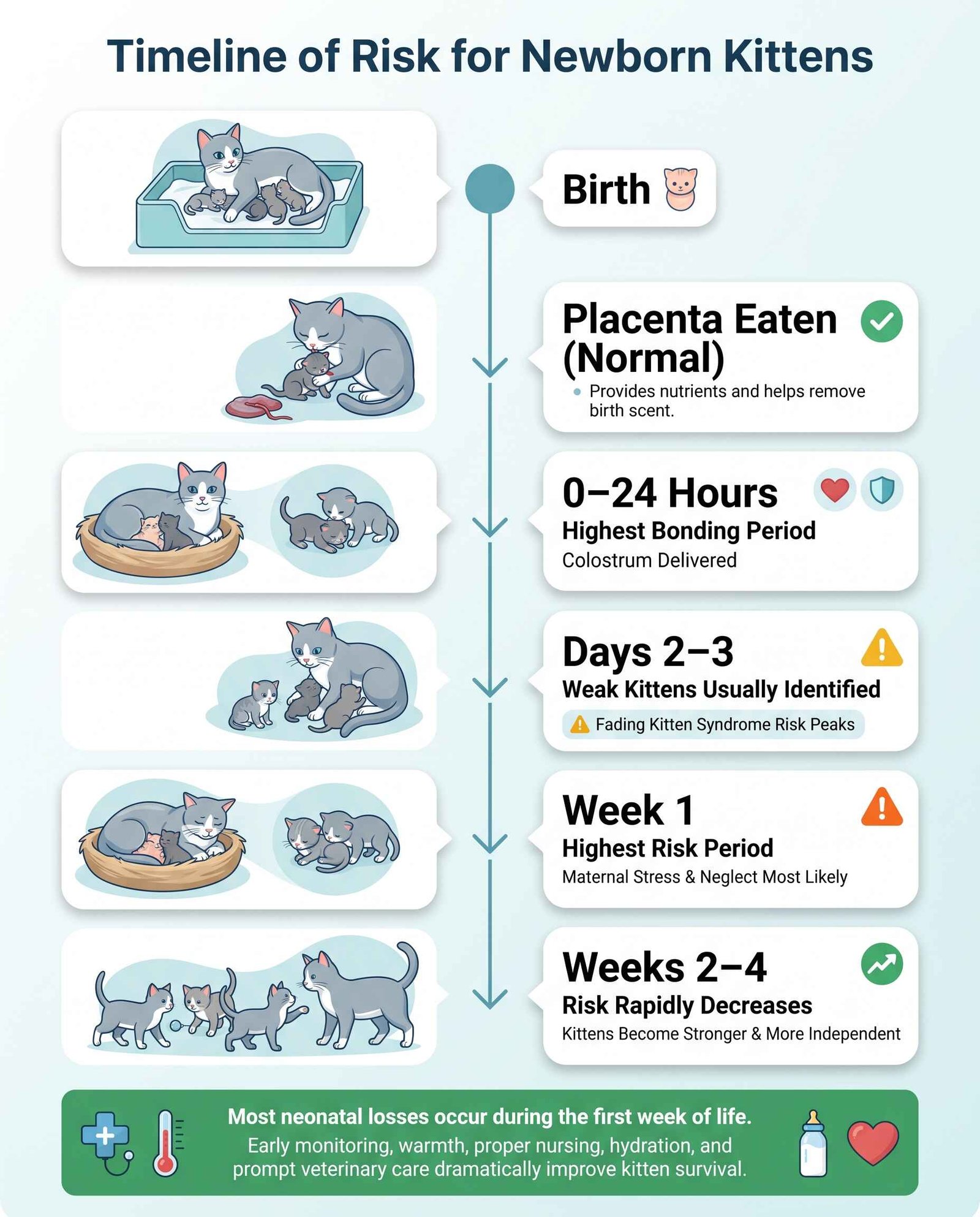
Studies of kitten mortality report that losses before weaning can range widely depending on the breeding environment, maternal health, and neonatal care. If you want to know exactly why do mother cats eat their kittens, the behavior usually traces back to one of these seven environmental or medical factors.
1. The Kitten Was Stillborn
If a kitten dies in the womb or during delivery, the mother’s immediate instinct is to clean the nest. Leaving a deceased kitten poses a massive bacterial threat to the healthy babies. She consumes the remains to keep the environment perfectly sterile.
2. The Kitten Was Extremely Weak (Fading Kitten Syndrome)
Neonates rely entirely on the mother for thermoregulation. A mother cat can sense when a kitten’s body temperature drops. If a runt is suffering from fading kitten syndrome or a congenital defect, the queen may cull it to stop wasting precious energy and colostrum on an unviable offspring.
3. Extreme Environmental Stress
If the breeding queen feels her babies are in immediate danger, her cortisol spikes. She may panic and consume them to “save” them from perceived predators (like the household dog or loud children).
4. Inexperienced First-Time Mothers
Statistically, first-time queens are far more likely to experience maternal problems than experienced mothers. The intense pain and confusion of birth can lead to poor maternal instincts. Sometimes, an aggressive bite meant to sever the umbilical cord is accidentally directed at the kitten’s abdomen.
5. Poor Nutrition and Low Body Condition
Learning how many kittens can a cat have helps owners prepare for the massive caloric intake required for lactation. If a queen has a poor Body Condition Score (BCS) and is severely malnourished, her survival instincts will take over. She may eat her kittens to regain vital protein to avoid starvation.
6. Pain After Birth (Dystocia)
Severe birth complications, such as dystocia (difficult birth), a retained placenta, or delayed uterine involution, cause excruciating pain. A mother in agony may misdirect her aggression at the nursing kittens.
7. Medical Illness (Mastitis, Metritis, or Eclampsia)
Postpartum medical emergencies are highly dangerous:
- Mastitis: A painful bacterial infection of the mammary glands makes the milk let-down reflex agonizing.
- Metritis: A severe uterine infection causing fever and lethargy, leading to maternal neglect.
- Eclampsia: Also known as “milk fever,” this is a life-threatening drop in blood calcium that causes tremors, pacing, and severe maternal aggression. (Learn more about eclampsia in cats)
Can You Foster the Remaining Kittens?
If a mother cat has attacked her litter, separating them is mandatory. But can kittens survive without their mother? Yes, though it requires intervention. While human bottle-feeding is an option, finding a surrogate nursing queen is often the best solution for neonatal kittens.
- When another queen can adopt: A surrogate queen with a litter of a similar age (within 1 to 2 weeks) is usually the best candidate, provided she is healthy, fully vaccinated, and producing enough milk.
- Scent transfer: To encourage the surrogate to accept the orphans, rub them gently with bedding from the surrogate’s nesting box, or mix them in with her biological kittens so they share the same scent.
- Age compatibility: Matching ages is crucial so older, stronger kittens do not push the fragile orphans away from the nipples.
- Veterinary guidance: Always consult your veterinarian before introducing orphans to a new queen to prevent the spread of infectious diseases.
How Long Should You Watch the Mother?
To prevent tragedies, you must monitor the nesting box unobtrusively. Follow this schedule:
- First 24 hours: Peek in quietly every hour. Ensure all kittens are nursing and the mother is resting.
- Day 2: Check every 2–3 hours.
- Days 3–7: Check morning, afternoon, and evening.
- Week 2 and beyond: Normal daily monitoring.
What NOT To Do
If you catch the mother acting erratically, your reaction dictates the outcome.
- ❌ DON’T punish or hit the mother (this guarantees a spike in aggression).
- ❌ DON’T yell or spray her with water.
- ❌ DON’T move the kittens constantly.
- ❌ DON’T separate healthy kittens unnecessarily unless they are in immediate danger.
Signs the Remaining Kittens Are Safe
If an incident occurred with one kitten, you need to know if the rest of the litter is safe. The remaining kittens are generally out of danger if you observe the following:
- ✓ They are nursing normally and latching without the mother growling.
- ✓ They feel warm to the touch.
- ✓ The nesting box is quiet (a contented litter is a quiet litter).
- ✓ The mother is purring while they nurse.
- ✓ They are visibly gaining weight daily.
- ✓ They are sleeping together in a warm pile.
Prevention & What Veterinarians Usually Check
If a mother cat shows signs of aggression or neglect, a veterinary examination is required. If you are still wondering why do mother cats eat their kittens despite providing a calm, dark nesting box, a vet must step in. What exactly is the vet looking for? When you bring a postpartum queen to the clinic, the veterinarian will evaluate:
- Temperature: Checking for postpartum fever indicative of infection.
- Mammary Glands: Palpating for heat, hardness, or discolored milk (Mastitis in cats).
- Retained Placenta/Fetuses: Using palpation or ultrasound to ensure the uterus is empty.
- Uterine Infection: Checking vaginal discharge for signs of Metritis.
- Calcium Levels: Blood tests to rule out life-threatening Eclampsia.
- Hydration and BCS: Assessing her nutritional status to ensure she can produce milk.
A Note on Spaying: If a queen repeatedly shows poor maternal behavior, rejects her kittens, or resorts to cannibalism despite appropriate veterinary care and a low-stress environment, discuss spaying with your veterinarian. Spaying prevents future litters, eliminates the risk of these heartbreaking occurrences, and greatly reduces her risk for reproductive cancers.
Key Takeaways
- ✓ Healthy kittens should never be attacked. If they are, it is a medical emergency.
- ✓ Stillborn kittens may be consumed naturally. It is a primal instinct to keep the nest clean.
- ✓ Stress is highly preventable. Keep dogs, kids, and visitors completely away for the first week.
- ✓ Nutrition matters. Follow a strict kitten feeding schedule and provide unlimited high-calorie food for the nursing queen.
- ✓ Veterinary care saves litters. Metritis, mastitis, and eclampsia cause severe maternal aggression.
- ✓ Early intervention changes outcomes. If the mother attacks, remove the babies, keep them warm, and prepare to provide intensive newborn kitten care.
Sources & References
- Merck Veterinary Manual: Management of the Neonatal Kitten and Postpartum Complications.
- International Society of Feline Medicine (ISFM): Feline Behavior and Stress Guidelines.
- World Small Animal Veterinary Association (WSAVA): Global Nutrition Guidelines for Lactating Queens.
- American Veterinary Medical Association (AVMA): Resources on Animal Welfare and Maternal Behavior.
Frequently Asked Questions (FAQ)
Is it normal for cats to eat their kittens?
It is only normal if the kitten is stillborn, severely deformed, or dangerously weak. A mother cat consumes unviable offspring to protect the healthy kittens from disease and predators. Eating perfectly healthy kittens is never normal and indicates severe stress or illness.
Why did my cat eat only one kitten?
If a queen eats only one kitten while peacefully nursing the rest, that specific kitten was likely stillborn, fading, or suffering from a severe congenital defect. The mother removed it to keep the nesting box sanitary and safe for the survivors.
Why did my cat eat only the runt?
A mother cat relies heavily on instinct to conserve resources. If the “runt” is suffering from hypothermia, is too weak to nurse, or has developmental defects, she may cull it to ensure her limited milk supply goes to the strongest, most viable kittens.
Can a male cat eat kittens?
Yes. In the wild, an intact male cat (tomcat) may kill or consume kittens that are not his own to force the female back into heat so he can mate with her. However, neutered domestic indoor cats rarely exhibit this extreme behavior.
Do wild cats eat their kittens?
Yes, maternal cannibalism is documented across many wild feline species. In the wild, consuming stillborns or weak kittens is a critical survival tactic to prevent the scent of decay from attracting larger predators to the den.
Can stress alone cause this?
Yes, extreme stress alone can trigger this. Severe panic causes cortisol to spike, which physically blocks the release of oxytocin (the bonding hormone). Without this hormone, the mother’s caregiving instincts are disrupted, and she may view the kittens as threats.
Can first-time mothers eat kittens?
Yes, first-time mothers are at a higher risk of maternal cannibalism. The intense pain, confusion, and hormonal rush of their first delivery can overwhelm their instincts, causing them to mistakenly view their squirming newborns as a threat.
Will she recognize her kittens after separation?
Cats rely primarily on scent to identify their young. If the kittens are separated for a few hours, the mother will usually recognize them. If they are separated for several days, her milk may dry up and she may no longer recognize their scent. Always consult a vet for reintroduction.
Should I bottle-feed the remaining kittens?
If you have had to permanently separate the kittens because the mother is aggressive, ill, or deceased, yes, you must bottle-feed them. You will need a specialized feline milk replacement formula and must feed them every two hours.
How do I stop my cat from eating kittens?
You can prevent this by eliminating all environmental stress. Provide a warm, isolated nesting room, keep all other pets and loud children away, and ensure the mother has unlimited access to high-calorie food and water right next to her box.
Should I remove newborn kittens?
You should immediately remove the kittens if the mother is hissing, biting, or intentionally injuring healthy babies. If she is calm and nursing, do not remove them, as kittens desperately require their mother’s antibody-rich colostrum during the first 24 hours of life.
Why does my cat reject one kitten?
A mother cat typically rejects a single kitten if it is suffering from hypothermia or born with hidden medical defects. Her survival instincts compel her to reserve her limited milk supply for the strongest kittens.
Will she do it again?
If a mother cat eats a kitten due to a one-time medical complication or a stillborn birth, she may never do it again. However, if she repeatedly attacks healthy litters due to severe anxiety or poor maternal instincts, she will likely repeat the behavior and should be spayed.
Is it common for cats to eat stillborn kittens?
Yes, it is very common and entirely instinctual for a queen to consume a stillborn kitten. In the wild, the scent of decay quickly attracts dangerous predators, so the mother consumes the remains and the placenta to keep her healthy babies safe.
Should I intervene if a cat moves her kittens?
If a mother cat moves her kittens once or twice to a quieter, warmer spot, it is normal nesting behavior. However, if she is frantically pacing and carrying them around while crying, she is highly stressed and needs immediate veterinary evaluation.
How long do kittens stay with their mother?
Ideally, kittens should stay with their mother for a minimum of 8 weeks, though 12 weeks is preferred for optimal social and behavioral development. Separating them earlier can lead to nursing fixations and anxiety. (Read more on how long do kittens stay with their mother).